
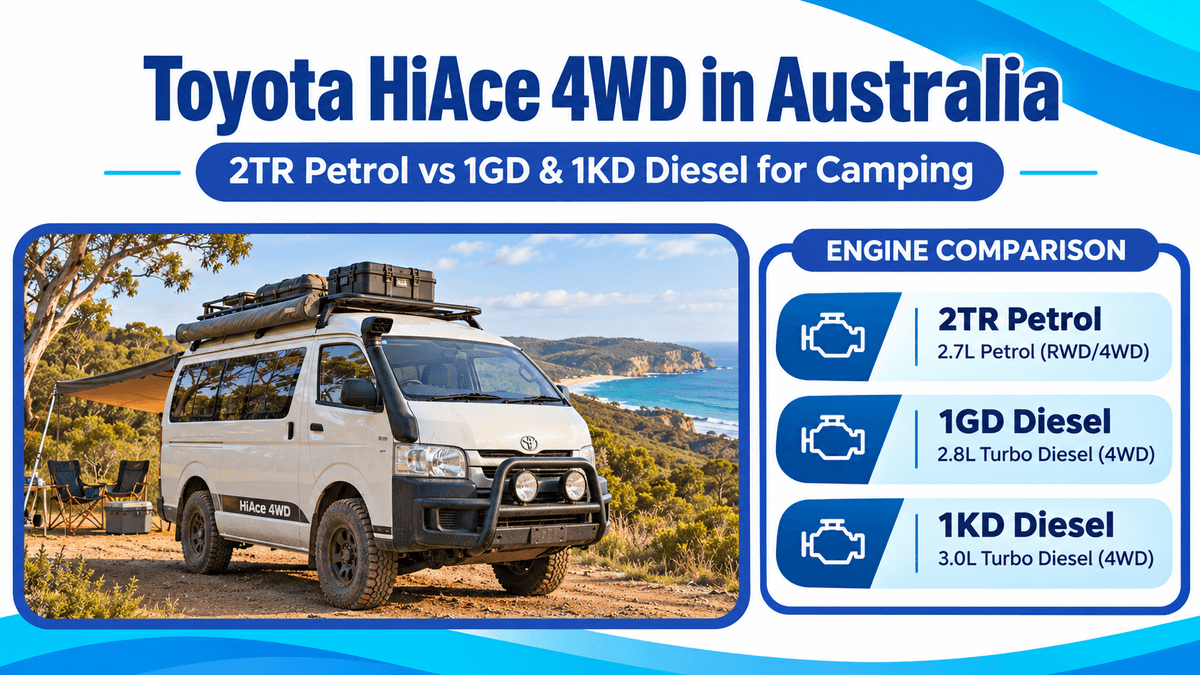
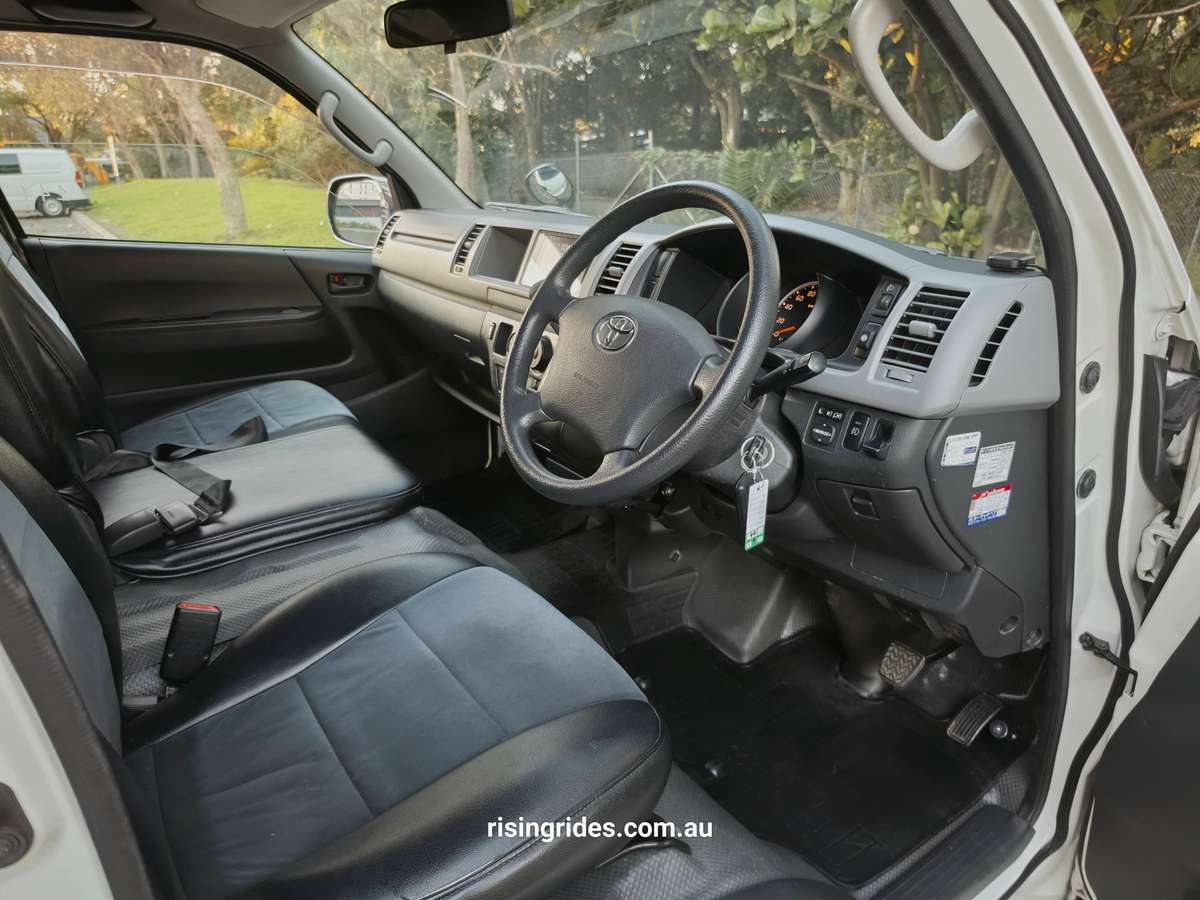
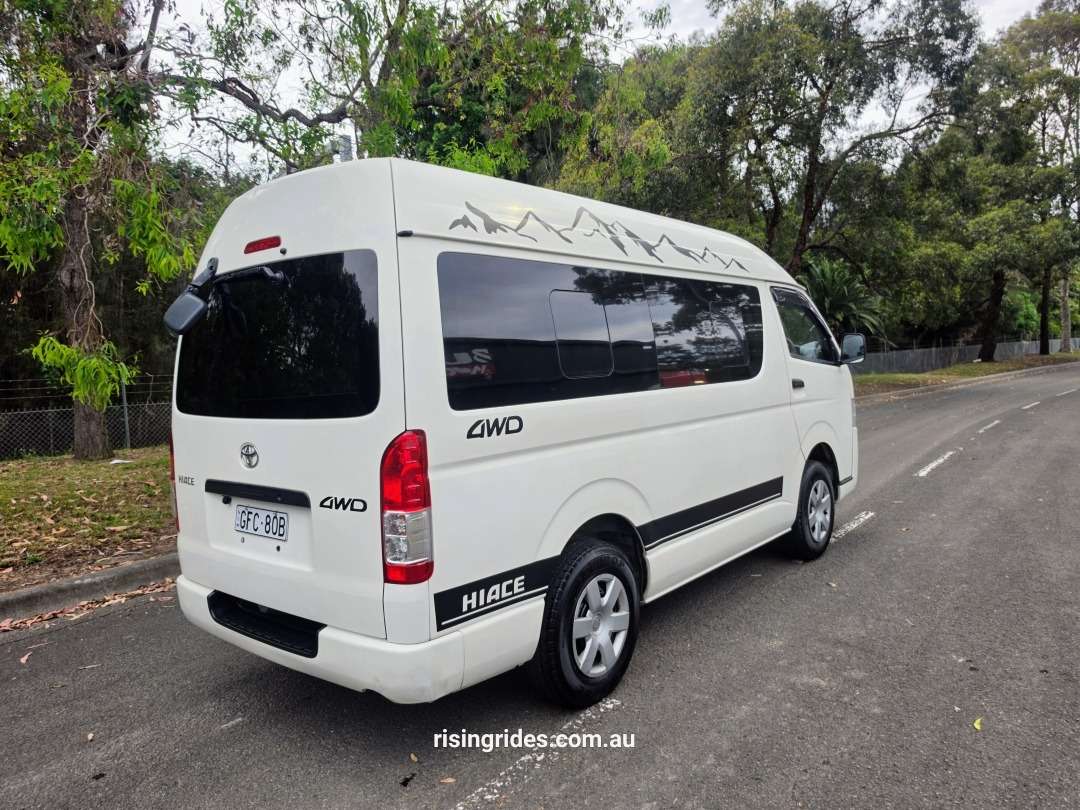
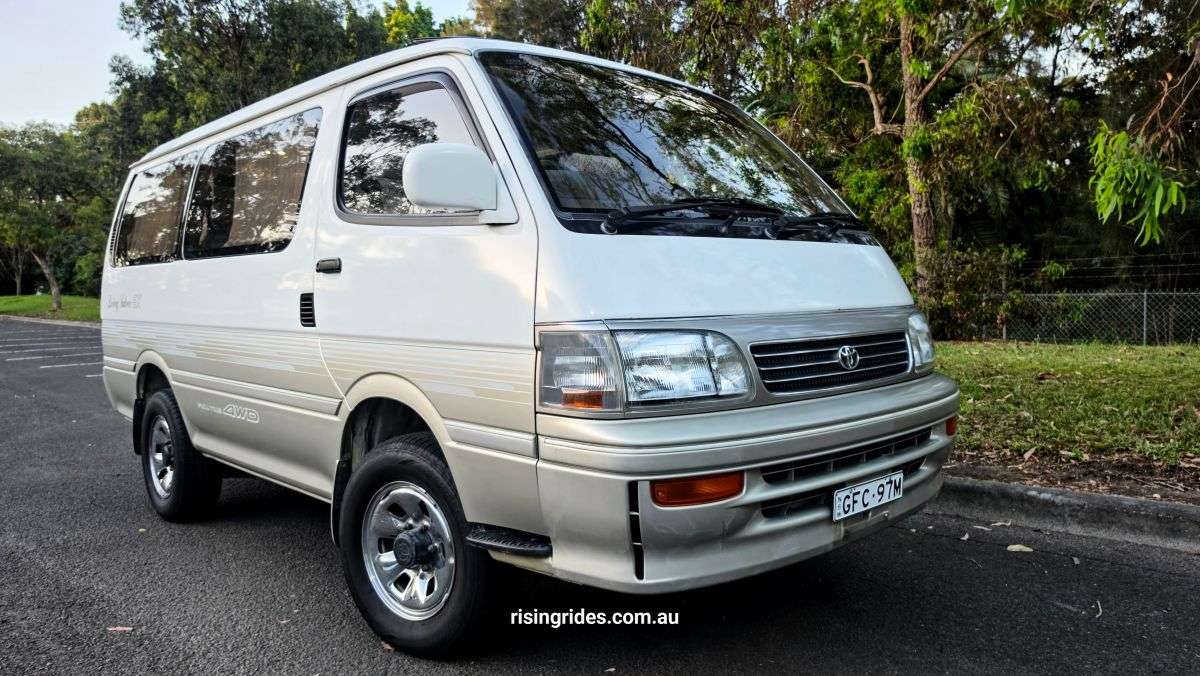
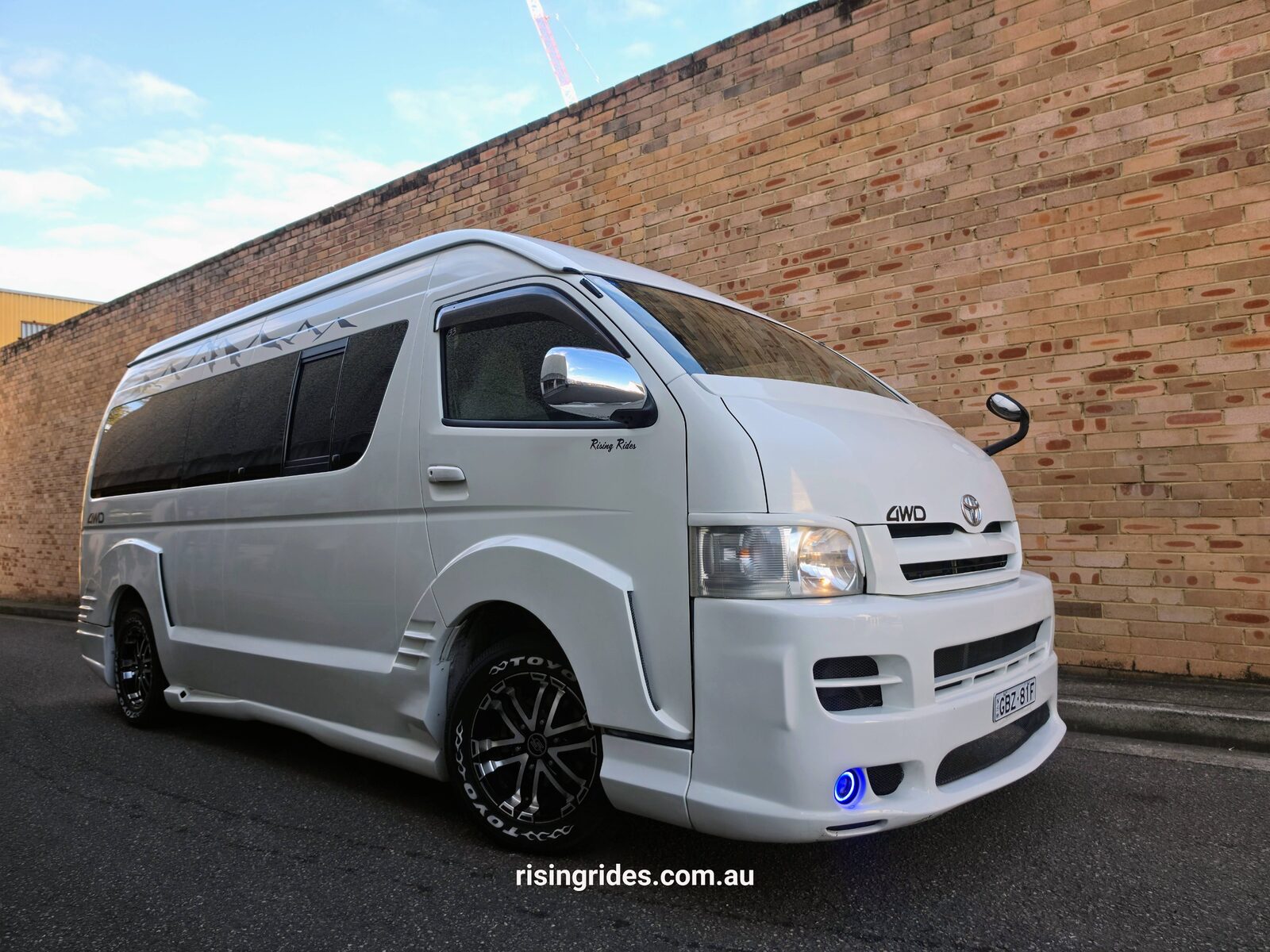
If you're planning loaded, long-distance camping, the 1GD-FTV diesel is the strongest all-round pick. The 2TR-FE petrol suits lighter trips closer to town, and the 1KD-FTV is a solid older diesel if the history checks out. That's the short answer we give most people who walk into our Lidcombe yard asking about engines.
The longer answer comes down to three things: your route, your fuel access and how heavy your finished camper will be. We'd rather help you match the engine to the way you actually travel than sell you on reputation alone.
This guide covers Australian 4WD HiAce campervans, not Hilux or Prado engines. One term before we start: the diesel particulate filter (DPF) is a filter in the exhaust that traps soot and burns it off every so often. That burn-off is called regeneration.
An engine that feels fine around town can feel very different on an outback trip with water, batteries and recovery gear aboard. So choose by the weight you'll carry and how remote you'll go.
Key Takeaways
- 1GD-FTV: the broadest fit for a heavily loaded van doing long, remote trips.
- 1KD-FTV: a sensible older diesel, as long as it's been carefully maintained.
- 2TR-FE: suits lighter camping and routes that stay closer to towns.
- Fuel use: depends on your setup, the roads and how you drive.
- Before you buy: check the exact import, emissions gear, service history and finished weight.
Factory Imports vs Australian Conversions
Toyota never sold a factory 4WD HiAce through its Australian dealers. So every 4WD HiAce here is either a Japanese factory import or a locally engineered conversion. Factory imports were built as 4WDs in Japan. Local conversions start life as a 2WD HiAce and get a 4WD system fitted here. (New to the topic? Our guide What Is a Toyota HiAce 4x4? explains the difference in more detail.)
Newer Japanese imports usually face an odometer limit of around 80,000km under used-import approval schemes. That limit, and approval itself, apply to particular vehicles and pathways, not every HiAce for sale. The import families include KDH206, GDH206 and TRH-series models, but the family name alone doesn't prove a van's approval status.
Importing a 4WD HiAce from Japan typically takes six to ten weeks from auction to arrival. Each step can affect cost and timing:
- Auction purchase: choose and buy a specific vehicle in Japan.
- Shipping: arrange transport from Japan to Australia.
- Compliance: complete the required checks and modifications for Australian use.
- ADR/RAV entry: meet the Australian Design Rules (ADR) and enter the Register of Approved Vehicles (RAV), where required.
Australian Government rules require import approval before a road vehicle arrives. Applications go through the department's ROVER portal, and assessment can take up to 60 business days. The Australian Border Force won't release a vehicle from customs without that approval.
Local conversions skip the factory-import route, but quality and paperwork vary from build to build. Ask what work was done and which approval documents cover that exact van. A model name or a seller's word isn't enough.
Our tip: confirm the exact vehicle's import eligibility and approval status before you pay a deposit. Buying from a dealer who has already handled compliance, like the vans in our stock list, takes most of that legwork off your plate.
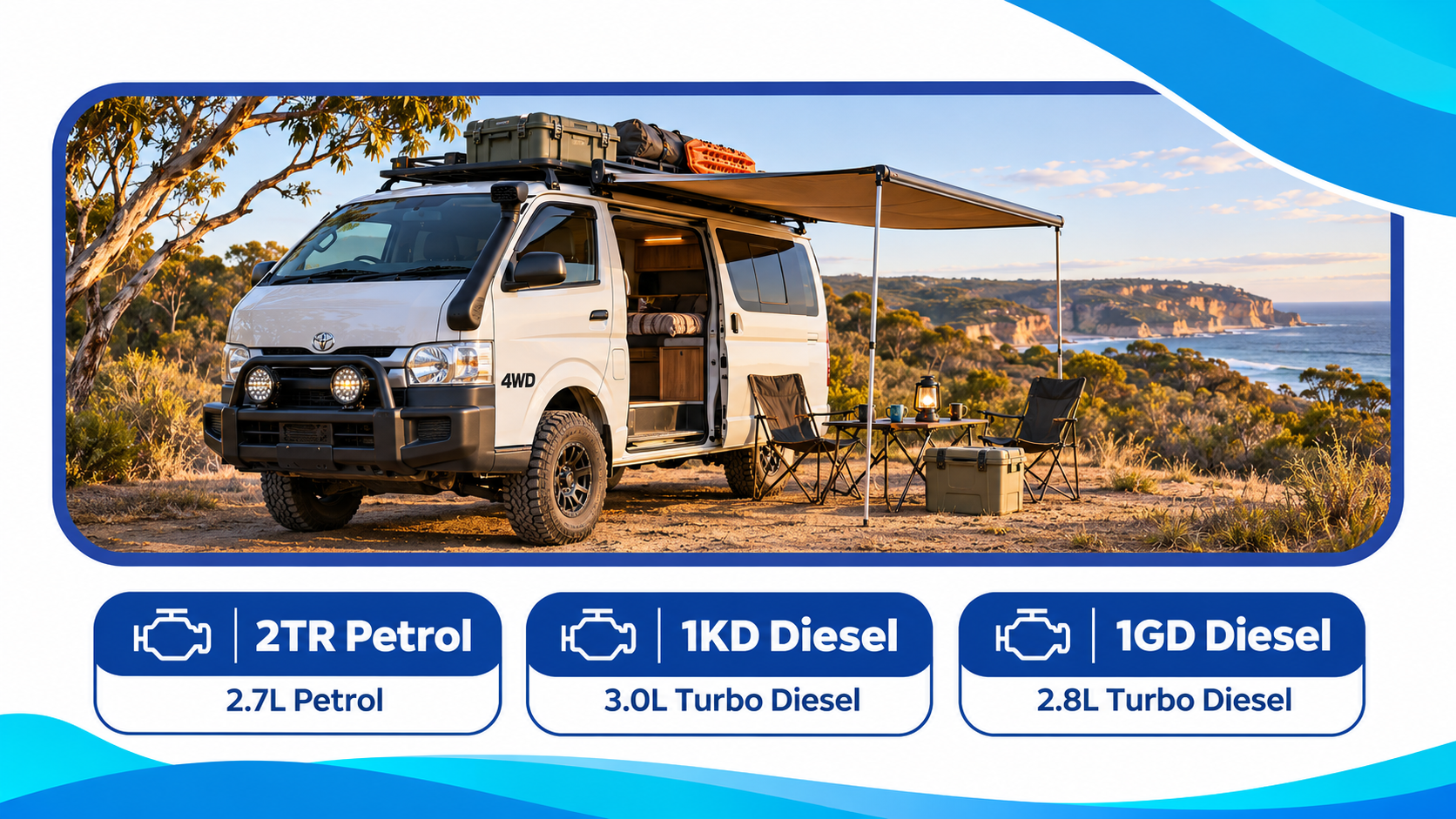
The HiAce 4WD Engine Line-Up: 2TR Petrol, 1KD and 1GD Diesel
The model code is the quickest way to identify the engine. TRH points to petrol, KDH206 to the 1KD diesel and GDH206 to the 1GD diesel. Read both codes, because the model code names the vehicle family and the engine code names the engine itself. You'll find these codes on every listing in our Toyota HiAce range.
Engine codes are far more useful than a listing that just says "diesel HiAce". They let you compare like with like when checking specs, service records or parts. If the codes still look like alphabet soup, our HiAce model codes guide breaks them down.
2TR-FE petrol (TRH-series)
- Model codes: TRH223B and TRH228B
- Fuel: petrol, naturally aspirated
- Displacement: 2,694cc
- Good to know: if a listing just says "petrol HiAce", the model and engine codes give you a more precise ID. See current examples such as the TRH219W "Sand Van" and the TRH226 "Arcade".
1KD-FTV diesel (KDH206-series)
- Model codes: KDH206K and KDH201V
- Fuel: 3.0-litre turbo-diesel
- Displacement: 2,982cc
- Good to know: the exact suffix matters when comparing vans or ordering parts. Browse KDH206K vans like the 2015 "Trailmaster" or the 2013 "Scout 2".
1GD-FTV diesel (GDH206-series)
- Model codes: GDH206 series
- Fuel: 2.8-litre turbo-diesel
- Displacement: 2.8 litres
- Good to know: the newest diesel of the three. The code helps you tell it apart from an older diesel listed only as "HiAce 4WD". Our GDH226K campervan guide covers the 1GD in more depth.
Before ordering parts or comparing two vans, match the model code and the engine code. That one habit saves a lot of confusion later.
Real-World Fuel Use: 2TR Petrol vs Diesel
With a camper load in mixed conditions, the 2TR-FE petrol uses around 10-14L/100km. The diesels sit lower, at roughly 7.5-9.5L/100km for the 1KD-FTV and 7.5-9.0L/100km for the 1GD-FTV. For a camper, these loaded figures matter far more than an empty-van number. (For the bigger picture, see our diesel vs petrol 4WD vans guide.)
Here's how each engine compares when loaded:
- 2TR-FE (petrol): around 10-14L/100km. Rises with a heavy camper load, sand or hills.
- 1KD-FTV (diesel): around 7.5-9.5L/100km. Rises on unsealed roads and with touring gear aboard.
- 1GD-FTV (diesel): around 7.5-9.0L/100km. Rises in soft sand or with a full touring load.
Treat these as planning ranges, not promises. A 2TR-FE might use 10-12L/100km in easy daily driving. Load it heavily and it can go past 14L/100km, especially when the road and setup ask a lot of it.
Your fitout changes what the engine has to move. Water tanks, batteries, solar, cabinetry and personal gear all add up, and a full water tank adds more again. Tyres matter too: bigger or more aggressive tyres change rolling resistance and gearing. Speed, headwinds, steep climbs and frequent acceleration all push use up.
When you read owners' figures online, check that the vans carried similar loads at similar speeds on similar terrain. A single L/100km number without that context can mislead you. Our tips for improving fuel efficiency post has a few easy wins.
Diesel Range Gives You a Buffer Between Remote Fuel Stops
A diesel HiAce can typically travel 150-200km further on a full tank than a comparable petrol 2TR van. On a remote trip, that's real breathing room. It's a typical comparison though, not a guaranteed reserve.
Range and fuel availability are two different questions. You might have enough theoretical range for a leg, but still need a detour if a stop is closed or the next service is further than expected. Plan around actual places to refuel, not a headline range figure.
That buffer matters on routes like the Gibb River Road, Great Central Road and Tanami Track. For each leg:
- Note the fuel stops you plan to use, plus a backup where practical.
- Check current road conditions and services before you leave.
- Confirm opening hours and fuel availability directly, especially if your plan relies on one stop.
- Keep a record of your van's own use over a few trips, including load and conditions.
Don't assume a roadhouse at the far end of a track will have fuel when you arrive. A spare margin beats running the tank close to empty because the published range looked fine.
Fuel Availability Across Australian Touring Routes
Diesel is commonly stocked at remote roadhouses, because freight and touring traffic run on it. Petrol owners should check whether their particular import is happy on the 91 RON unleaded sold at smaller stops.
Standard unleaded is widely available, but some small remote stops only carry 91 RON. Premium unleaded is sold as 95 or 98 RON. Don't assume every stop has every grade, or that a Japanese import shares a local Toyota's fuel requirement.
Check the handbook for your specific import to find its required or preferred grade. A badge, a seller's description or another owner's experience won't settle it. Keep the manual in the van so the answer is there when you're far from home.
Some petrol owners plan their route around towns with the right fuel and manage just fine. Others prefer diesel's wider availability on remote tracks. Neither choice makes a trip automatically safe: route, services and range still need to line up.
Low-Rev Torque Favours the 1GD for Heavy Off-Road Loads
In HiAce tune, the 1GD-FTV makes roughly 110kW and 300Nm, with that torque arriving from around 1,000rpm. For a loaded van, that means useful pull on dirt, sand and climbs without having to wind the engine up first.
Low-range driving is about control, not speed. A loaded van often needs to crawl up a slope or through soft ground without a sharp stab of throttle. The 1GD's delivery makes that feel calmer, especially with water and gear aboard. Our HiAce off-road guide goes deeper on low-range technique.
The naturally aspirated 2TR petrol generally needs more revs under a heavy load. That doesn't make it useless off-road, but it feels different hauling a fully kitted van up a hill.
The 1KD-FTV is a 3.0-litre turbo-diesel used in KDH206-series vans. It's older and from a different engine family than the 1GD, so don't assume the same figures or behaviour just because both are diesels. Our 1KD-FTV engine review compares the two side by side.
One more thing: HiLux and Prado figures for the same engine aren't interchangeable with the HiAce tune. Always compare numbers for the exact HiAce, not another Toyota.
Camper Weight, GVM and Towing Set Your Safe Limits
Your legal payload is what's left once the van, fitout, passengers and touring gear are counted. A strong engine alone doesn't make a heavy build safe. Gross vehicle mass (GVM) is the maximum permitted mass of the loaded vehicle, and a finished camper eats into it fast.
Cabinetry, water tanks, batteries, solar panels, a bed platform, awnings, recovery gear and personal effects all add up. Our off-grid solar packages guide shows how much an electrical setup can weigh into the mix.
One Australian second-stage conversion pairs a 2.8-litre 1GD-FTV with a six-speed auto, a Land Cruiser 200-derived drivetrain and low-range gearing. That build has a GVM of around 4,000kg and towing capacity of around 1,500kg. Those figures belong to that build only, not every import or conversion.
Before you settle on a fitout, do a quick load audit:
- Passengers: count everyone who'll travel in the van.
- Water: include the tanks at the level you expect to carry.
- Batteries: include batteries, wiring and related touring gear.
- Recovery gear: include tools and equipment for tough tracks.
- Outside gear: don't forget anything mounted on the roof or rear.
Braked towing capacity is the maximum rated trailer mass when the trailer has its own brakes. The exact build sets that rating, so never borrow a figure from another HiAce or a Land Cruiser. Towing a boat or camper trailer also uses some of the van's capacity and changes how it handles.
A GVM upgrade only counts when the work and its approval cover that specific van. Ask for the documents, then weigh the completed camper with its normal touring load. Weighing an empty shell won't tell you what's left once you're ready to roll.
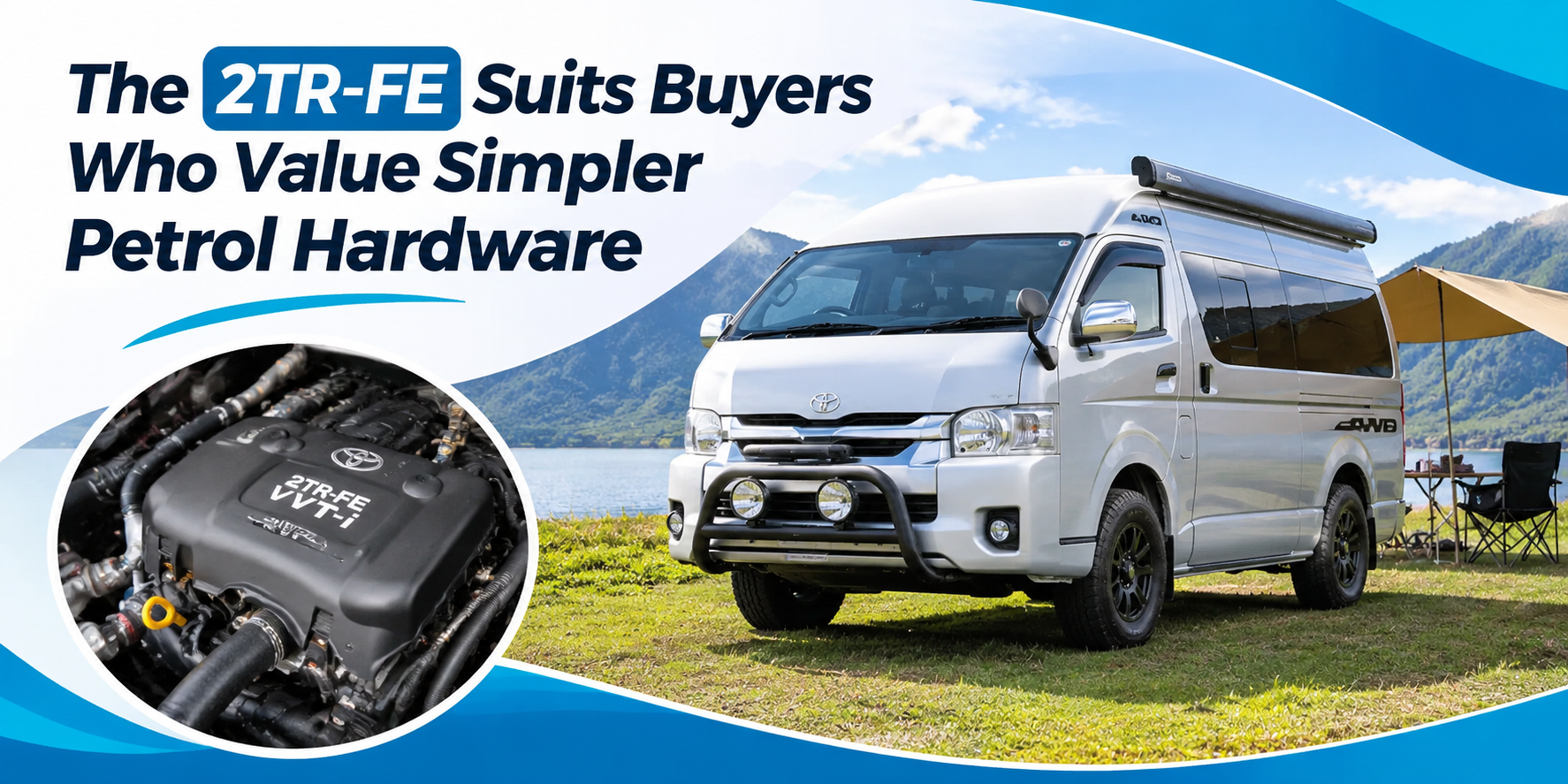
The 2TR-FE Suits Buyers Who Value Simpler Petrol Hardware
The 2TR-FE is a 2.7-litre naturally aspirated petrol engine. It has no turbocharger, no DPF and no common-rail injection system. For owners who like a familiar petrol setup and don't need diesel-style low-rev pull, that simplicity is a genuine plus.
Fewer systems doesn't mean failure-proof, though. Any engine can develop faults, and condition still matters most. A straightforward layout is easier to understand, but it's no substitute for regular servicing and a proper inspection.
The 2TR-FE makes sense if you camp near towns, take shorter trips and run a lighter fitout. In that case, low-rev pull and long-distance range matter less. Your everyday use is often a better guide than the big trip you'll do once every few years.
The trade-off shows up under a heavy load. A naturally aspirated engine can feel strained with a full camper, especially on climbs. That's about matching the van to its job, not proof the engine can't handle camping.
The 2TR-FE is also used in HiLux, Prado and Fortuner models, but specs and parts aren't automatically identical. When you need parts or service advice, give the workshop the exact HiAce model and engine codes. Our Toyota stock lists those codes for every vehicle.
1KD Reliability Comes Down to Condition and Maintenance
A well-maintained 1KD-FTV can pass 300,000km before major repairs. That potential depends on a credible service history and attention to its known weak spots. Mileage alone can't tell you whether an older diesel is ready for touring.
A tidy exterior or a low odometer reading won't replace evidence of care. A neglected 1KD can need costly work, so the service record is what really tells the story.
Common 1KD failure points to inspect
- Injectors: failure and carbon build-up are the best-known issues.
- Overheating: can be linked to cracked cylinder heads or coolant leaks.
- Turbocharger: wear or faults on older engines.
- Fuel contamination: damage from water in the diesel.
These are possible problems, not a list every 1KD will develop. A mechanic who knows the engine should check how it starts, runs and responds, and look for signs of overheating or leaks. A coolant top-up with no explanation doesn't prove the original problem was fixed. If a seller says injector or turbo work was done, ask for the paperwork.
The maintenance schedule to look for
- Oil and filter: change every 5,000-10,000km.
- Air filter: replace every 15,000km.
- Injectors: service every 40,000km.
- Coolant: check and refill every 50,000km.
- Turbocharger: inspect every 100,000km.
- Timing belt: confirm against the exact vehicle's service record.
The 1KD runs a timing belt, not a chain. Never assume it's been replaced just because the van is old or has done big kilometres. A snapped belt can cause serious engine damage, so keep the replacement evidence in the service file. Our HiAce timing belt vs timing chain guide explains why it matters.
If the records can't confirm a belt change, have a qualified workshop assess the engine before any long trip.
Short Trips Make the 1GD's DPF a Key Ownership Question
A 1GD HiAce used mostly for short, slow trips may struggle to complete its DPF regeneration. The filter needs sustained heat to burn off trapped soot, and stop-start driving can cut that process short.
If the van rarely gets a good steady run, soot can build up and a warning light or blockage may follow. A warning light isn't proof of one specific fault, but don't ignore it. A diesel specialist can diagnose the cause and explain what the van needs.
Regular highway and outback driving changes the picture. Sustained running keeps the exhaust hot, so a 1GD that tours often is a very different prospect from one doing short local errands.
DPF equipment can also differ between import specs. Don't assume every 1GD has identical emissions hardware, or that a badge tells you what's fitted. Check the individual van, especially if a converter or previous owner has changed the exhaust.
Our tip: confirm the emissions equipment on the exact import, and ask a diesel specialist how your planned driving will affect regeneration. Our campervan maintenance guide has more on keeping a diesel happy.
Used-Import Checks: Paperwork, 4WD and Engine Condition
Before buying a used 4WD HiAce, make sure the paperwork, odometer history, engine, 4WD system and conversion all match the van in front of you. Look at the whole vehicle, not just the engine code or a neat camper fitout. Our used HiAce buying guide walks through this step by step.
A roadworthy certificate doesn't prove a van is mechanically fault-free. It covers roadworthiness on the day of inspection. A pre-purchase inspection looks much more closely at mechanical condition and whether the 4WD system is ready for touring.
Your checklist:
- Paperwork: compare compliance plates and approval documents with the vehicle.
- History: check the Personal Property Securities Register (PPSR), Japanese auction records and odometer history.
- Mechanical condition: assess the engine and operate the 4WD system.
- Equipment: identify the DPF hardware and inspect the quality of the conversion.
- Road use: check roadworthy certification and the terms of any warranty.
The PPSR is run by the Australian Financial Security Authority. It's one part of the check, not a substitute for import and service records. Auction records and odometer history help you compare the van's condition now with its past.
Check that the 4WD engages and works as it should. Some faults only show under load or on a rough surface, so a quick lap of the block may not reveal them. Look for poor wiring, unfinished fittings or unexplained changes in the conversion, and signs of leaks or repairs in the engine bay.
Japanese-market parts or wiring may need a specialist who knows imports. Before you commit, ask your workshop whether it has worked on that HiAce model and engine. For a deeper look, read Are Grey Import HiAces Reliable? and our Sydney buyer's checklist.
At Rising Rides, every van comes with a verified odometer and NSW compliance already sorted. You're welcome to bring your own mechanic for an inspection too. We'd much rather you buy with confidence than in a hurry.
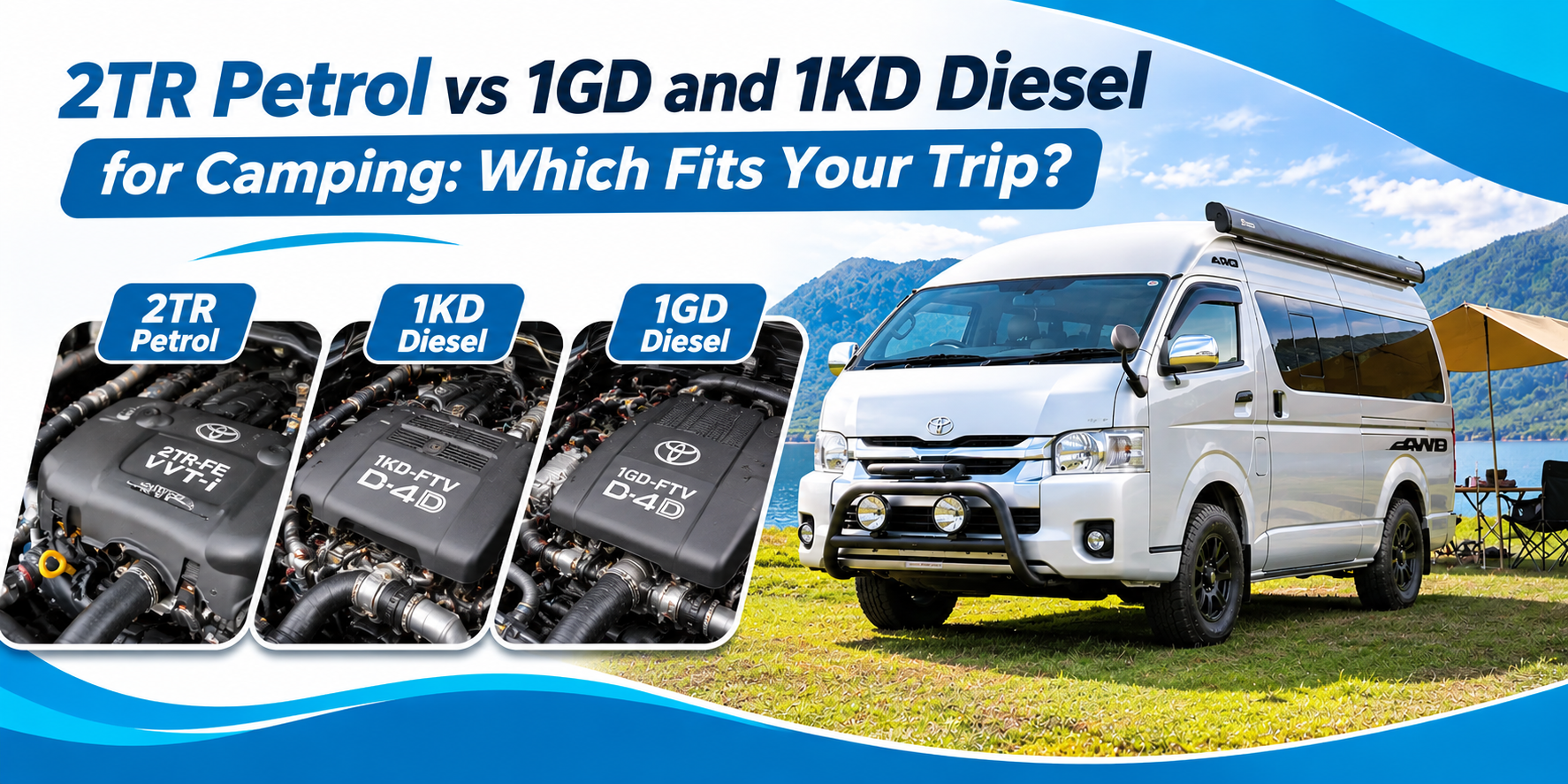
2TR Petrol vs 1GD and 1KD Diesel for Camping: Which Fits Your Trip?
Heading into remote Australia with a heavily loaded HiAce? Choose the 1GD-FTV. Camping lighter and closer to town? The 2TR-FE can be the better fit. The 1KD-FTV sits between them as a capable older diesel. You can compare all three across our 4WD vehicles for sale.
Loaded remote touring: 1GD-FTV
- Why it fits: low-rev pull and range suit long, heavy trips.
- Main trade-off: check the DPF equipment matches how you'll use the van.
Choose the 1GD if your camper carries plenty of gear and regularly heads into remote country. The more often you're far from services, the more those diesel touring strengths pay off.
Older diesel build: well-maintained 1KD-FTV
- Why it fits: a credible diesel alternative when its history is sound.
- Main trade-off: condition and service history need close attention.
A 1KD is a reasonable pick when maintenance has been consistent and the mechanicals check out. If the history is unclear, a lower price alone doesn't make it the better touring choice. Browse our 4WD HiAce stock to see examples with records.
Lighter local camping: 2TR-FE
- Why it fits: simpler petrol hardware suits trips closer to towns.
- Main trade-off: less range and low-rev pull for heavy touring.
The 2TR-FE makes most sense with a lighter load and campsites near towns. For regular remote touring with a heavy fitout, its trade-offs start to count more. Not sure which body suits your build? See LWB vs SLWB vs High Roof HiAce.
One last word on forum comparisons: they're only useful when load, tyres, terrain, speed and setup are comparable. A roof load, a tyre change or a slower track can make two similar vans behave very differently.
Try this: write down your expected load, your longest fuel gap and your usual trip pattern. Those three details will shortlist the engine for you.
Conclusion
For long, loaded touring, the 1GD-FTV is the safest starting point. The 2TR-FE suits lighter trips closer to towns, and a sound 1KD-FTV makes a great older diesel build.
Whatever you choose, match the engine to the trip, not to reputation or one owner's fuel figure. The van's import spec and finished weight matter just as much as what's under the bonnet. Our full range of vans for sale is a good place to start comparing.
Before committing, match the engine code and emissions equipment to the exact van. Then have an import-experienced workshop inspect it against your planned load.
Ready to find your HiAce? Browse our 4WD HiAce campervans or the full campervans for sale in Sydney range. Can't see the right van yet? Add it to your wishlist and we'll let you know when one lands. You can also get pre-approved for finance, value your trade-in, or chat with our team by phone, WhatsApp or in person at our Lidcombe yard.
FAQ
Is it still worth buying a petrol or diesel HiAce?
Yes, both can make sense for a HiAce camper. Petrol is a sensible choice for lighter trips near towns, especially if you like a simpler engine. Diesel generally suits heavier, longer and more remote touring, where low-rev pull and extra range help. Base the decision on your usual load and routes, not fuel type alone.
Is the Toyota 1KD engine reliable?
A properly maintained 1KD can pass 300,000km before major repairs, but that's not a promise for every van. Injectors, cooling-system history, the turbo and water-contaminated fuel all deserve attention. Check the timing-belt work in that van's service records. A mechanic's inspection helps separate a well-kept diesel from one with unresolved problems. Read our full 1KD-FTV engine review for more.
Which Toyota engine should I stay away from?
There's no Toyota engine to rule out on name alone. Instead, avoid a specific van with unresolved faults, weak service records or emissions gear that doesn't suit how you'll drive it. A good engine code can't make up for poor maintenance or a questionable conversion.
Can a 2TR-FE HiAce 4WD tow a camping trailer?
Yes, but only within that exact vehicle's rated towing capacity and loaded GVM. Don't take the rating from another HiAce, a HiLux or a similar-looking conversion. The trailer, passengers and touring gear all count. Check the build's rating and weigh the completed van before you set off.
Does every imported 1GD HiAce have the same emissions equipment?
No. Specs vary between imports, so identify the actual DPF equipment on the individual van. This matters most if you'll mainly do short trips, which can stop regeneration from finishing. A diesel specialist can identify the system and talk through how it suits your driving.
What should I compare when judging owners' fuel-use reports?
Compare load, tyres, terrain, speed and vehicle setup before trusting a single L/100km figure. A lightly loaded van on sealed roads won't show what a finished camper uses on sand or corrugations. Your own fuel records over a few trips will give you a far more useful planning number.