
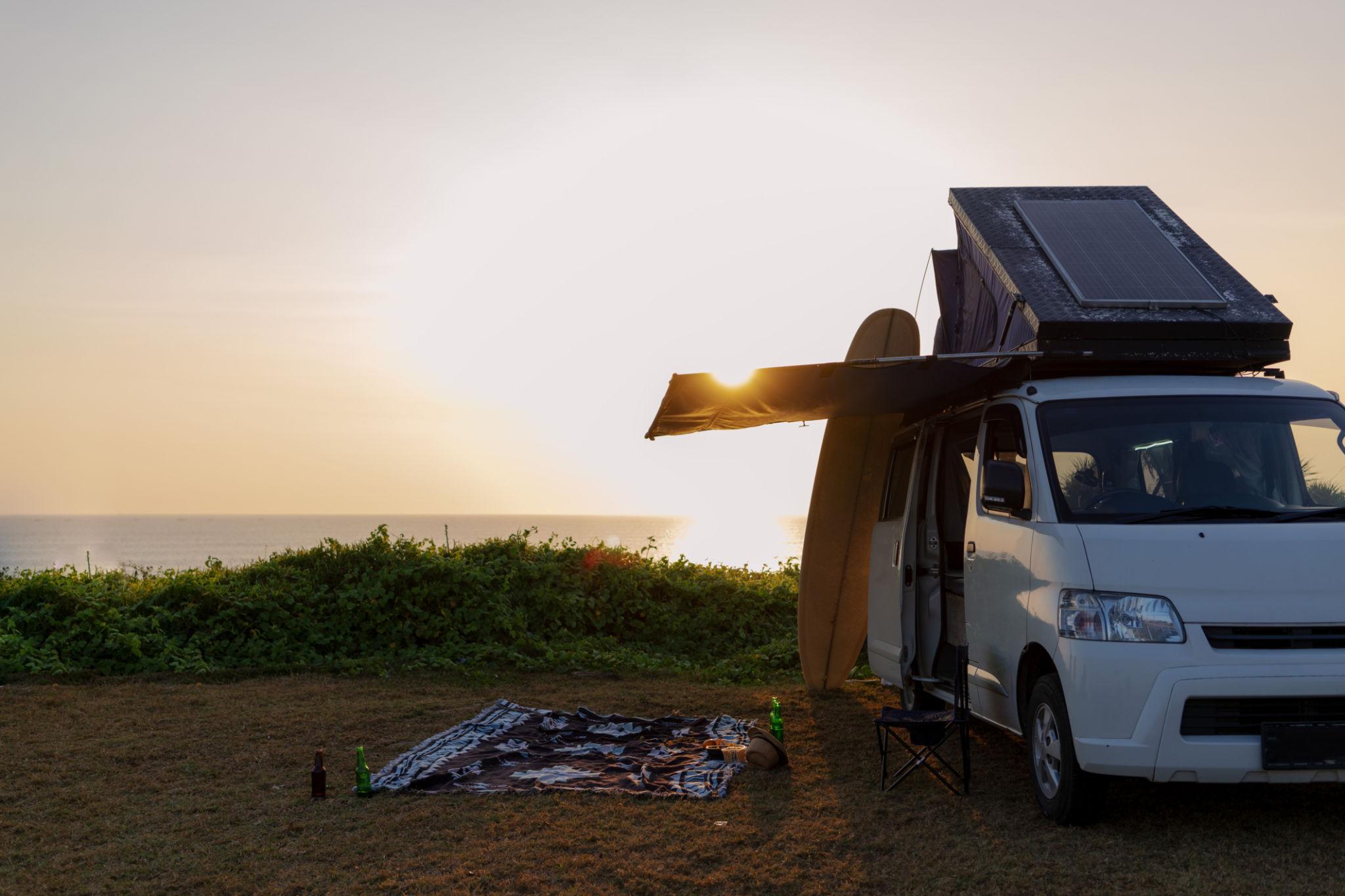
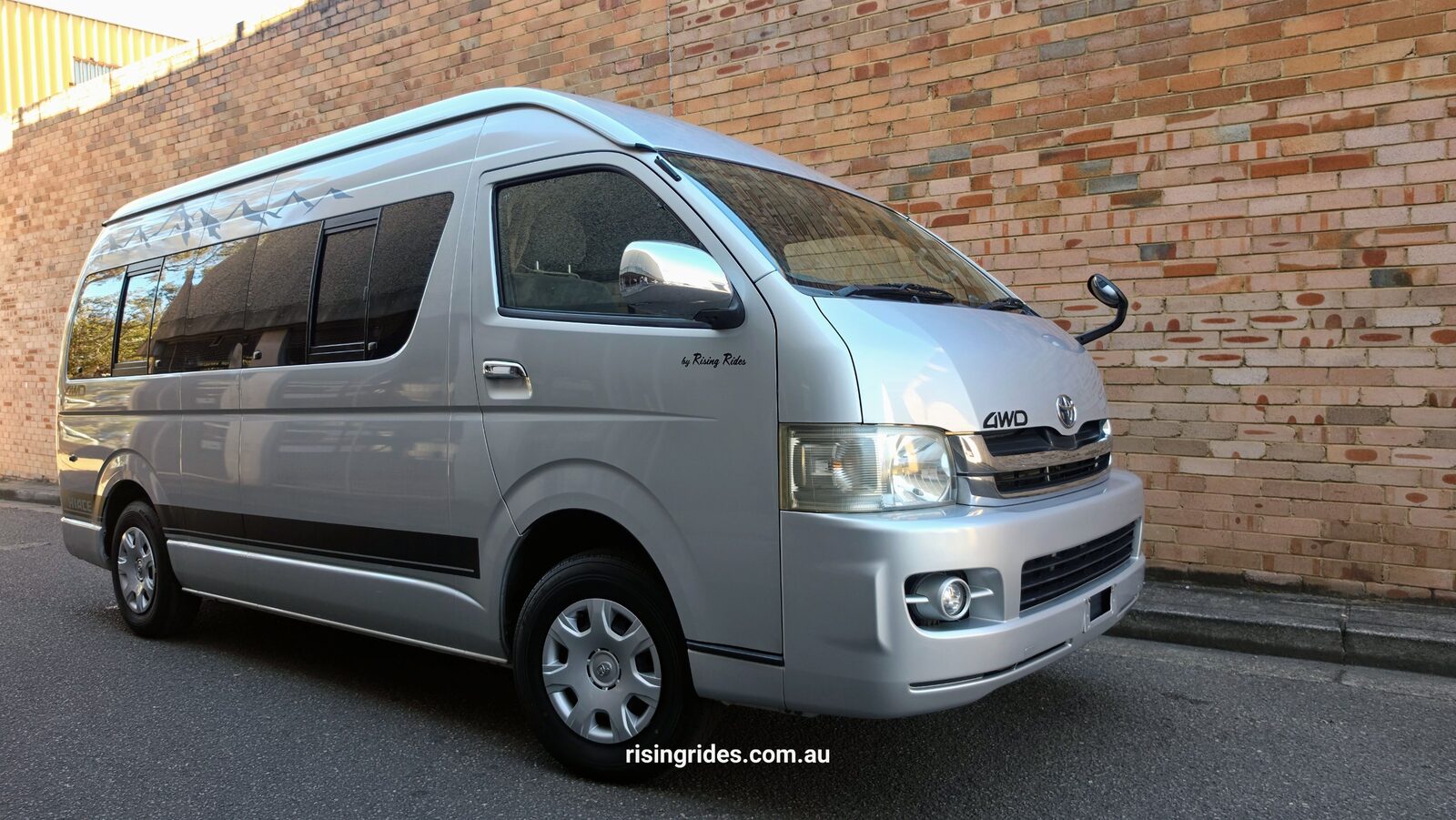
Australia is enormous. Truly, impossibly enormous. And the best parts of it — the hidden gorges, the empty beaches, the red-dirt tracks that go on forever — don't have powered campsites waiting at the end. They don't have amenity blocks or laundromats or cafés. What they have is silence, stars, and a landscape that rewards the prepared.
That's exactly why off-grid solar is no longer a luxury add-on for campervans. It's the feature that separates a vehicle that keeps you close to town from one that sets you genuinely free.
At Rising Rides, we've made off-grid solar a core part of our campervan range — because we know the kind of adventurers who buy from us. They're not looking for a weekend van that needs a power hook-up by Sunday night. They're looking for something that can disappear into the bush for a week and come back with nothing but stories.
This guide covers everything you need to understand about campervan solar packages, from the basics of how the system works to what we offer here at Rising Rides — and why it matters more than most buyers initially realise.
Why Off-Grid Solar Is a Game-Changer for Campervan Travel
Most people think about solar as a way to charge their phone. That's thinking too small.
A well-designed campervan solar setup runs your entire electrical system — your fridge, your lighting, your water pump, your fan, your devices, and potentially even a small inverter for appliances. It does this silently, cleanly, and for free, every single day the sun is out. In Australia, that's most days.
The alternative is relying on:
- Powered campsites, which book out fast, cost money, and are rarely where you actually want to be
- Shore power hookups, which chain you to caravan parks
- Running your engine to charge, which burns fuel and defeats the purpose of camping
- Generator power, which is noisy, smelly, expensive to run, and increasingly banned in national parks
Once you've experienced waking up in a remote spot with full batteries, a cold fridge, and no neighbours — you won't want to camp any other way.
How a Campervan Solar System Works
Before we get into specifications and packages, it helps to understand the core components of any off-grid solar setup:
1. Solar Panels
Mounted on the roof, these capture sunlight and convert it into direct current (DC) electricity. The more panels you have — and the more surface area they cover — the more power you generate. The flat, wide roof of a Toyota HiAce SLWB High Roof is practically purpose-built for maximising solar panel coverage.
2. Solar Charge Controller (MPPT)
This is the brain of the system. A Maximum Power Point Tracking (MPPT) controller manages the flow of power from your panels to your batteries, optimising efficiency and protecting the batteries from overcharging. Quality MPPTs can improve energy harvest by up to 30% compared to cheaper PWM controllers.
3. Leisure Batteries (Deep Cycle)
Your solar panels collect energy during the day; your batteries store it for use at night or on overcast days. For campervans, you need deep cycle batteries — not the standard starter battery in your van. These are designed to discharge slowly and recharge repeatedly. Lithium (LiFePO4) batteries are the premium choice: they're lighter, last longer, and can discharge to a much lower state without damage compared to AGM or lead-acid alternatives.
4. Inverter (Optional but Recommended)
Solar systems produce DC power. Most of your appliances — including phone chargers, laptops, and small kitchen gadgets — run on AC power. An inverter converts DC to AC, opening up a much wider range of devices you can use off-grid.
5. Wiring, Fusing & Distribution Board
The unsexy but essential stuff. Proper wiring gauge, fusing at every connection point, and a clean distribution board keep the whole system safe, manageable, and easy to troubleshoot.
What to Look for in a Quality Campervan Solar Package
Not all solar setups are created equal. Here's what separates a proper off-grid system from a cobbled-together weekend fix.
Panel Wattage
For serious off-grid capability, you want a minimum of 200W of solar panel capacity, though 400W or more is ideal for a full-time travel setup. At Rising Rides, our upgraded solar packages are built with this in mind — not a token panel bolted on as an afterthought.
Battery Capacity
Think in amp-hours (Ah). A basic setup might have a single 100Ah AGM battery. An upgraded system built for extended off-grid stays should have 200Ah or more, ideally in lithium. Lithium batteries are more expensive upfront but offer significantly better performance, longer lifespan (often 10+ years vs 3–5 for AGM), and considerably less weight.
MPPT vs PWM Controllers
Always opt for MPPT. The efficiency gains are real and meaningful, especially in variable light conditions — which is every real-world camping situation.
System Integration
A well-installed system integrates your solar input, your battery bank, your 240V shore power input (for when you do visit a powered site), and potentially a DC-DC charger that tops up your leisure batteries while you drive. The whole thing should talk to a single monitor so you always know your state of charge, daily generation, and consumption.
Professional Installation
DIY solar is possible for those with electrical knowledge, but a poorly wired system is a fire risk. More importantly, a properly engineered and installed system will perform significantly better and last far longer. At Rising Rides, our solar packages are installed to a professional standard — not wired in by whoever had the van before.
The Rising Rides Off-Grid Solar Package
We don't just sell campervans. We sell campervans that are genuinely ready to go off-grid.
Our upgraded solar packages are designed around one question: how long do you want to be out there? The answer, for most of our buyers, is: as long as possible.
Here's what our upgraded campervan solar setup delivers:
- High-output solar panels mounted to maximise collection on the HiAce's wide roof platform
- Quality MPPT charge controller for efficient power harvest across varying light conditions
- Deep cycle battery bank sized for extended off-grid capability — not just a day or two
- Clean, professional installation integrated with the van's existing electrical system
- Battery monitoring so you can manage your power intelligently rather than guessing
- 240V charging input for when you do choose to plug in at a powered site
The result is a van that can run a compressor fridge, lighting, fans, device charging, and moderate appliance use for days on end without needing to move, plug in, or run the engine.
Which Campervans at Rising Rides Come Solar-Ready?
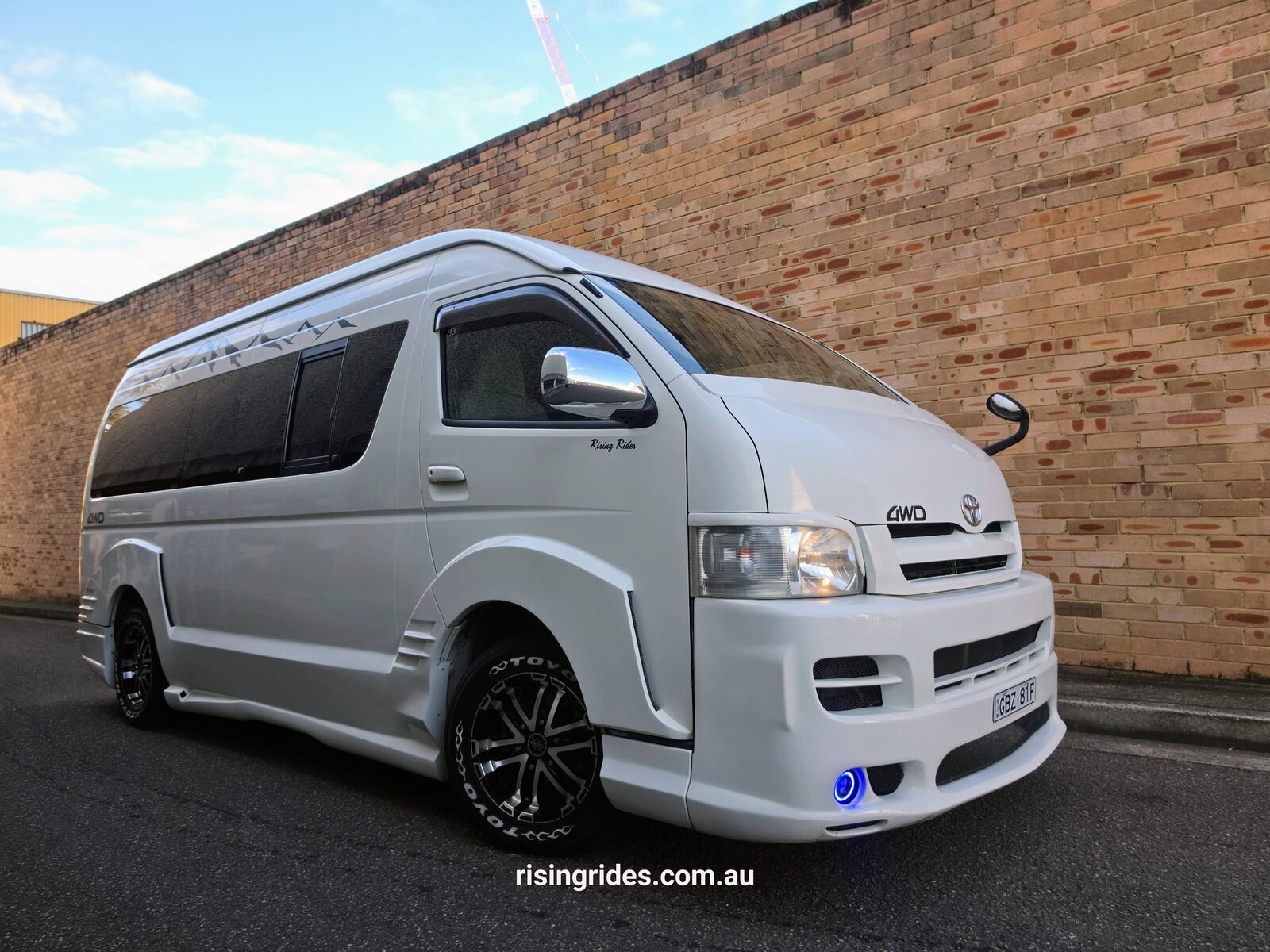
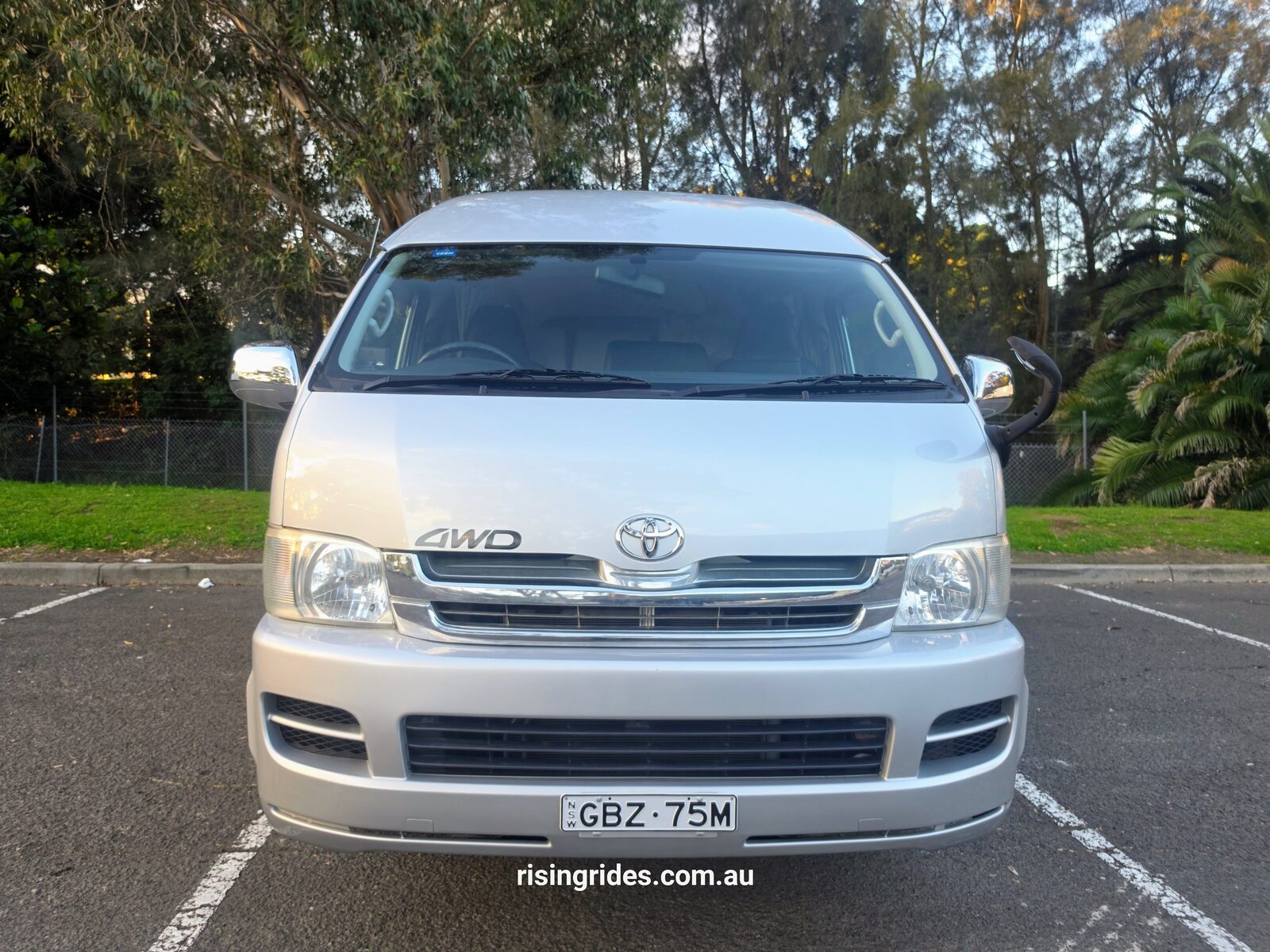
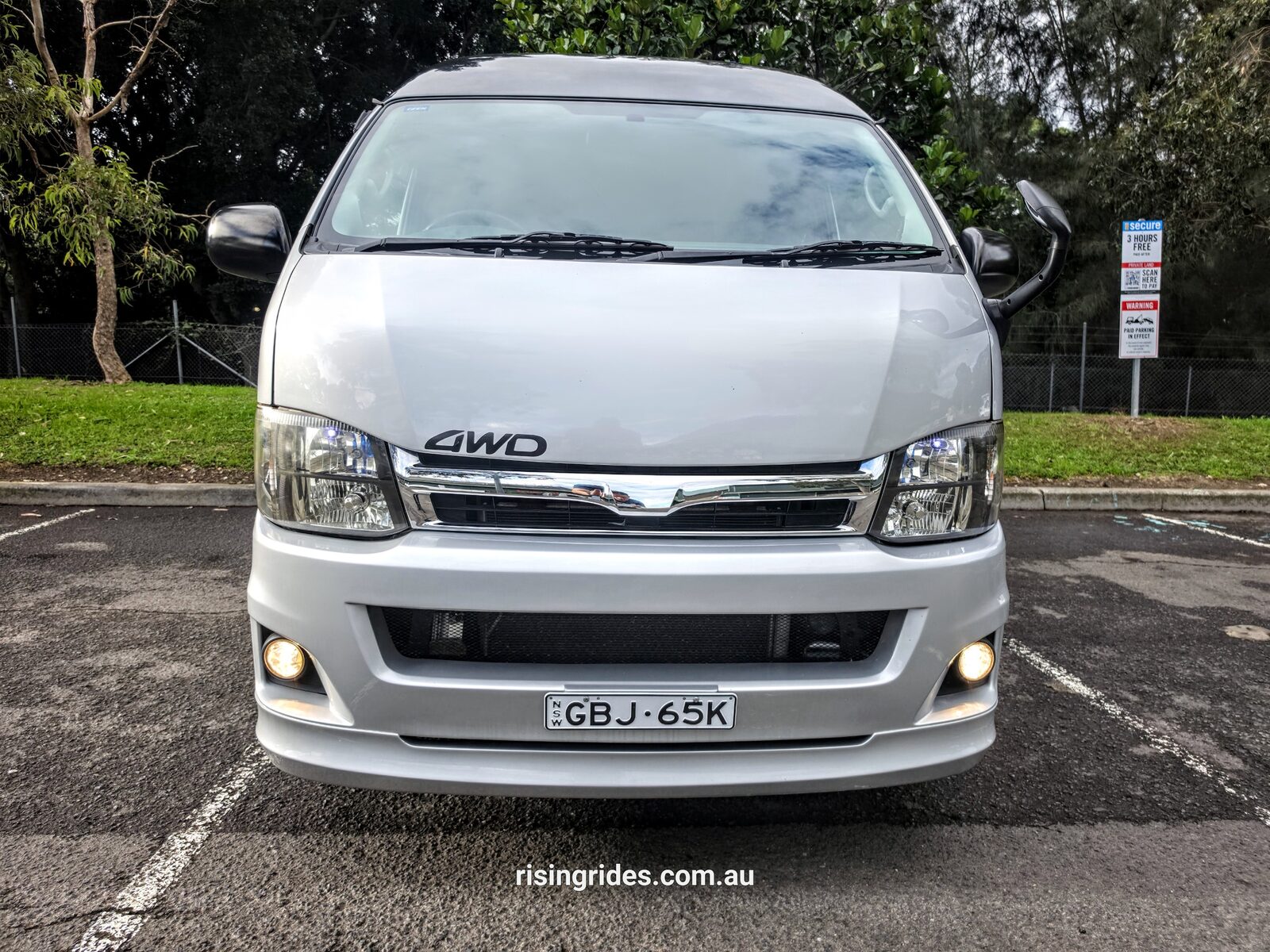
Our solar packages are available across our campervan stock in Sydney, with a particular focus on our Toyota HiAce 4WD SLWB High Roof conversions. Here's why the HiAce is the ideal platform:
- Roof area: The Super Long Wheelbase High Roof configuration gives you more usable roof real estate than almost any other van in this class — meaning more panels, meaning more power
- Reliability: The 2.8L 1GD-FTV diesel engine (the same unit found in the Hilux and Land Cruiser Prado) means the van itself won't let you down in remote locations
- 4WD capability: Getting to the best off-grid spots often means leaving the bitumen. As we explain in our Toyota HiAce 4WD adventure van guide, a 4WD HiAce can handle it
- Electrical platform: The HiAce's chassis and cabin layout make for clean, logical solar installation without the compromises you get in smaller vans
Whether you're after a pre-converted campervan with solar already fitted, or a base 4WD HiAce you plan to build out yourself, we can advise on what works. If you're planning your own build, our Toyota HiAce camper conversion guide is a great place to start.
Solar-Ready Campervans Currently In Stock
Here are some of our featured campervans that include or are ideal for an off-grid solar setup:
- 2016 Toyota HiAce 4WD High Roof — Off-Grid Solar Camper | 97K KM — Our modular campervan with 10+ layout options, already fitted with off-grid solar. Low kilometres for a 2016.
- 2018 Toyota HiAce 4WD SuperLWB Camper — 2.8 Diesel Auto — A proper off-grid 4WD build on the GDH platform. Winter-ready and built for long-range travel.
- 2019 Toyota HiAce GL SLWB 4WD High Roof — Low 49K kilometres on the GDH226K platform, loaded with storage and ready for solar upgrade.
- 2006 Toyota HiAce SLWB 4WD — Toy-Factory Build | Off-Grid Ready — A professionally converted camper from Japan's renowned Toy-Factory, off-grid ready from the ground up.
→ Browse our full campervan stock
Off-Grid Solar for Campervans: Frequently Asked Questions
How much solar do I actually need?
It depends entirely on your usage. The biggest draws in a typical campervan are the compressor fridge (running 24/7), lighting, and device charging. A 200Ah lithium battery bank with 300–400W of solar can comfortably handle this for extended periods. If you're running an inverter for a coffee machine or laptop regularly, size up.
Will solar work on cloudy days?
Yes — panels still generate power in diffuse light, just at reduced output. A well-sized system with sufficient battery capacity provides a buffer for a run of overcast days. Australia's climate means this is rarely a prolonged issue.
Can I add solar to a HiAce I buy from you without solar?
Absolutely. We're happy to discuss what a solar installation would look like on any van in our stock. Many buyers choose a base vehicle and upgrade the solar setup to their exact specifications. If you're unsure which base van to start with, read our guide on choosing between LWB, SLWB and High Roof HiAce.
How long do the batteries last?
Lithium (LiFePO4) batteries typically last 2,000–4,000 charge cycles before significant capacity degradation — which translates to 10+ years of regular use. AGM batteries average 300–500 cycles. The upfront cost difference is real; so is the long-term value.
Is the solar system covered under warranty?
All vehicles at Rising Rides come with our premium mechanical and electrical warranty, valid Australia-wide. We're upfront about what's covered — no fine print designed to avoid paying out.
Which HiAce model is best for solar?
The GDH226K is our top pick for serious off-grid builds — the SLWB High Roof gives you maximum roof panel space, maximum living space, and the modern 2.8L diesel for long-range reliability. Read the full breakdown in our Toyota HiAce review.
Why Solar Changes the Way You Travel
This is the thing that's hard to explain until you've lived it.
When your power is free and abundant, you stop making compromises. You stop choosing campsites based on whether they have a power point. You stop rationing your fridge temperature or skipping the morning coffee to save battery. You stop planning your route around where you can top up.
You just go.
The Flinders Ranges. Cape York. The Kimberley. The Nullarbor. The Gibb River Road. All of these become genuinely accessible when your van doesn't need to plug in to keep going. And if you're also searching for a motorhome or a larger self-contained setup, the same solar principles apply — scale up the panels and batteries to match the bigger living space.
That's the freedom a properly set-up off-grid solar campervan delivers. And that's why we've made it a priority — not a premium add-on — across our campervan range.
Ready to Go Further, Stay Longer?
At Rising Rides, we're a boutique dealership based in Lidcombe, Western Sydney. We source our vehicles directly from Japanese auctions — USS, TAA, and HAA — which means you're getting vans with known histories, genuine odometers, and the kind of build quality that Japanese domestic market buyers expect.
Every vehicle goes through a thorough mechanical inspection before it's offered for sale. What we know about a vehicle is exactly what you'll know — no spin, no hidden history, no surprises.
If you're searching for campervans for sale in Sydney with a genuine off-grid solar setup — not a token panel and a hope — we'd love to hear from you.
→ Browse our current campervan stock → Contact us directly → Learn more about Rising Rides
Related Reading
- Toyota HiAce 4WD: The Ultimate Adventure Van for Australia
- Toyota HiAce GDH226K 4WD Campervan: Complete Guide
- LWB vs SLWB vs High Roof HiAce — Which Model Should You Buy?
- Toyota HiAce Camper Conversion: Step-by-Step Guide
- Motorhomes for Sale in Sydney: Your Buying Guide
Rising Rides Global | 16A Adderley Street, Lidcombe NSW 2141 | 0478 901 002 | Lic No: MD095543 Specialising in imported Japanese 4WD HiAce vans, campervans & motorhomes