
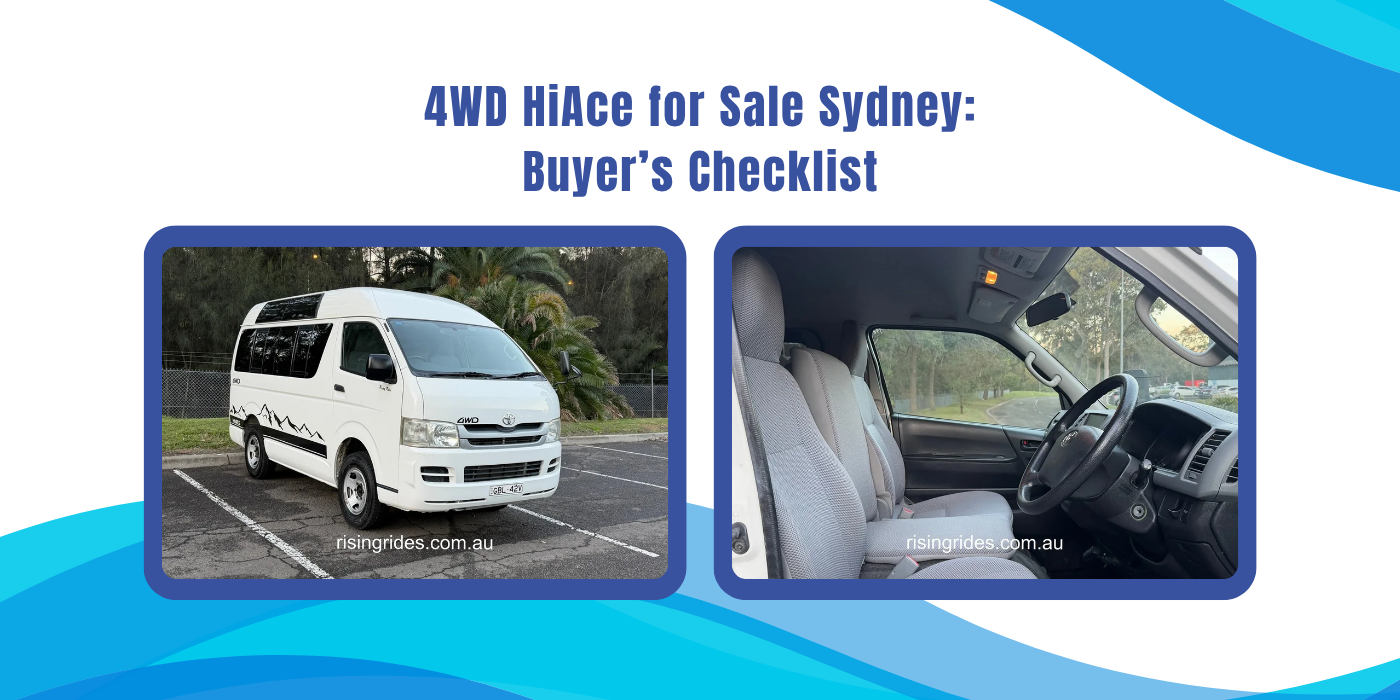
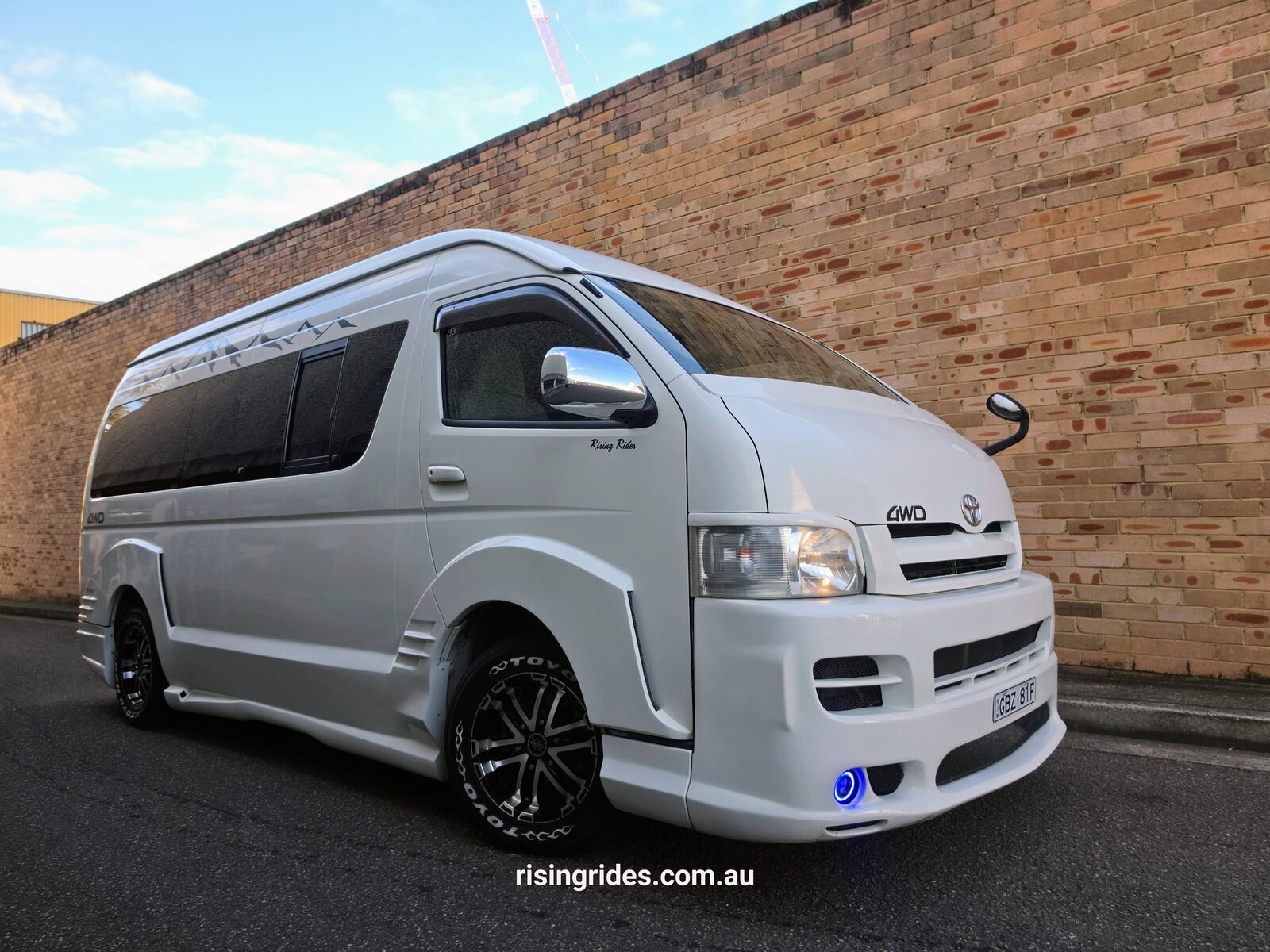
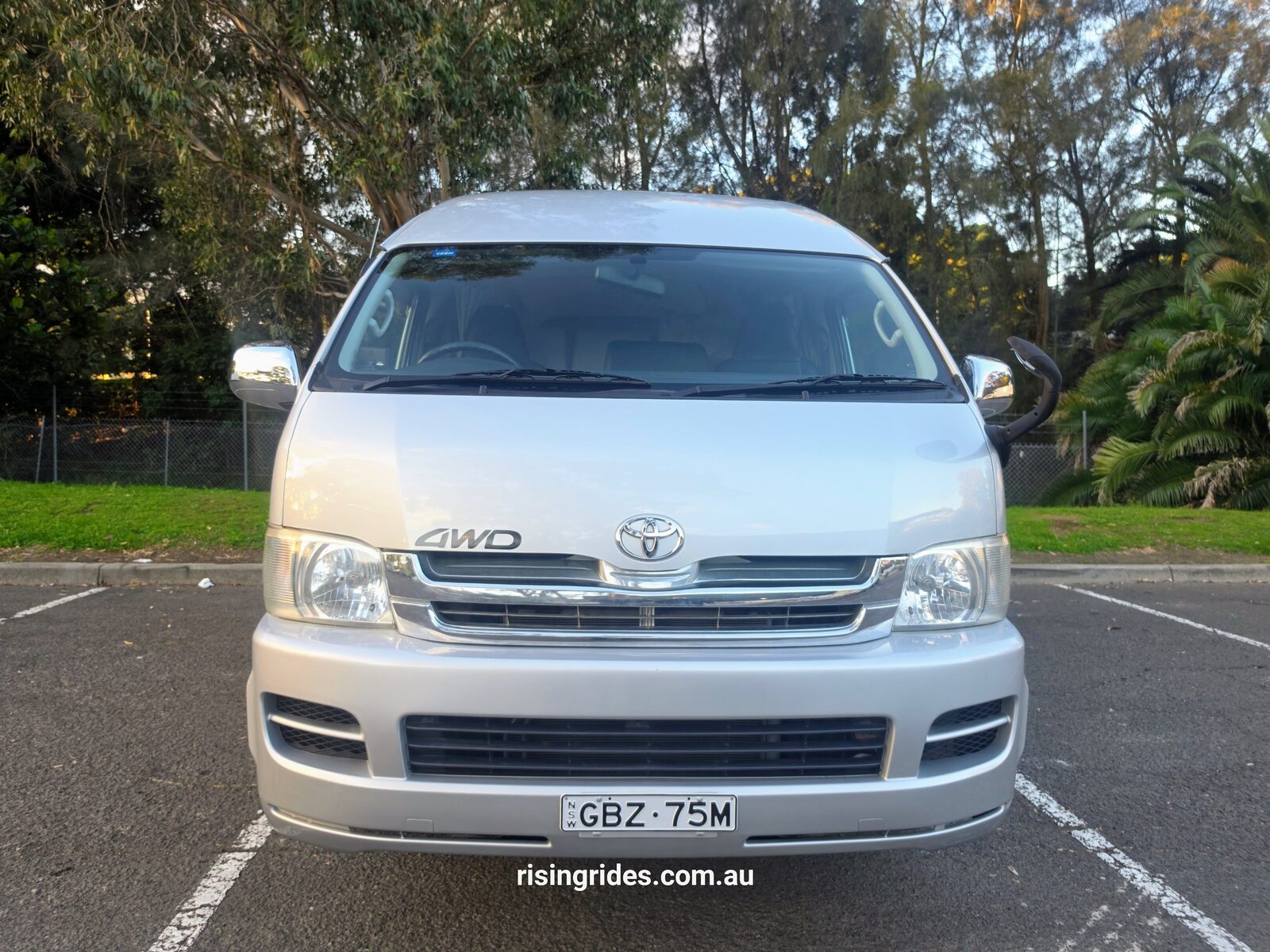
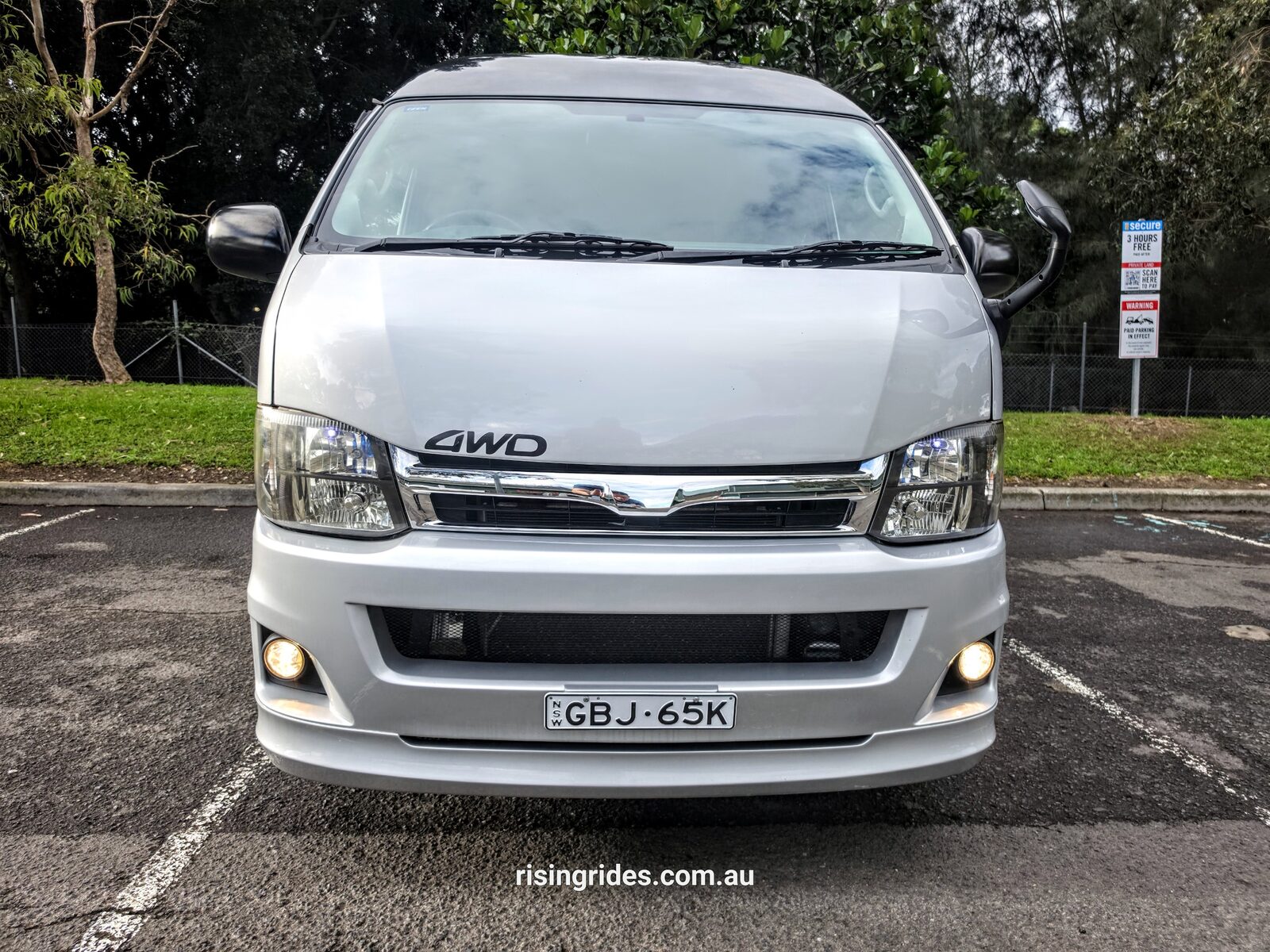
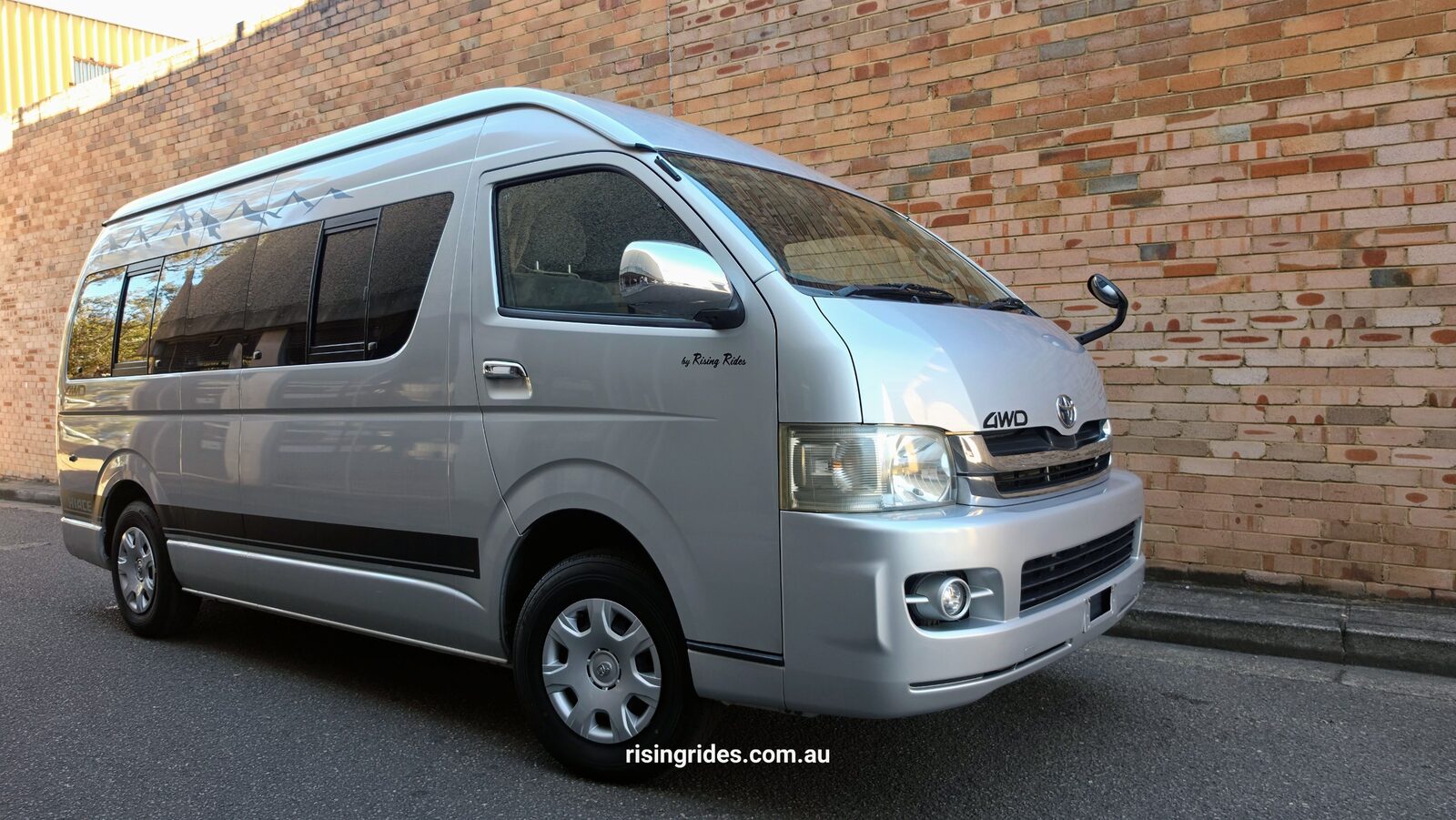
Whether you're buying from Rising Rides or anywhere else — use this checklist. A 4WD HiAce campervan is a significant investment, and the difference between a great buy and a costly mistake comes down to a few specific things most buyers overlook. Here's the 10-point inspection guide our team runs on every vehicle before it goes anywhere near a customer.
1. Check the Compliance Plate
Every legally registered grey import in Australia must have a compliance plate — a small metal or adhesive plate affixed to the vehicle (typically inside the driver's door jamb) showing the compliance date and the Registered Automotive Workshop (RAW) that approved it.
What to look for: The plate should show a date and a compliance number. No compliance plate = not legally complied = potentially unregisterable in some states. Ask to see the compliance certificate.
Red flag: A seller who can't produce the compliance plate or certificate.
2. Run a PPSR Check Before You Inspect
Before you drive anywhere to look at a vehicle, spend $2 at ppsr.gov.au and run the VIN through the Personal Property Securities Register. This confirms:
- No outstanding finance (you could inherit someone else's debt)
- Not reported stolen
- Not a written-off vehicle
Red flag: Any PPSR result that shows finance owing, stolen status, or write-off. Walk away immediately regardless of how good the vehicle looks.
3. Verify the Odometer Against Auction Records
Legitimate importers will have the Japanese auction sheet for every vehicle. The auction sheet records the odometer reading at time of sale in Japan. Cross-reference this against the current odometer. Any significant discrepancy — more than a few thousand kilometres for shipping and compliance — is a serious red flag.
What to ask: "Can I see the Japanese auction sheet for this vehicle?"
Red flag: A seller who doesn't have the auction sheet, or who refuses to provide it.
4. Check the Auction Grade
The auction sheet also shows the grade assigned by the independent assessor at the Japanese auction. As discussed in our grey imports reliability guide, we recommend grade 4 or above for serious buyers.
What to look for: Grade 4, 4.5, or 5. The sheet will also show a diagram of the vehicle with any noted damage marked in specific locations.
Red flag: Grade R or RA (accident/repaired). Grade 3 or below without full disclosure and price reflecting the condition.
5. Inspect the Engine Bay — Specifically These Items
You don't need to be a mechanic to do a meaningful engine bay inspection. Look for:
- Oil condition: Pull the dipstick. Dark black oil isn't necessarily bad — diesel oil darkens quickly. But look for a milky, frothy appearance which indicates coolant mixing with oil (head gasket issue). This is a serious and expensive problem.
- Coolant overflow tank: Should be clear or slightly yellow/green. Brown or rusty coolant suggests the cooling system hasn't been maintained.
- Oil leaks: Check around the engine block, rocker cover, and sump. Minor seepage is common on older vehicles. Active dripping is a problem.
- Belts and hoses: Should be intact with no cracking. On diesel models, the timing chain (not belt) is not visible but ask about service history.
6. Check the 4WD System Actually Works
This sounds obvious but many buyers skip it. Before purchasing, ask to drive the vehicle and specifically engage 4WD High and 4WD Low.
What to look for: The transfer case lever (or button on newer models) should engage without grinding. You should feel the characteristic 4WD engagement. The 4WD indicator light should illuminate on the dash.
Red flag: Difficulty engaging 4WD, grinding noises, or a seller who is reluctant to demonstrate the 4WD system working.
7. Test the Diesel Particulate Filter (DPF) — Diesel Models
On diesel HiAces, particularly older 1KD-FTV models, the DPF can become blocked if the vehicle has been driven predominantly on short trips without regeneration cycles. A blocked DPF can cost $1,500–$4,000 to clean or replace.
What to ask: Has the DPF been cleaned or replaced? Is there any DPF warning light history?
What to look for on a test drive: White smoke on startup (normal for diesel, brief), excessive black smoke under load (potential issue), any warning lights on the dash.
8. Inspect the Camper Conversion Quality
If you're buying a converted campervan rather than a bare van, the quality of the conversion matters enormously for long-term reliability and livability.
What to check:
- Fixed bed vs fold-down: Fixed beds are more practical for regular use. Check that the mattress is clean and dry (mould under mattresses is common in neglected campervans).
- 12V electrics: Ask to see the battery, solar panel, and inverter. Test the fridge, lights, and power outlets. Check all wiring is secured and not exposed.
- Kitchen fitout: Run the water pump. Check that the sink drains properly. If there's a gas cooktop, check all burners light.
- Water tank: Ask about tank capacity and when it was last cleaned.
- Cabinetry: Open and close everything. Check for water damage around windows and roof vents (a common source of leaks in older conversions).
9. Verify the Roadworthy Certificate
In NSW, a vehicle must have a current roadworthy certificate (Blue Slip or Pink Slip) to be registered in the buyer's name. Make sure the certificate is current and issued by a licensed inspection station — not self-certified by the seller.
What to ask: "Can I see the roadworthy certificate? Who issued it?"
At Rising Rides: Every vehicle we sell has a current NSW roadworthy certificate issued by a licensed third-party inspection station. It's non-negotiable for us.
10. Ask About the Warranty
Not all used vehicle warranties are equal. A genuine warranty from a licensed provider (like AWN) is fundamentally different from a dealer's verbal "we'll look after you" promise. Ask for the warranty product disclosure statement and check:
- Who underwrites the warranty (is it a licensed financial services provider?)
- What components are covered
- What the claim process is and how quickly claims are authorised
- Whether the warranty is Australia-wide or limited to the selling dealer's workshop
Why Buy From a Specialist?
Every single item on this checklist is something we've already done before a vehicle arrives on our yard. We source from USS, TAA, and HAA — the three largest Japanese auction houses. We check auction grades. We run PPSR. We provide roadworthy certificates and AWN warranties. We fit Apple CarPlay and reverse cameras as standard.
You're welcome to bring an independent mechanic to inspect any vehicle on our yard — we encourage it. Confident buyers make happy customers, and happy customers come back and send their friends.
Current stock at risingrides.com.au/cars — or call us on 0478 901 002. We're based at 16A Adderley Street East, Lidcombe NSW 2141.