
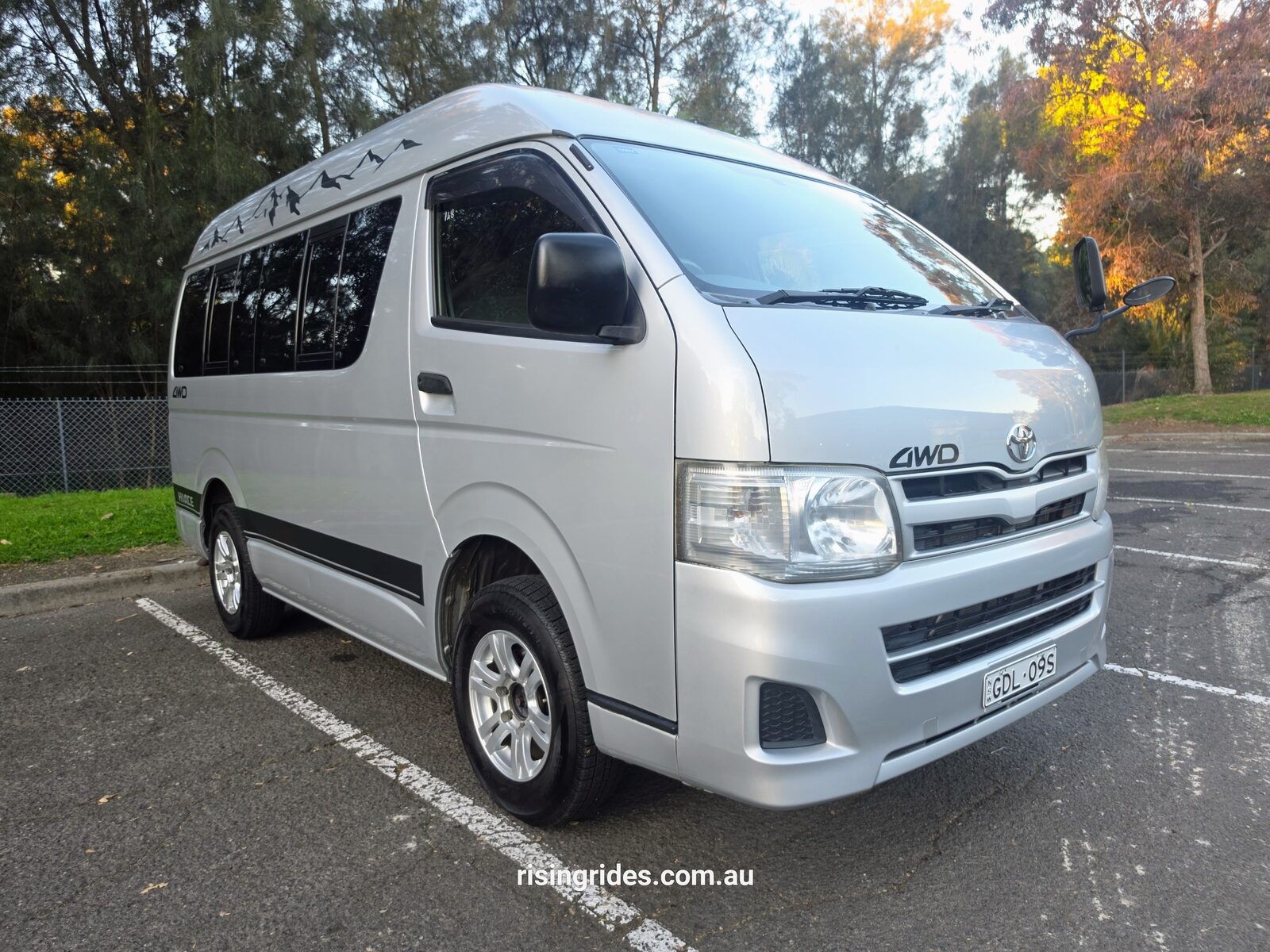
Toyota HiAce vs. Nissan Caravan: Real-World Stats
Choosing the ultimate work van means weighing more than surface features—technical capability, running costs, safety, and long-term dependability matter most. In Australia, the Toyota HiAce and Nissan Caravan are the top rivals for tradies, couriers, and businesses. Here’s a detailed, statistical comparison designed for buyers who value hard data and owner-verified experiences.
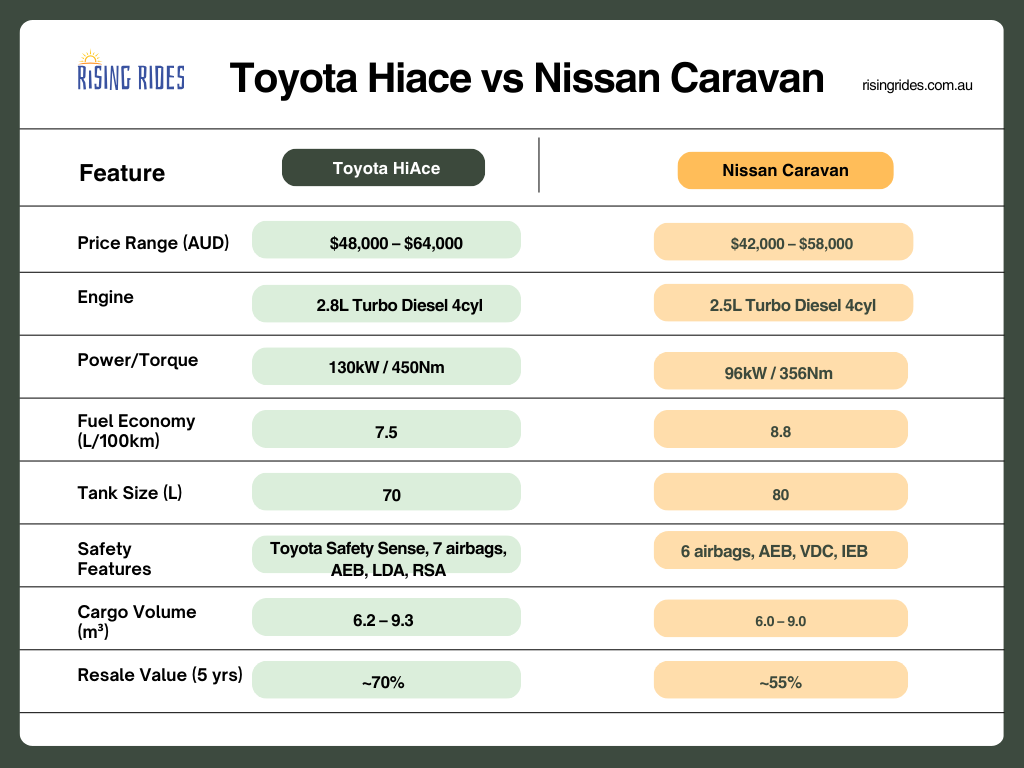
Key Metrics Comparison Chart
Below is a direct, multi-factor comparison chart highlighting main specs and data points based on current Australian market info and owner surveys.

Technical Review & Owner Analysis
Price Range in Australia
The 2026 Toyota HiAce is priced at a premium, with a starting MSRP around $48,000 and topping out near $64,000 for higher trims. The Nissan Caravan is more budget-friendly, starting at $42,000 and maxing around $58,000. However, the HiAce's legendary resale value (retains roughly 70% after 5 years) means actual cost-of-ownership can be lower over the vehicle’s life span. Caravan loses value slightly faster, averaging 55% retained value after 5 years.
Engine Performance & Reliability
HiAce’s 2.8L turbo-diesel outperforms on power (130kW) and torque (450Nm), translating to smoother acceleration, easier heavy load hauling, and trusted durability—many HiAce engines are known to surpass 500,000km with routine maintenance. The Caravan's 2.5L is robust but generally requires more maintenance after 350,000km, according to surveyed mechanics.
Comfort, Storage, and Interior Features
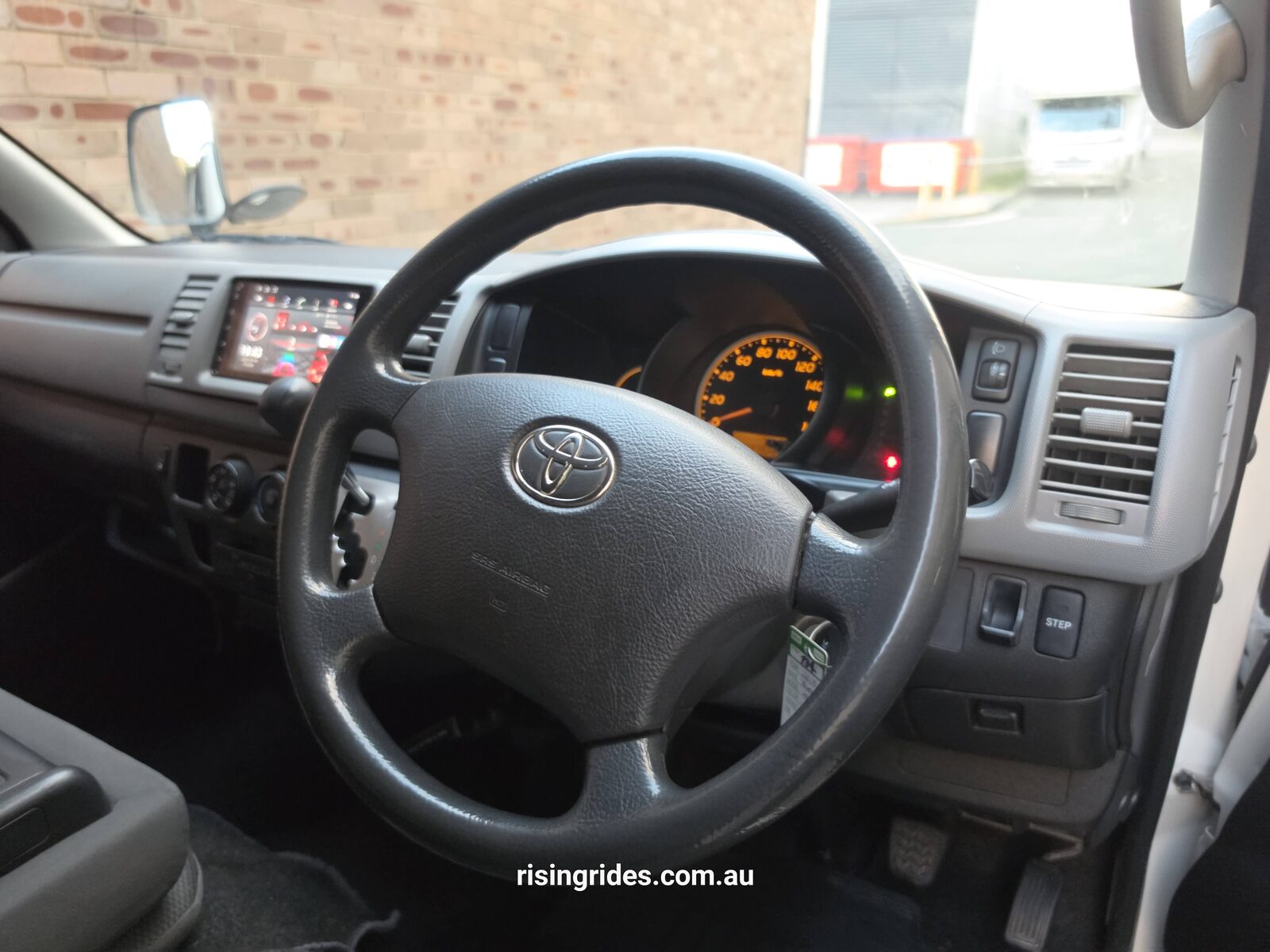
On the inside, the HiAce uses rugged, hard-wearing plastics and upholstery meant to survive harsh Aussie work conditions. However, owners consistently note issues like persistent road noise (measured at about 73 dB at highway speed) and finicky door switches that sometimes hinder cabin lighting. Storage is practical, and cargo volumes go up to 9.3 m³.
The Caravan shines with its well-insulated, quieter cabin (measured at ~70 dB), better A/C output, and more ergonomic dash layout. It also wins on tank capacity—housing a 10L larger (80L) tank, meaning greater range, especially on rural routes.
Safety Features
Safety tech is comprehensive in both vans, but HiAce sets the benchmark with Toyota Safety Sense: auto emergency braking (AEB), lane departure alert (LDA), road sign assist (RSA), and 7 airbags standard. Caravan features 6 airbags, intelligent emergency braking (IEB), and vehicle dynamic control (VDC). Both are ANCAP 5-star safety rated (2020+).
Fuel Economy
HiAce demonstrates real-world efficiency at 7.5L/100km (combined), routinely exceeding 12 km/L in mixed driving—thanks to advanced engine management and lighter construction. Caravan, while offering a larger fuel tank for longer trips, consumes at 8.8L/100km, equating to slightly higher long-term fuel costs.

Owner Experience & Cultural Edge
HiAce drivers form a tight-knit community—once you buy in, you’re part of the “HiAce Club,” complete with the secret wave. Resale value, reliability, and community support make it a legend. Beware: HiAce is among Australia’s most stolen vehicles, so always double-lock and use security gear.
Caravan owners praise the van for comfort, quieter long drives, and better factory air-conditioning, making it the preferred choice for users prioritizing cabin climate and road noise on long routes.
Verdict
- Choose HiAce if you value:
- Maximum reliability and engine longevity
- Lower fuel costs over time
- Higher resale value
- Strong owner community and proven track record
- Choose Caravan if you prefer:
- Lower upfront investment
- Quieter, more comfortable cabin
- Better air-conditioning
- Fewer fuel stops (larger tank)
Final advice: The HiAce’s mileage and value retention make up for its higher initial cost, ideal for heavy-duty, long-term use. The Caravan delivers on comfort and quietness while still being a solid, dependable workhorse for businesses on a budget.