
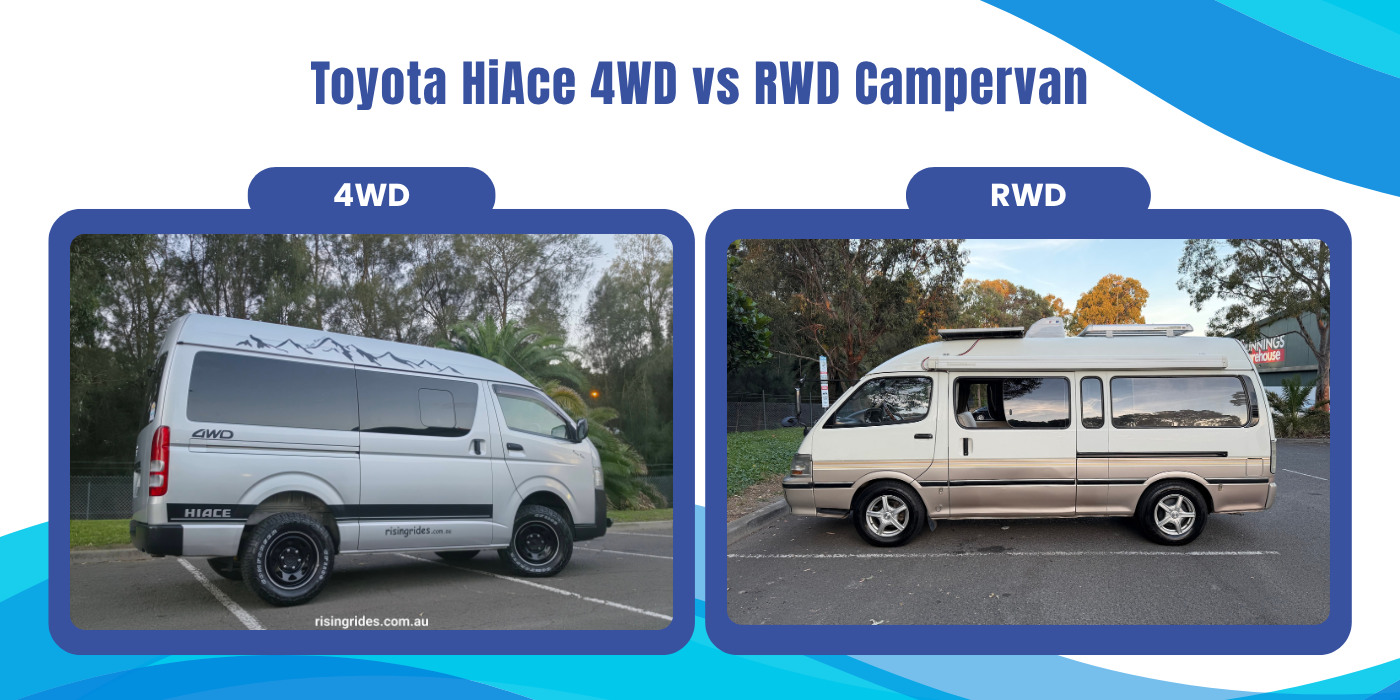
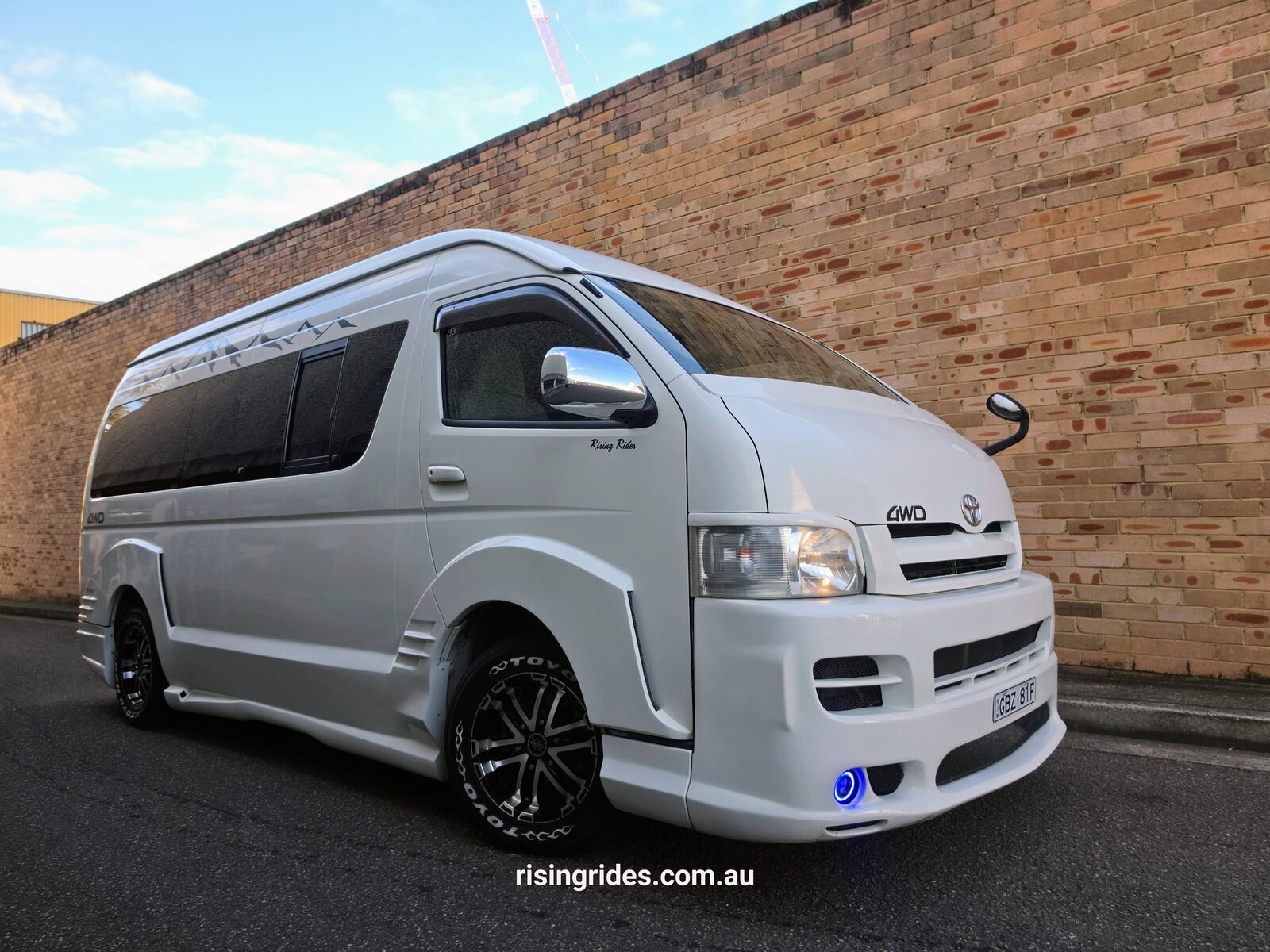
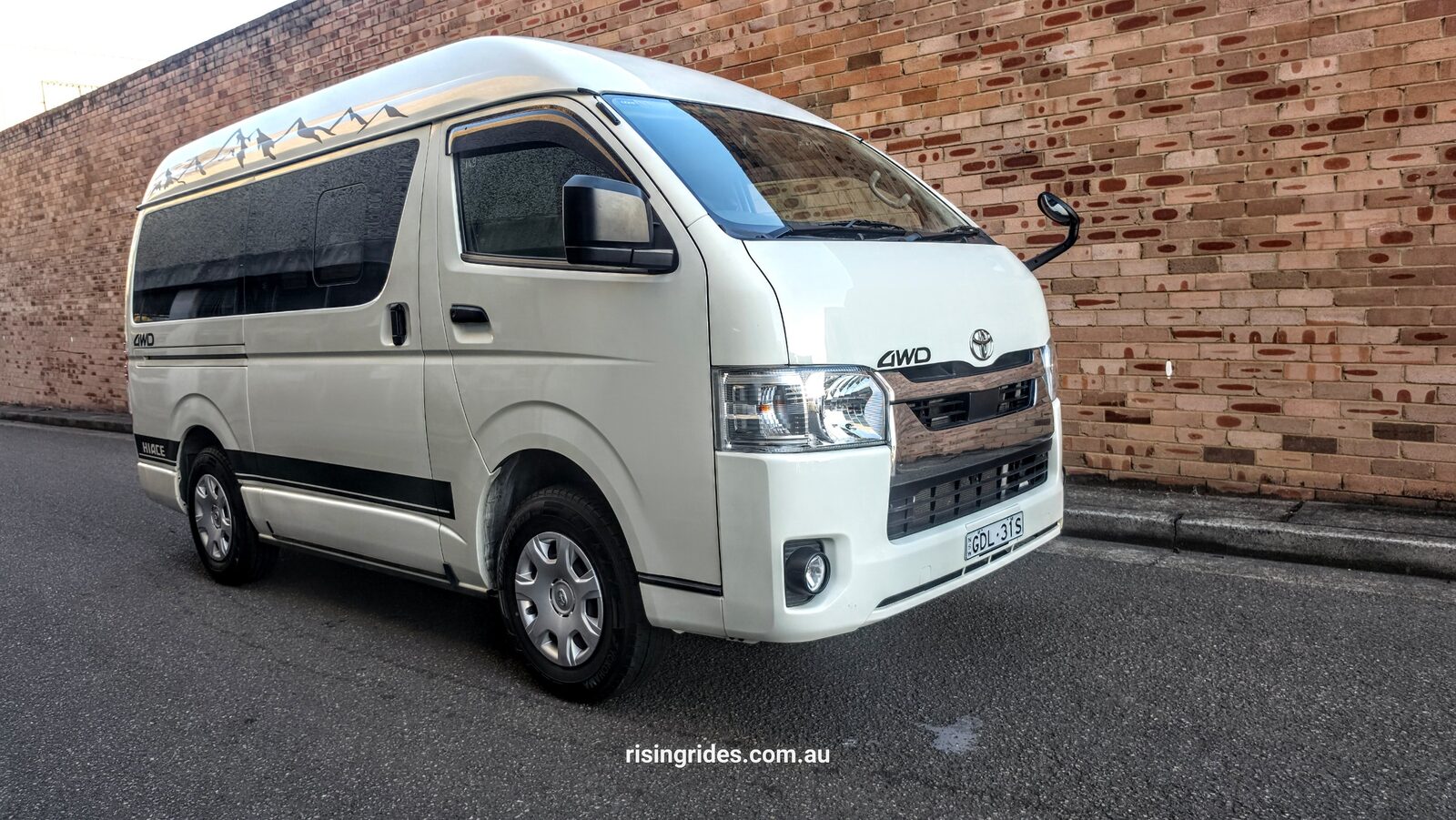
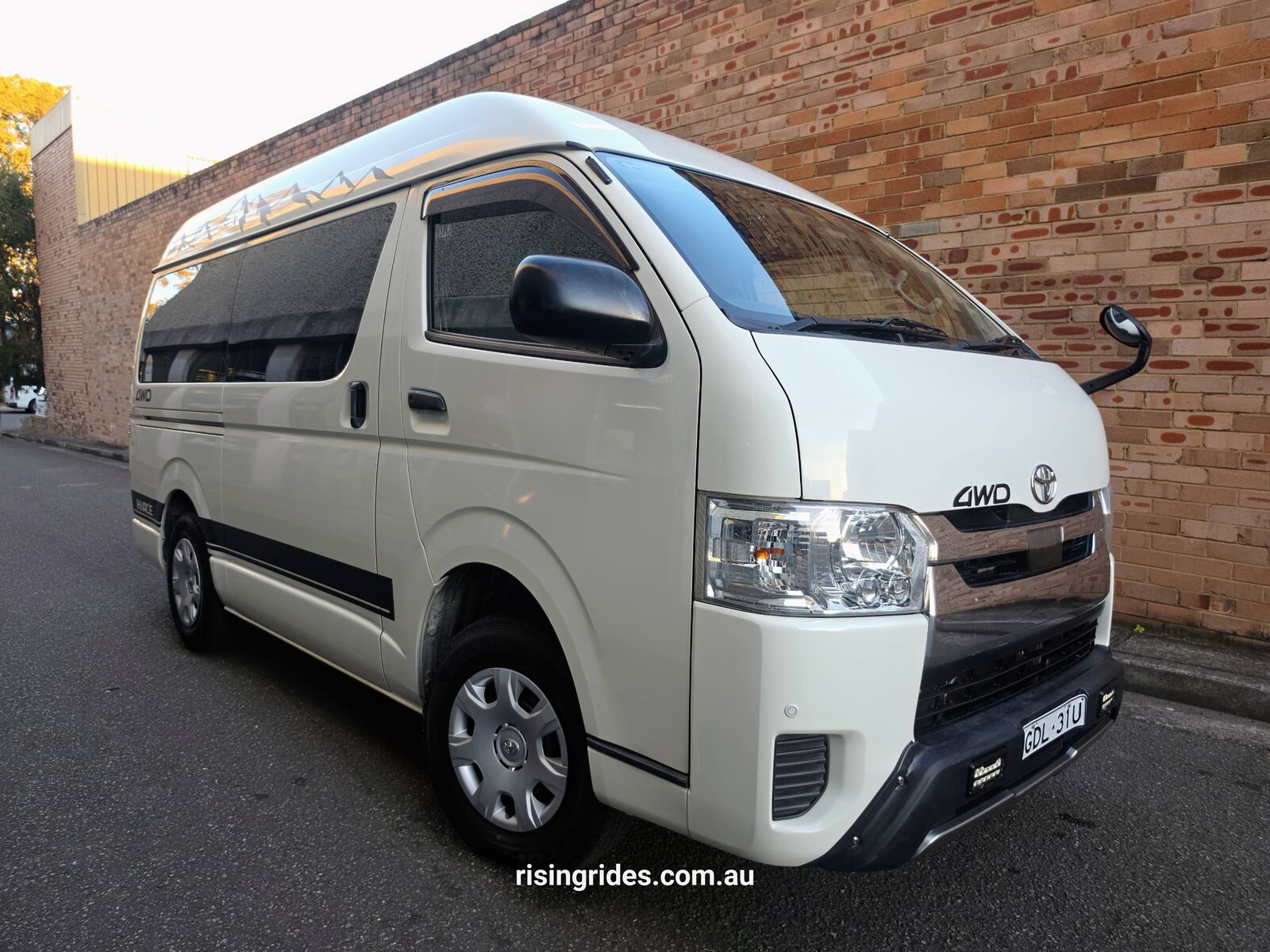
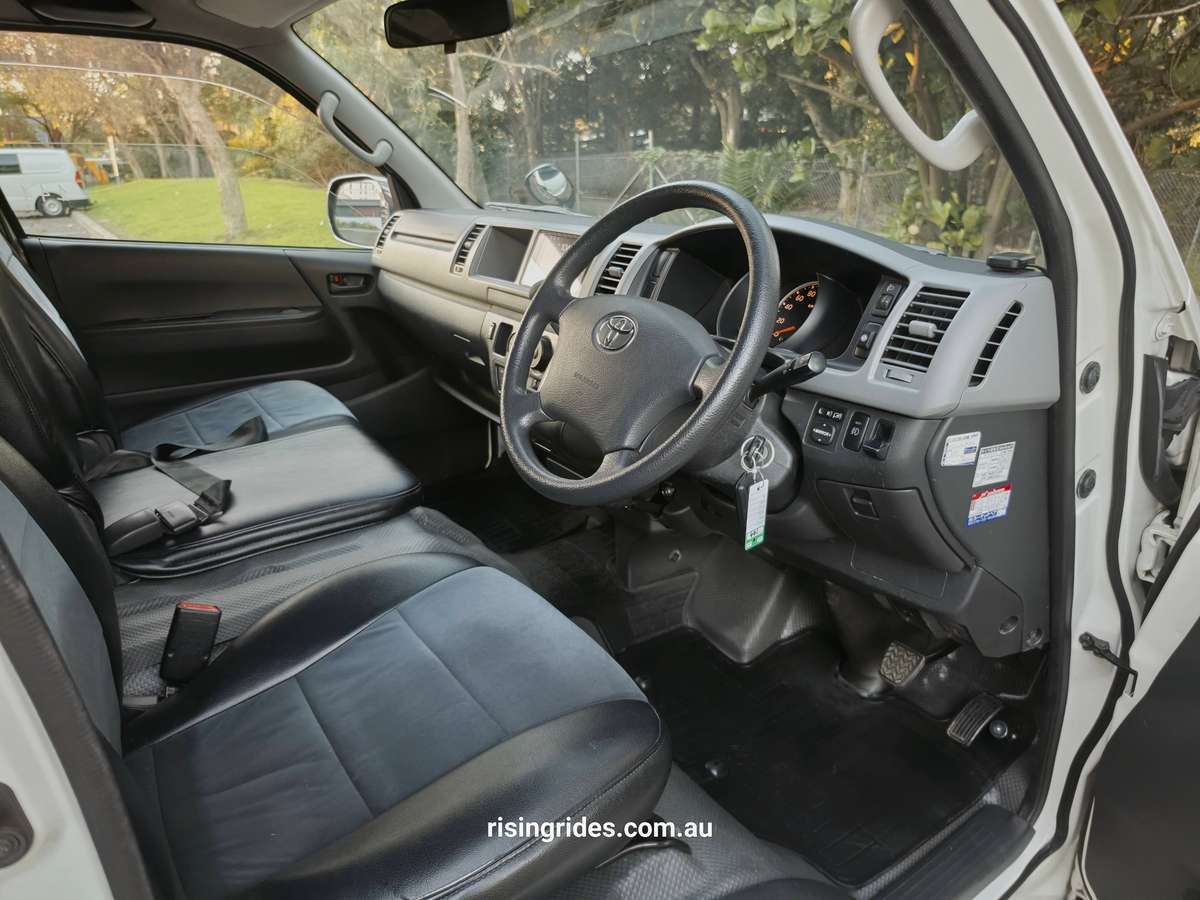
If you've been searching for a used Toyota HiAce campervan for sale in Australia, you've almost certainly come across two options: the classic Rear-Wheel Drive (RWD) and the more capable Four-Wheel Drive (4WD). Both are legendary. Both have their loyal fans. And both are available on Australian roads in impressive numbers.
But which one is right for you?
This guide breaks down everything you need to know — from how each drivetrain performs on Australian terrain, to pricing, fuel costs, maintenance, and real-world use cases. Whether you're planning a lap around Australia, weekend escapes into the bush, or looking for an affordable campervan to start your van life journey, we've got you covered.
Quick Answer: If you stick to sealed roads and campgrounds, the RWD HiAce is a brilliant, affordable choice. If you're heading into the Outback, snow country, or remote 4WD tracks, the 4WD model is worth every extra dollar.
Understanding the Toyota HiAce — Australia's Favourite Campervan Base
The Toyota HiAce has been Australia's go-to commercial van and campervan platform for decades. Its reputation for bulletproof reliability, easy serviceability across regional Australia, and strong resale value makes it the top choice for van-lifers, backpackers, and adventure seekers alike.
Why Australians Love the Toyota HiAce
The HiAce ticks every important box for the Australian market:
- Toyota parts and service available in nearly every regional town
- Proven diesel engines that handle the heat and long hauls
- High roof and SLWB variants give excellent liveable space
- Strong community of owners for tips, mods, and advice
- Holds value exceptionally well compared to European vans
The Two Main Variants: RWD vs 4WD
The key difference between these two variants goes far beyond just which wheels are driven. The 4WD HiAce (typically the KDH206 model) features a completely different suspension setup, higher ground clearance, and a transfer case — making it a fundamentally different vehicle to drive and live in.
The RWD HiAce (LH and KDH body styles) is the workhorse — lighter, more fuel-efficient, and cheaper to buy and maintain. It's what most campervans on the road are built on.
Toyota HiAce RWD Campervan — The Classic Choice
What Is the RWD HiAce?
The Rear-Wheel Drive HiAce is the standard configuration for most HiAce vans sold in Australia. It sends power to the rear wheels only, using a simpler drivetrain that's lighter and less complex than the 4WD system.
Common RWD models include the LH103, LH113, LH123 (older diesel), and the newer KDH201/KDH221 series. These vans are the backbone of the Australian used campervan market.
Key Specs — RWD HiAce
- Drivetrain: Rear-Wheel Drive (RWD)
- Typical Engine: 2.5L 2KD or 3.0L 1KD Turbo Diesel
- Ground Clearance: ~170mm
- Payload: Up to 1,050 kg
- Fuel Economy: 9–11L/100km (highway)
- Price Range (used): $18,000 – $45,000 AUD
Pros of the RWD HiAce Campervan
- Lower purchase price — typically $10,000–$20,000 cheaper than 4WD equivalents
- Better fuel economy — lighter drivetrain means less thirst
- Lower maintenance costs — simpler front end, no transfer case to service
- Wider range of available stock — far more RWD campervans on the market
- Slightly better payload capacity due to lower kerb weight
- Easier to find a qualified mechanic in regional areas
Cons of the RWD HiAce Campervan
- Limited traction on wet grass, muddy campsites, or loose gravel
- Not suitable for remote tracks, river crossings, or snowfields
- Lower ground clearance can be an issue on rough dirt roads
- Rear-wheel bias can feel skittish in wet or slippery conditions when unladen
Best For: RWD HiAce Campervan
The RWD is ideal for travellers who stick to sealed roads, national park campgrounds, and caravan parks. If your dream trip is the East Coast highway, Great Ocean Road, or the Red Centre via the Stuart Highway — the RWD HiAce is absolutely all you need.
Toyota HiAce 4WD Campervan — The Off-Road King
What Is the 4WD HiAce?
The 4WD HiAce is a factory-built, part-time four-wheel drive system fitted to selected HiAce LWB and SuperLWB models — primarily the KDH206 High Roof Tourer. This isn't a suspension lift with aftermarket components; Toyota engineered these from the factory with a proper transfer case, front differential, and independent front suspension with significantly more travel than the RWD model.
These vans are highly sought after in Australia, and for good reason.
Key Specs — 4WD HiAce
- Drivetrain: Part-Time 4WD with 2H/4H/4L modes
- Typical Engine: 3.0L 1KD-FTV Turbo Diesel
- Ground Clearance: ~200mm+
- Payload: Up to 950 kg
- Fuel Economy: 11–14L/100km (highway)
- Price Range (used): $35,000 – $75,000 AUD
Pros of the 4WD HiAce Campervan
- Genuine off-road capability — handle rough tracks, river crossings, snowy mountain roads
- Higher ground clearance — tackle corrugated Outback roads with less stress
- Better traction in wet, muddy, or loose terrain
- More confidence on unsealed roads even in 2WD mode
- Exceptional resale value — 4WD HiAces are rare and hold price extremely well
- Opens up remote campsites inaccessible to RWD vehicles
Cons of the 4WD HiAce Campervan
- Higher purchase price — premium of $10,000–$20,000+ over equivalent RWD
- Heavier drivetrain means higher fuel consumption
- More complex mechanics — transfer case, front diff need periodic servicing
- Slightly lower payload due to heavier chassis
- Less stock on the market — harder to find the right spec at the right price
Best For: 4WD HiAce Campervan
If you're planning remote Outback trips, Fraser Island, the Gibb River Road, Snowy Mountains winter travel, or any trip where you'll regularly leave the bitumen — the 4WD HiAce is the right tool for the job. It's also the better long-term investment if you plan to own the van for 5+ years.
Head-to-Head Comparison: 4WD vs RWD HiAce Campervan

Real Cost of Ownership: What You'll Actually Spend
Purchase Price Difference
When comparing equivalent year models in similar condition, the 4WD HiAce typically commands a $10,000 to $20,000 premium over its RWD counterpart. A well-converted 2010–2013 RWD HiAce campervan might sell for $28,000–$35,000, while the same vintage 4WD in comparable condition often fetches $40,000–$55,000.
Fuel Costs Over a Long Trip
Let's say you're doing a 10,000km lap of Australia — a common goal for many van-lifers:
- RWD at 10L/100km: approximately $2,200 in diesel (at $2.20/L)
- 4WD at 13L/100km: approximately $2,860 in diesel (at $2.20/L)
That's roughly $660 extra in fuel over a full lap — a meaningful but manageable difference.
Servicing and Maintenance
Regular servicing costs are similar for both variants — approximately $300–$500 per major service. However, the 4WD adds:
- Transfer case fluid changes (approximately $150–$200 every 40,000km)
- Front differential service (approximately $100–$200 every 40,000km)
- More complex front suspension components that cost more to replace
Over 100,000km, you might spend an additional $1,000–$2,500 on 4WD-specific maintenance.
Resale Value
This is where the 4WD wins decisively. Used 4WD HiAce campervans hold their value remarkably well. A 2010 4WD HiAce in good condition regularly sells for $38,000–$50,000 in Australia today — a vehicle purchased new for around $55,000. RWD models of the same era have depreciated more significantly. If you plan to resell within 3–5 years, the 4WD model may actually cost you less in real terms.
Terrain Guide: Which HiAce for Which Australian Adventure?
East Coast Highway Trips
Verdict: Either will do the job — choose RWD for better value
The Pacific Highway from Sydney to Cairns, the Great Ocean Road in Victoria, or a run down the Eyre Peninsula — these are all sealed road adventures where an RWD HiAce performs beautifully. You don't need 4WD for any of it.
Outback and Remote Australia
Verdict: 4WD strongly recommended
The Gibb River Road in the Kimberley, the Oodnadatta Track in South Australia, the Canning Stock Route in WA — these are genuinely remote, corrugated, and sometimes flooded roads. The extra clearance and traction of the 4WD HiAce can be the difference between completing your trip and being stranded. An RWD can handle many of these in dry conditions, but the margin for error is slim.
Alpine and Snow Country
Verdict: 4WD is a significant advantage
If you're heading to Mount Hotham, Falls Creek, or Thredbo in winter, 4WD with snow chains is the smart choice. Many alpine roads require chains on all vehicles, and the 4WD HiAce handles these conditions with confidence that the RWD simply can't match.
Beach and Coastal Camping
Verdict: RWD is fine for most coastal campgrounds; 4WD for beach driving
Most coastal campgrounds in Australia are accessible by RWD. However, if you're planning to drive on beaches — Fraser Island, Stockton Beach, or Eighty Mile Beach in WA — 4WD is essential. Beach sand is notoriously unforgiving on RWD vehicles.
Who Should Buy Which HiAce Campervan?
Buy the RWD HiAce If You Are...
- A first-time campervan buyer on a tight budget
- Planning to stick mainly to highways and sealed roads
- Doing the classic East Coast or southern Australia circuit
- Looking for the most campervan for your money
- Planning to resell within 1–2 years
- A backpacker doing a working holiday
Buy the 4WD HiAce If You Are...
- Planning remote Outback adventures or the Kimberley region
- Travelling in winter through alpine areas
- Wanting to access beach camping that requires 4WD
- A long-term owner who wants the best resale value
- Comfortable spending more upfront for greater capability
- Frequently camping on rough, unsealed access roads
Not sure which one fits your trip? The team at Rising Rides can help you match the right van to your adventure. Get in touch via WhatsApp or call us on 0478 901 002.
What to Check When Buying a Used HiAce Campervan in Australia
Regardless of whether you choose RWD or 4WD, here are the key things to inspect before handing over your money:
1. Service History and Odometer
A HiAce with a full Toyota service history is worth more and more reliable. Don't be scared of high odometers — a well-serviced 200,000km HiAce with records is often safer than a 120,000km van with no paperwork.
2. Roof, Windows, and Water Leaks
High roof campervans are particularly prone to leaks around the roof seam, skylights, and any custom roof vents. Check for damp carpets, musty smells, and water staining inside the conversion.
3. Conversion Quality
Look at how the campervan conversion has been done. Are the cabinetry fixtures solid? Is the wiring neat and professional? Are the solar panels properly mounted? A sloppy conversion can mean hidden electrical or structural issues down the track.
4. For 4WD Models: Transfer Case and Diffs
Engage 4WD and test all modes (2H, 4H, 4L). Listen for grinding or clunking when switching. Check for diff oil leaks underneath the van. Ask when the transfer case fluid was last changed.
5. Roadworthy Certificate and Registration
In NSW, QLD, VIC, and most other states, a roadworthy certificate is required for the sale of a used vehicle. Make sure this is current and that registration is included or transfer costs are factored into the price.
Conclusion
The Toyota HiAce is one of the best campervan platforms available in Australia, full stop. Whether you choose RWD or 4WD comes down to three core questions:
- Where are you going? Sealed roads vs. remote tracks
- What is your budget? Upfront cost vs. long-term value
- How long do you plan to own it? Short term vs. long-term investment
If your adventures keep you on the highway and in established campgrounds, save your money and buy the best-condition RWD HiAce you can find. You'll have a capable, reliable, and comfortable home on wheels without overspending.
If you're dreaming of the Gibb River Road, Fraser Island, or a winter in the Snowy Mountains, invest in the 4WD HiAce. Its additional capability will open doors — and tracks — that the RWD simply cannot reach.
At Rising Rides, we stock both RWD and 4WD HiAce campervans — all hand-picked, transparently priced, and ready for your Australian adventure. Browse our stock list or get in touch today.