
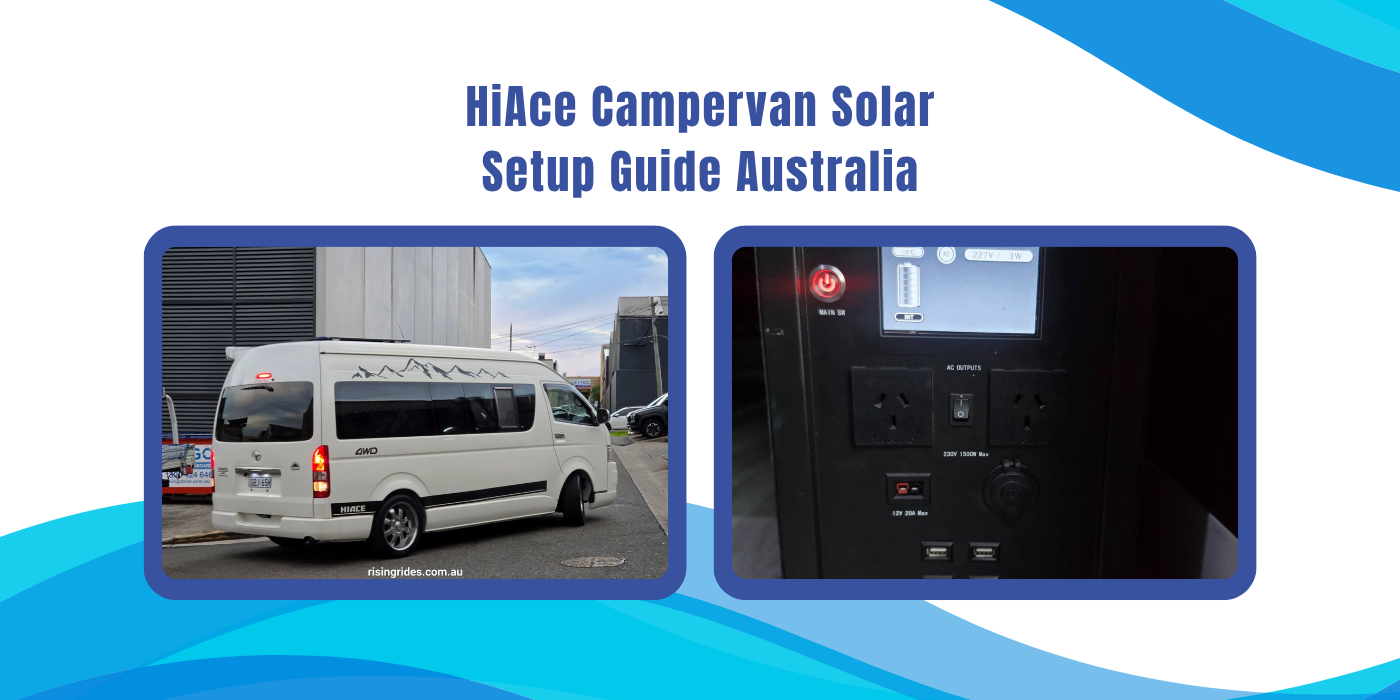
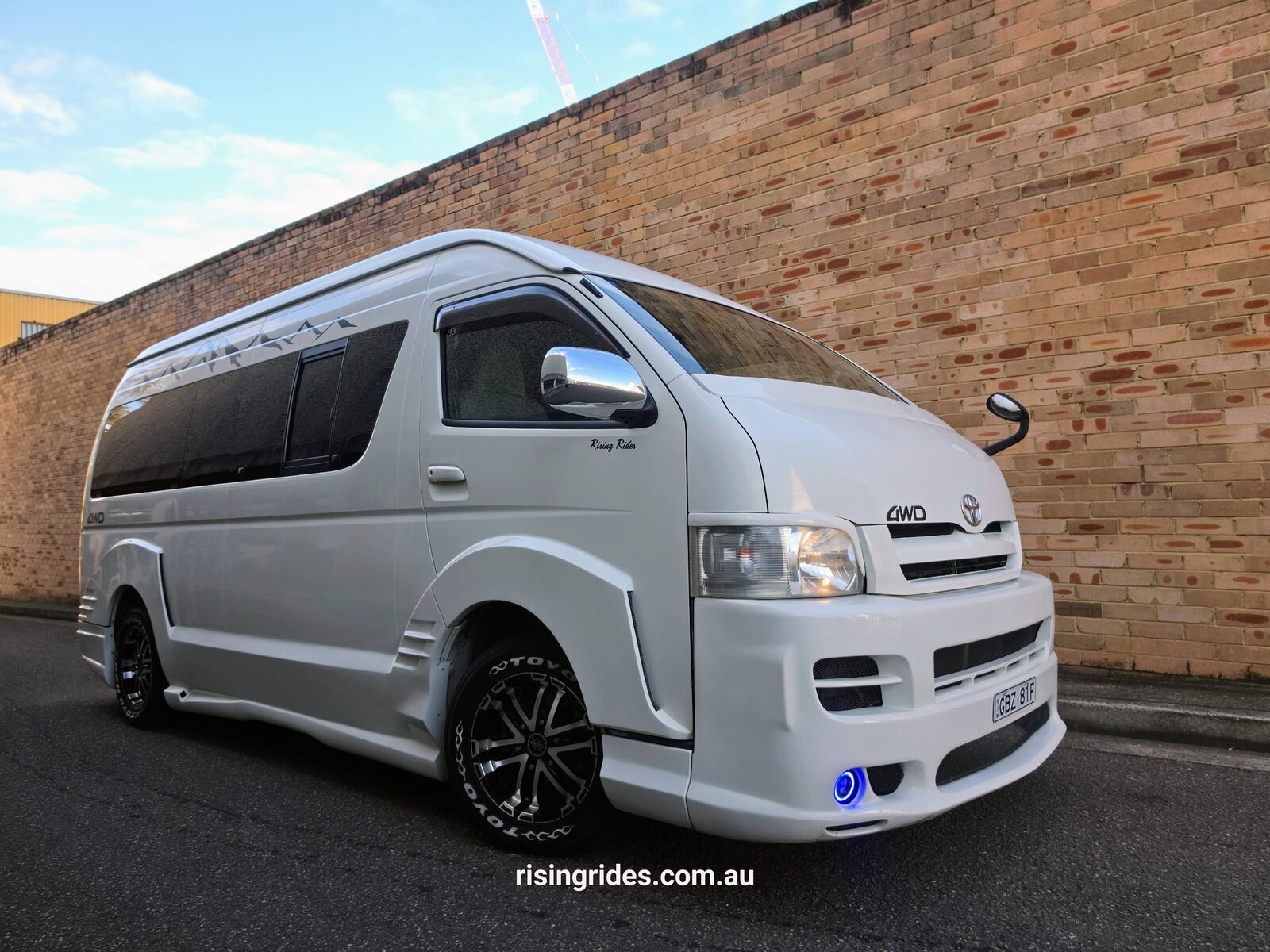
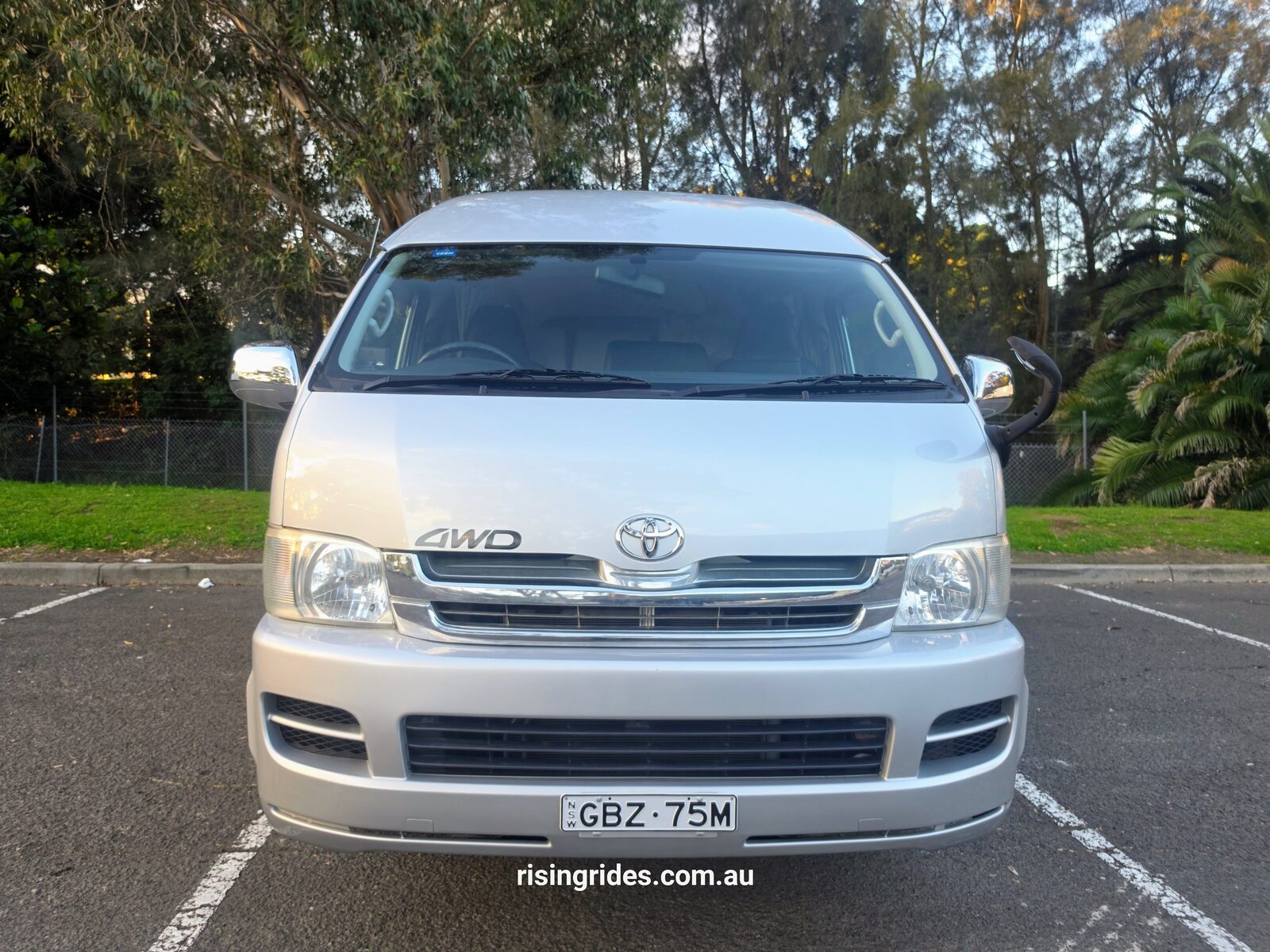
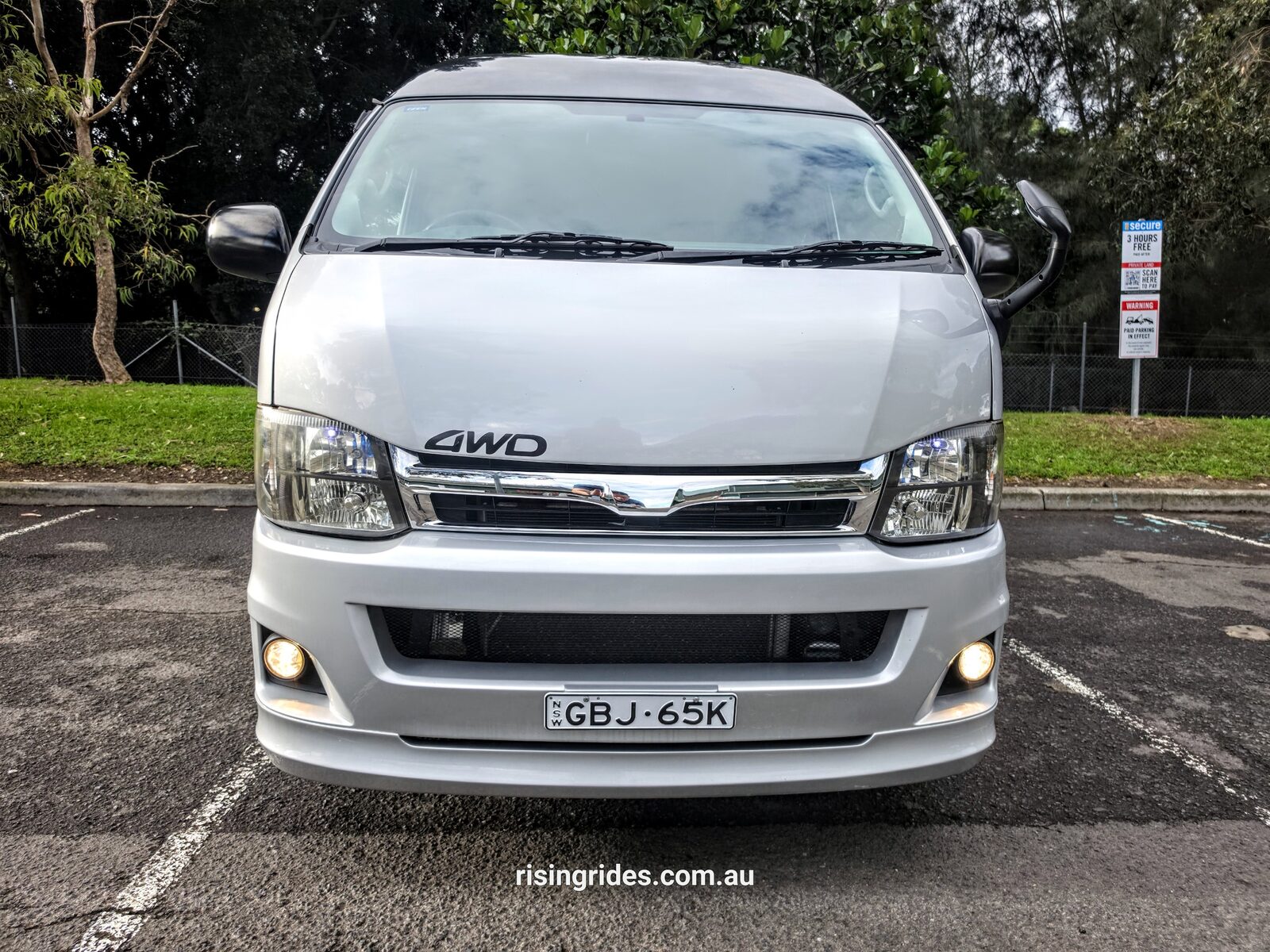
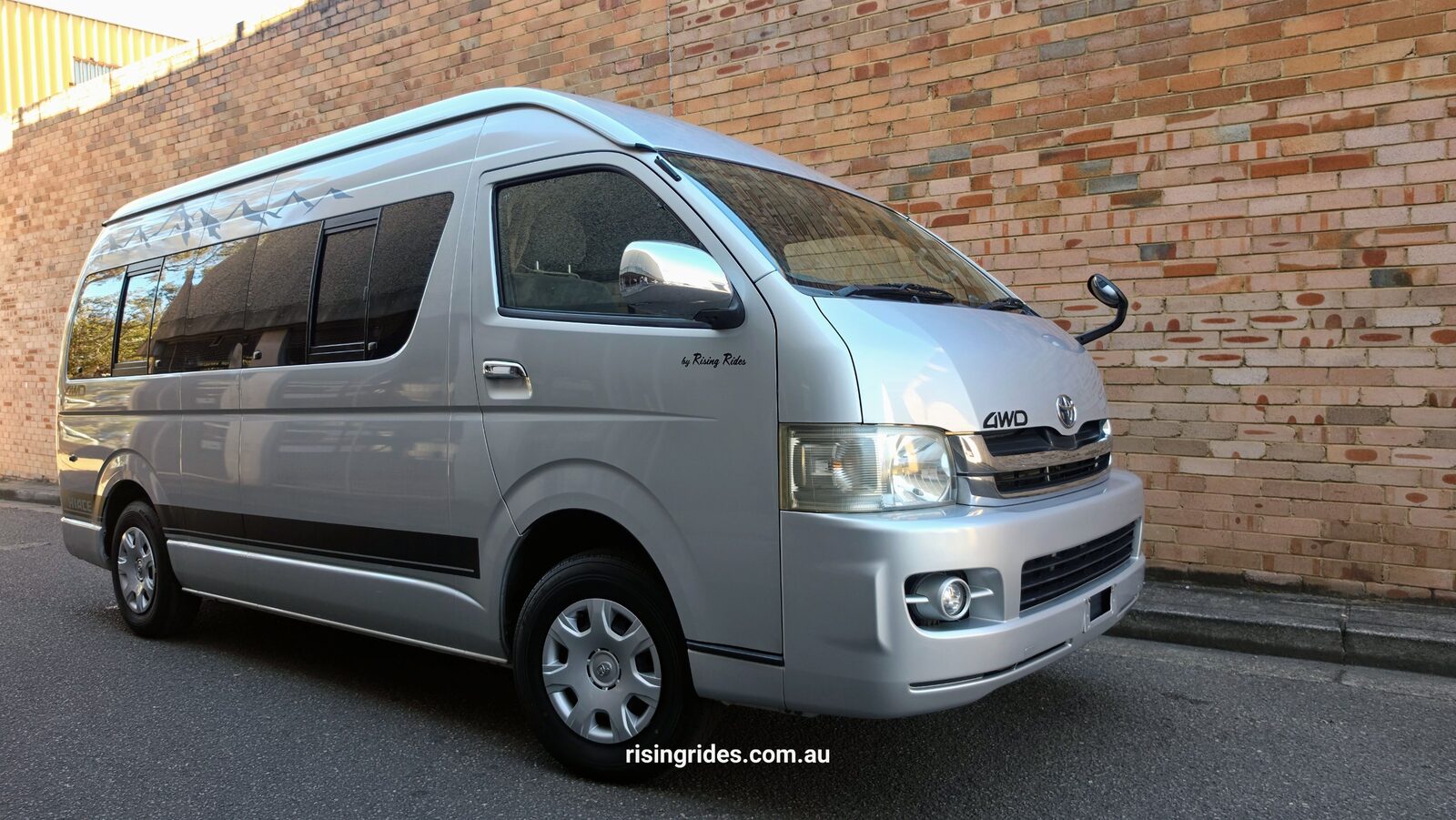
Going off-grid in a HiAce campervan is one of the great Australian adventures — but it only works well if the electrical system is properly specced. Too little solar or too small a battery and you're running out of power by mid-afternoon. Too much and you've overspent on components you'll never fully use. This guide covers exactly what's needed for real off-grid capability, and what Rising Rides includes in our upgraded solar packages.
The Four Components of a HiAce Campervan Solar System
Every off-grid campervan electrical system has four core components working together:
- Solar panels — generate power from sunlight
- Solar charge controller (MPPT) — regulates charging from panels to battery
- House battery — stores the power
- Inverter — converts 12V DC battery power to 240V AC for appliances
A fifth component — a DC-DC charger or battery-to-battery charger — is increasingly common and allows the house battery to charge from the vehicle's alternator while driving. This is particularly useful in poor solar conditions (winter, overcast days, tree cover).
Solar Panel Sizing — How Much Do You Actually Need?
The most common mistake is undersizing the solar. A 100W panel sounds like a lot — it isn't, especially in real-world conditions (partial shade, panel angle, seasonal variation).
For a typical HiAce campervan with a 12V fridge, LED lighting, phone and device charging, and occasional laptop use, here's a realistic daily consumption estimate:
ApplianceAverage drawDaily hoursDaily consumption12V compressor fridge (50L)3–4A24 hrs cycling35–50AhLED lighting (4 strips)2A5 hrs10AhPhone/device charging (x2)1A4 hrs4AhLaptop via inverter8A3 hrs24AhWater pump3A0.5 hrs1.5Ah Total daily~75–90Ah
A 200W solar panel in good conditions generates approximately 60–80Ah per day. That's not quite enough for full consumption — which is why a 300W+ system with a decent battery bank is the realistic minimum for extended off-grid trips.
Our recommendation for a HiAce SLWB roof: 200–300W of panels (two 100–150W panels side by side), an MPPT charge controller rated for the array, and a good battery bank.
Battery Type: AGM vs Lithium
This is the decision that has the most significant impact on both cost and capability.
AGM (Absorbed Glass Mat) — The Traditional Choice
AGM batteries are lead-acid technology — proven, affordable, and widely available. The critical thing to understand about AGM: you can only safely use 50% of the rated capacity. A 100Ah AGM gives you 50Ah of usable power. Below 50%, you risk damaging the battery and significantly reducing its lifespan (typically 300–500 cycles).
- Cost: ~$200–$350 for a 100Ah unit
- Usable capacity: 50% of rated
- Weight: ~28kg per 100Ah
- Lifespan: 2–5 years in campervan use
Lithium (LiFePO4) — The Modern Standard
Lithium iron phosphate (LiFePO4) batteries have transformed campervan electrics. You can use 80–100% of the rated capacity, they're half the weight of equivalent AGM, charge faster, and last 10× longer (3,000–5,000 cycles). The upfront cost is higher but the 10-year running cost is significantly lower.
- Cost: ~$800–$1,500 for a 100Ah unit (reputable brands)
- Usable capacity: 80–100% of rated
- Weight: ~12kg per 100Ah
- Lifespan: 10+ years in campervan use
Our recommendation: If budget allows, 100Ah lithium outperforms 200Ah AGM in real-world use and weighs less. For extended trips, 200Ah lithium is the sweet spot for a HiAce.
Inverter Sizing — What Can You Actually Power?
The inverter converts your 12V battery to 240V AC. Inverter size is rated in watts and determines what appliances you can run:
Inverter SizeWhat It PowersWhat It Won't Power300–600WLaptops, phones, small fans, camera batteriesKettles, microwaves, hair dryers1,000–1,500WAbove + small appliances, CPAP machinesAir conditioning, high-draw appliances2,000–3,000WMost 240V appliances except A/C and large heatersAir conditioning (needs dedicated system)
For a HiAce campervan used for off-grid camping, a 1,000–2,000W pure sine wave inverter covers most needs. Pure sine wave is important — modified sine wave inverters can damage sensitive electronics and some appliances.
What the Rising Rides Solar Package Includes
Our upgraded solar packages — available on selected campervans — are specced for real off-grid capability, not just checkbox marketing. A typical Rising Rides solar build includes:
- Solar panels: 200–300W roof-mounted (mono-crystalline, flush-mounted to minimise wind resistance and clearance issues)
- MPPT charge controller: 20–40A rated for the panel array and battery bank
- House battery: 100–200Ah LiFePO4 lithium (varies by build)
- DC-DC charger: 20–40A, charges house battery from alternator while driving
- Inverter: 1,000–2,000W pure sine wave
- 12V fridge circuit: Dedicated circuit for compressor fridge, separate from lighting and general 12V
- Battery monitor: Shows state of charge, voltage, amps in/out — essential for managing consumption
- USB and 12V outlets: Multiple points throughout the van
Every electrical installation is completed by our team before handover and tested under load. We don't outsource this to third parties — Hakan handles the 12V electrical conversion personally on all builds, with years of hands-on experience across our entire fleet.
What to Check When Viewing a Solar-Equipped Campervan
If you're assessing a HiAce campervan with an existing solar setup, from us or anyone else, check these things:
- Battery voltage: A healthy 12V system at rest should read 12.6–12.8V for AGM (full) and 13.2–13.4V for lithium (full). Below 12.0V for AGM suggests a discharged or failing battery.
- Fridge temperature: Ask to open the fridge. It should be cold. A 12V fridge that's not maintaining temperature is a sign of either a weak battery or a failing fridge compressor.
- Wiring quality: Look for proper cable sizing, fused connections, and secure cable management. Unsecured wiring, too-small cables, or unfused connections are fire hazards.
- MPPT controller display: If the sun is out, the controller should show charging amps flowing to the battery.
- Inverter test: Plug in a 240V appliance and test the inverter actually works.
The Bottom Line
A properly specced solar system makes the difference between a campervan that needs a powered campsite every night and one that can genuinely go anywhere for weeks at a time. For Australian conditions, long driving days, intense sun, and remote destinations, 200W+ solar, 100Ah+ lithium, and a DC-DC charger is the realistic minimum for comfortable off-grid living.
Our upgraded solar packages are available on selected stock, ask us about the specific setup on any vehicle you're interested in. We're transparent about exactly what's installed, what the components are, and what the system is capable of.
Browse solar-equipped campervans at risingrides.com.au/cars — or call 0478 901 002 to talk through your off-grid requirements. We'll match you with the right vehicle and the right setup for where you want to go.