
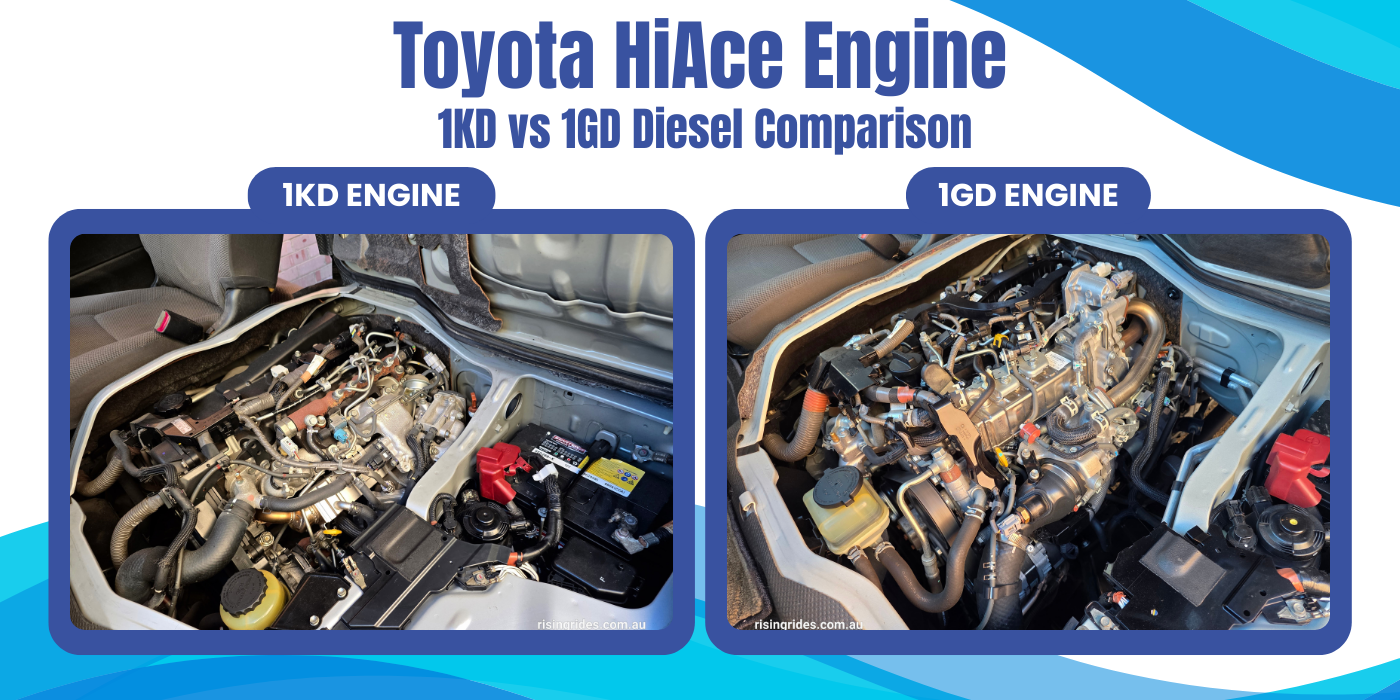
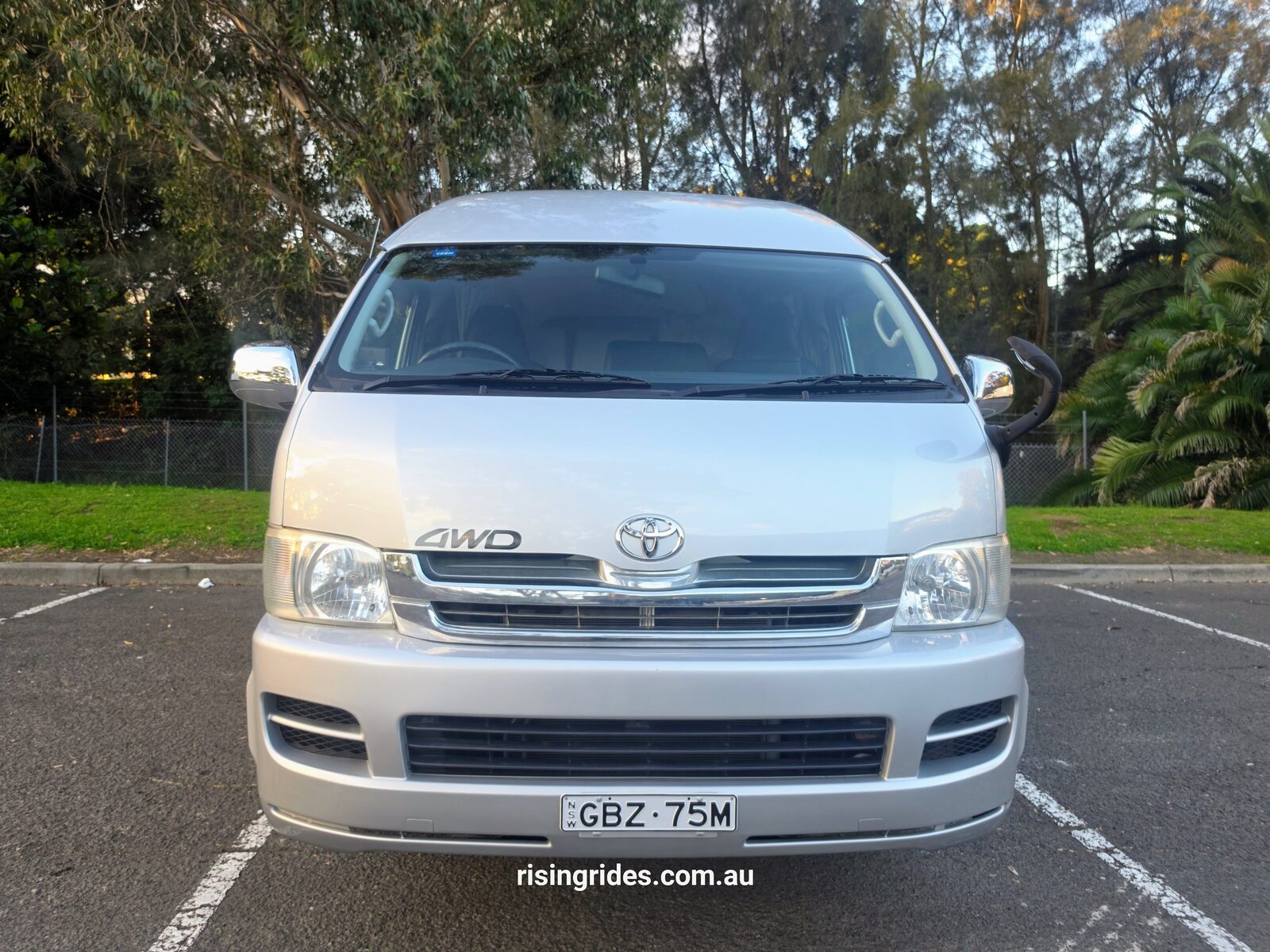
Toyota 1KD vs 1GD Diesel Engine Comparison
If you’ve spent any time on Australian roads, you know the Toyota HiAce is practically part of the furniture. From inner-city courier runs to coastal campervan adventures, these vans are the backbone of small businesses and travelers alike. Their reputation for being unkillable is legendary, and that’s a big reason why Toyota HiAce Australia sales figures remain so strong year after year.
However, the landscape is changing. With the rise of the imported Toyota HiAce Australia market, buyers now have access to a wider range of high-spec models from Japan, often with lower kilometers and better features than local options. But when you start looking at the spec sheets, you’ll likely run into a confusing alphabet soup of engine codes.
The two big heavyweights you need to know about are the 1KD and the 1GD.
Both are incredible pieces of engineering, but they serve slightly different purposes. One is the old-school legend known for mechanical simplicity; the other is the modern powerhouse focused on efficiency and torque. In this Toyota HiAce engine comparison, we are going to break down the differences between the 1KD vs 1GD engine so you can figure out exactly which one belongs in your driveway.
Overview of the 1KD Engine (The "Old Faithful")
Let’s start with the engine that cemented the HiAce's reputation as a workhorse: the 1KD-FTV. If you are looking at a HiAce from the 200 series (specifically the KDH series vans generally produced between 2005 and 2017), this is likely the beast under the passenger seat.
The Specs
The 1KD is a 3.0L turbo diesel engine. It’s a four-cylinder unit that prioritizes displacement and durability over high-tech gadgetry. While the horsepower figures might look modest on paper compared to modern sports cars, in the world of vans, it provides a solid, consistent grunt that gets the job done.
Why People Love It
The biggest selling point of the 1KD is its mechanical simplicity. It comes from an era just before emissions regulations started requiring incredibly complex exhaust treatment systems. For many Aussies, fewer sensors and systems mean fewer things to worry about when you are 500km from the nearest mechanic.
It is known for:
- Durability: These engines regularly clock over 500,000km with just basic servicing.
- Parts Availability: Because this engine was used in the HiLux and Prado as well, you can find parts in almost every country town in Australia.
- Torque delivery: It has a lazy, low-down torque delivery that makes towing or carrying heavy loads feel effortless.
Who is it for?
This Toyota HiAce diesel engine is the go-to choice for:
- Camper Conversion Owners: If you plan on doing a "big lap" and want an engine that any mechanic in the Outback can fix with their eyes closed, the 1KD is your best mate.
- Tradespeople on a Budget: It offers a lower entry price for the vehicle itself, and the maintenance is straightforward.
- Rural Buyers: The lack of complex AdBlue systems makes it easier to live with in remote areas.
Overview of the 1GD Engine (The Modern Powerhouse)
Now, let’s talk about the new kid on the block. The 1GD-FTV was introduced to replace the 1KD, featuring in the later 200 series models (GDH series) and the current 300 series HiAce. It represents a significant leap forward in diesel technology.
The Specs
Interestingly, the 1GD is smaller in capacity—it’s a 2.8L turbo diesel. Don't let the smaller size fool you, though. Thanks to a variable nozzle turbocharger and a highly advanced fuel injection system, it actually produces more torque and power than the larger 1KD it replaced.
Why People Love It
The driving experience in a 1GD HiAce is noticeably different. It’s quieter, smoother, and feels much punchier when you put your foot down to overtake on the highway. Toyota engineered this motor to meet strict Euro emissions standards, which means it burns cleaner and uses less fuel.
It is known for:
- Fuel Efficiency: The 1GD is significantly lighter on fuel, which adds up if you are doing high kilometers annually.
- Refinement: It rattles less than the older diesels, making for a more comfortable cabin experience on long drives.
- Low-End Torque: Toyota tuned this engine to deliver maximum torque at very low RPMs, making it feel very responsive in city traffic.
Who is it for?
The 1GD is the perfect match for:
- Daily Drivers: If your van is also your family car, the quieter engine and smoother drive make a huge difference.
- Business Fleets: The fuel savings over the life of the vehicle can be massive for businesses running multiple vans.
- Newer Vehicle Buyers: If you want a late-model van (2018 onwards) with modern safety tech and lower kilometers, you will likely be getting the 1GD.
1KD vs 1GD Comparison Table
Sometimes it helps to see the numbers side-by-side. Here is a quick breakdown of how these two legends stack up.

Reliability Comparison
When we talk about HiAce engine reliability, we are splitting hairs between "excellent" and "outstanding." Toyota does not make bad diesel engines, but they do have different characteristics regarding long-term ownership.
The 1KD Track Record
The 1KD has been around long enough to have proven itself completely. We know exactly what goes wrong with them (which isn't much). The injectors can wear out eventually, and like any diesel, the EGR (Exhaust Gas Recirculation) system can get clogged with soot if it's only driven on short trips. However, these are known quantities. Mechanics know exactly how to keep a 1KD running for a million kilometers. It is a "what you see is what you get" engine.
The 1GD Reputation
The 1GD is newer, but early reports and fleet data suggest it is living up to the Toyota name. It features a timing chain (instead of a belt on the older 1KD), which is a big plus for durability—it means you don't have to worry about changing a rubber timing belt every 150,000km.
However, the 1GD achieves its clean running through a Diesel Particulate Filter (DPF). In Australia, early versions of the 1GD (mostly in HiLux/Prado) had some well-publicized issues with DPFs clogging. The good news is that Toyota has largely rectified this with hardware and software updates, and the HiAce implementation of this engine has generally been very robust. It just requires you to drive it properly—it needs a good highway run occasionally to burn off the soot.
Running Cost Comparison
If you are a tradie or running a small business, the bottom line matters. How much will these engines cost you to keep on the road?
Fuel Consumption
The 1GD wins here, hands down. The newer technology and the 6-speed automatic transmission it is usually paired with allow it to sit at lower revs on the highway. Over a year of driving, the 1GD could save you hundreds of dollars at the bowser compared to the thirsty 3.0L 1KD.
Servicing and Parts
This is where the 1KD claws back some points. Servicing a 1KD is generally cheaper because the oil is standard, the filters are cheap, and there is no AdBlue to top up.
The 1GD requires low-ash oil (specifically for the DPF), which is more expensive. You also need to factor in the cost of AdBlue for emissions control, though a tank of AdBlue lasts thousands of kilometers. Furthermore, if a DPF system does fail outside of warranty, it can be a pricey repair, whereas the 1KD exhaust system is basically a metal pipe.
Availability in Australia
Both engines share DNA with the HiLux and Prado, which are Australia's best-selling vehicles. This means you will never be stuck waiting weeks for a water pump or an alternator. Whether you choose the 1KD or the 1GD, you have the backing of a massive parts network.
Which Engine Should You Choose?
So, you're ready to buy, but you're still on the fence. Let’s simplify the decision.
Choose the 1KD (3.0L) if:
- Budget is priority #1. You want a cheaper purchase price and simpler maintenance.
- You want a true "bush mechanic" engine. You plan on taking the van to very remote parts of Australia where modern diagnostic computers might be scarce.
- You do lots of short stop-start trips. Older diesels without DPFs are generally more tolerant of short trips where the engine doesn't get fully hot.
Choose the 1GD (2.8L) if:
- You want a car-like drive. You appreciate power for overtaking and a quieter cabin for phone calls.
- Fuel efficiency matters. You drive high kilometers and want to reduce your weekly fuel bill.
- You want a newer vehicle. You want the modern safety features and creature comforts that come with the newer GDH-series vans.
- You drive on highways. The extra torque and 6-speed gearbox make the 1GD a much better cruiser at 110km/h.
We Can Help You Decide
At the end of the day, there is no "wrong" choice here—only the choice that fits your lifestyle best. Whether you want the rugged simplicity of the 1KD or the refined power of the 1GD, the Toyota HiAce remains the king of the road for a reason.
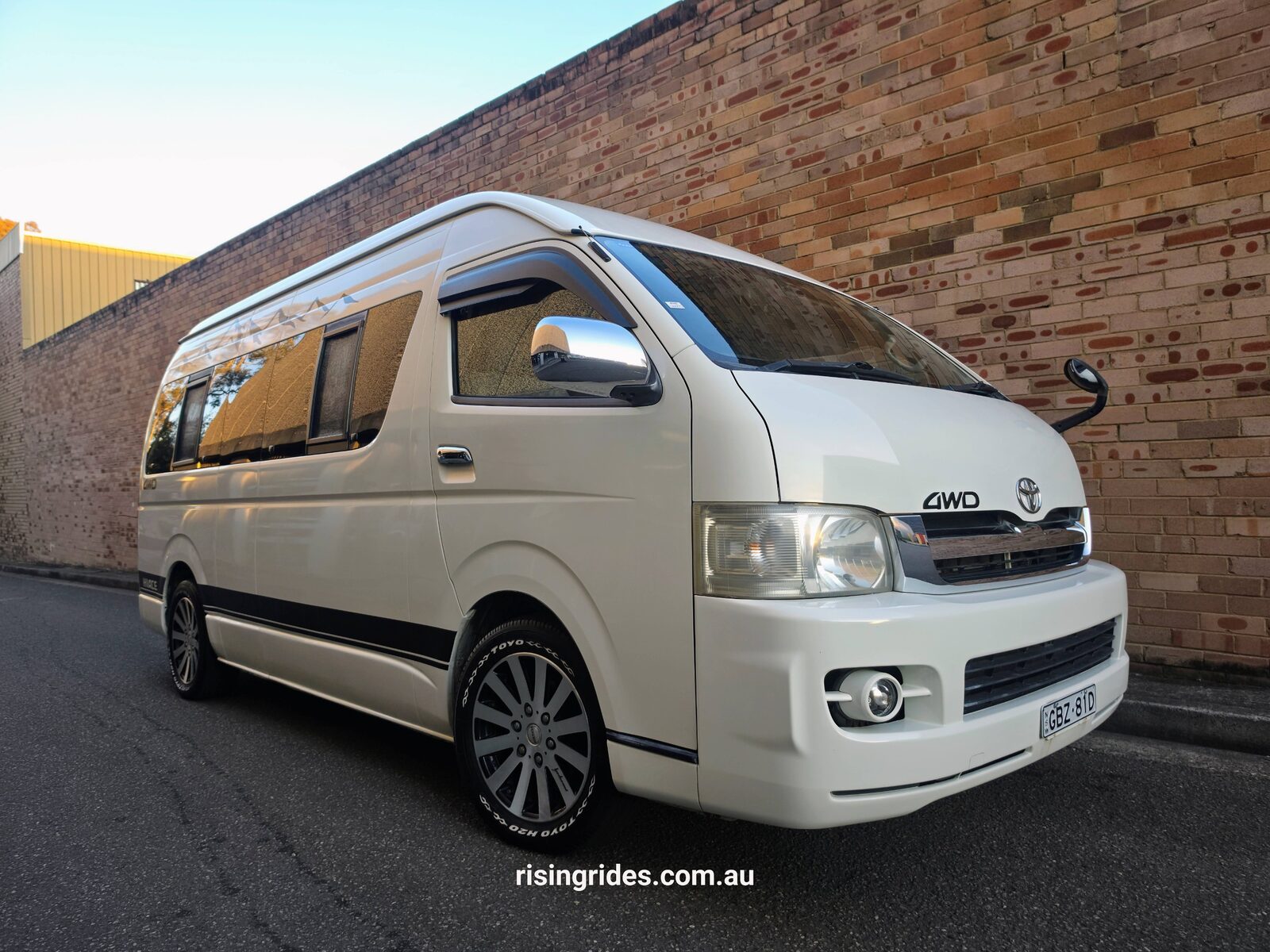
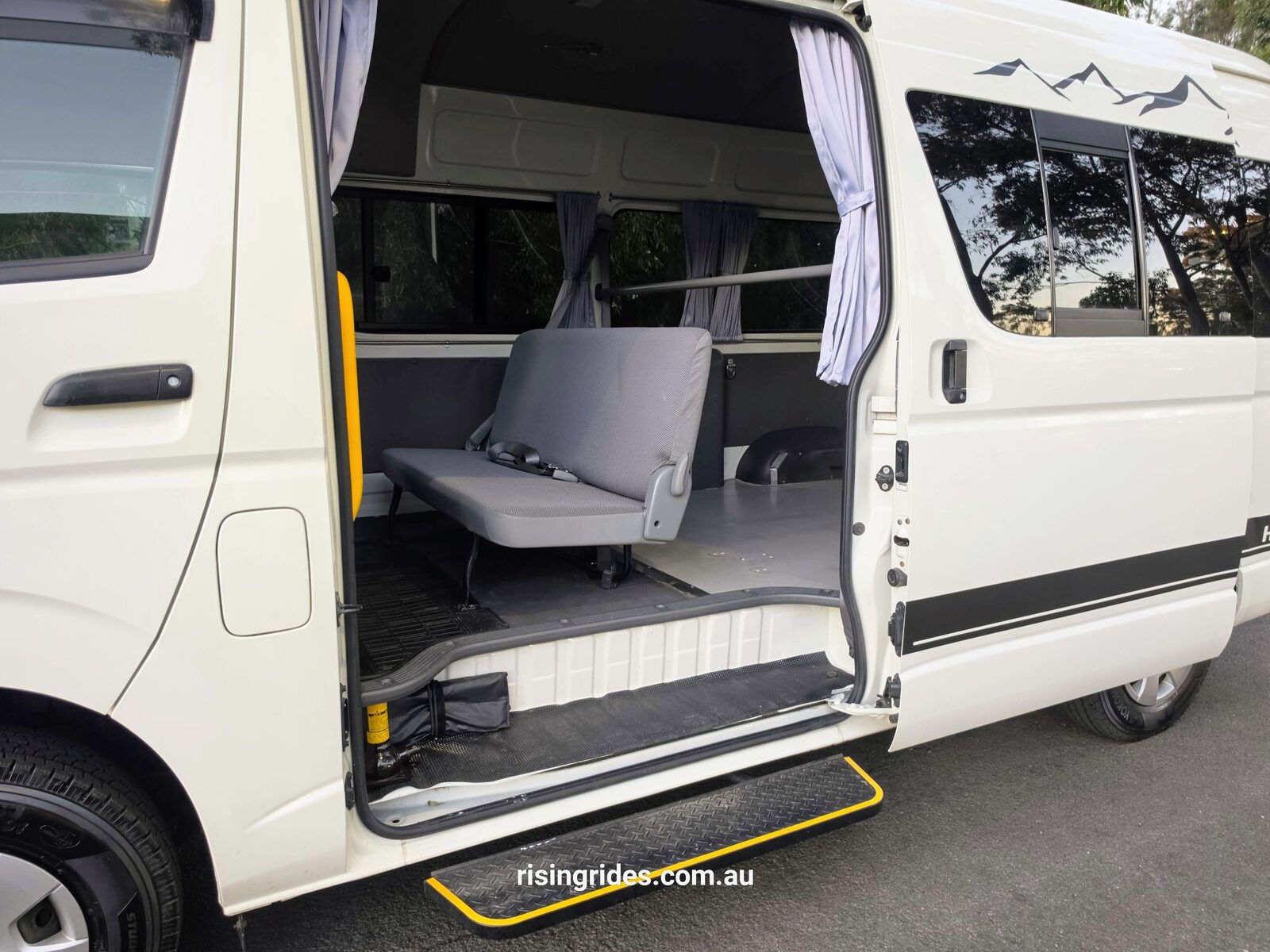
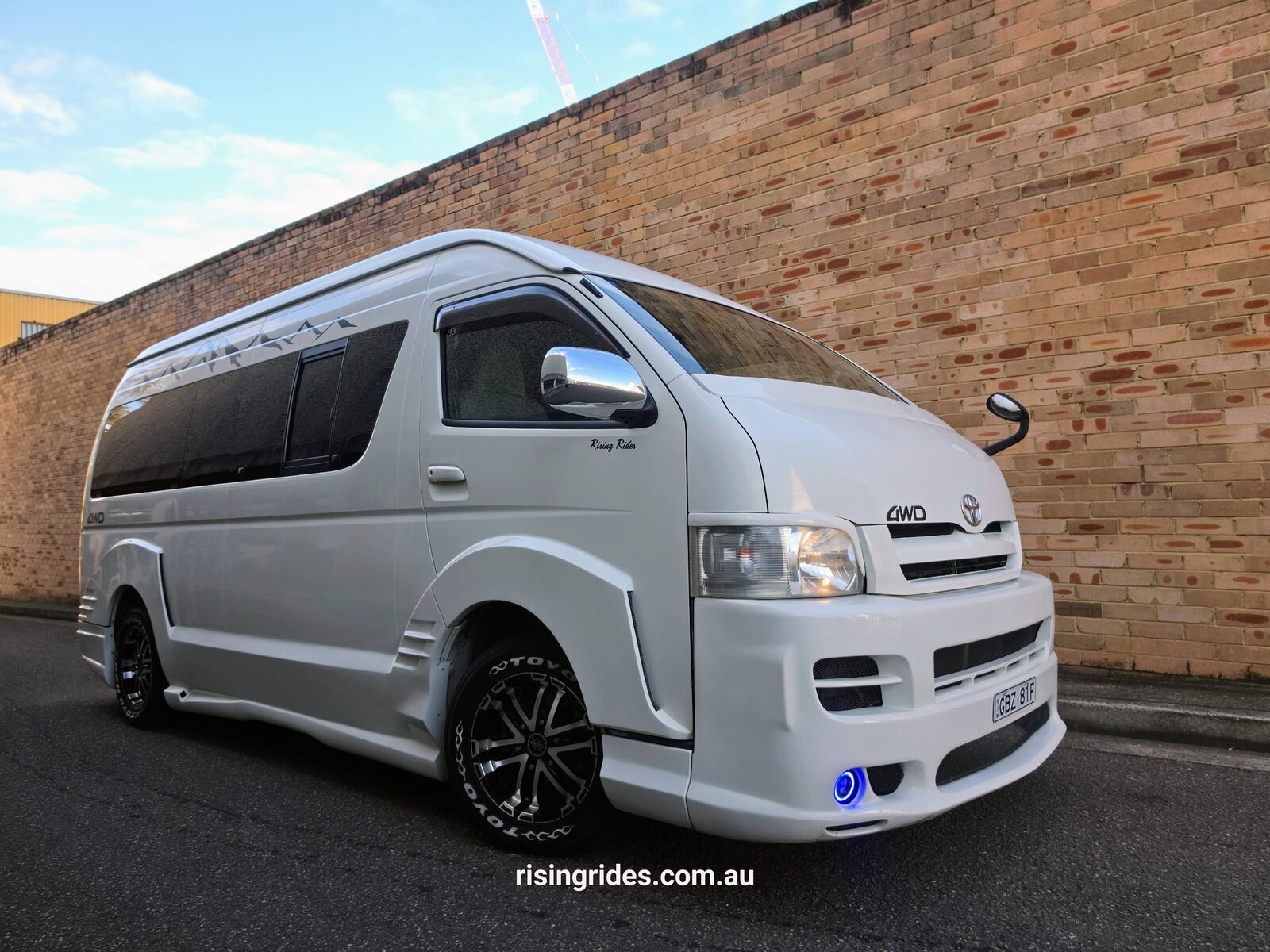
Here at Rising Rides, we are passionate about getting Aussies into the right van. We specialize in imported Toyota HiAce vans, which means we have access to a huge variety of high-quality stock straight from Japan. We stock both KDH (1KD) and GDH (1GD) models because we know different drivers have different needs.
If you are still scratching your head over torque figures or towing capacities, give us a shout. We’re always happy to have a chat, show you the engines side-by-side, and help you drive away in a van that won’t let you down.