
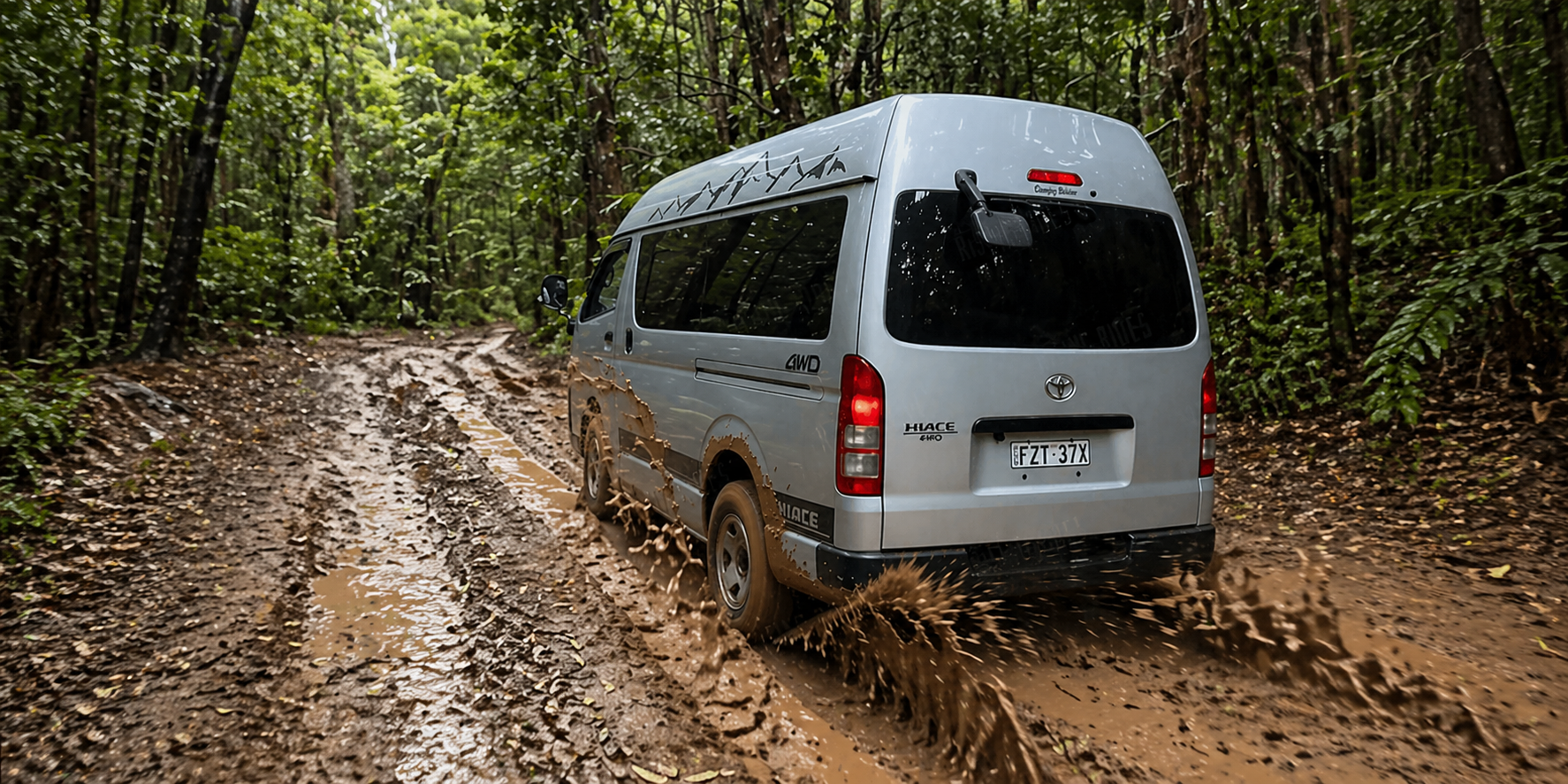
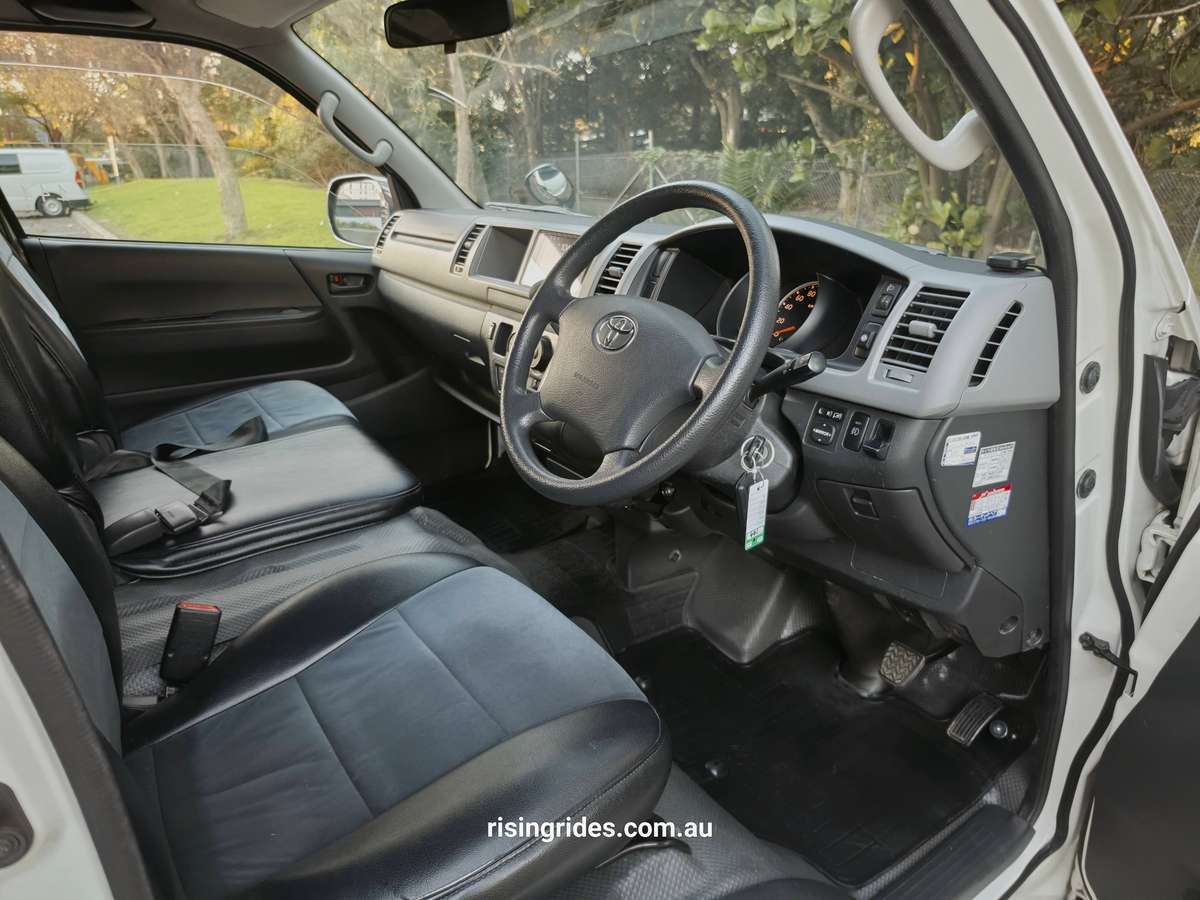
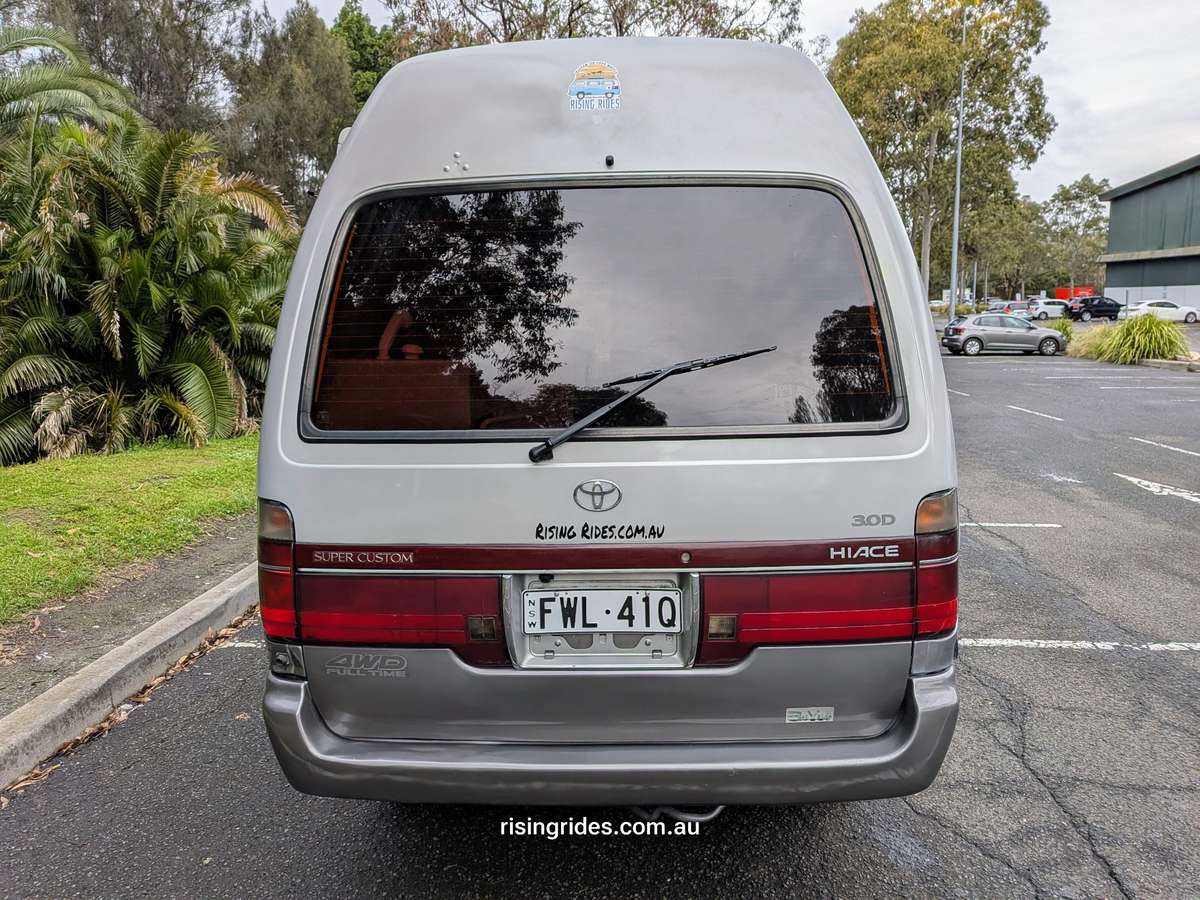
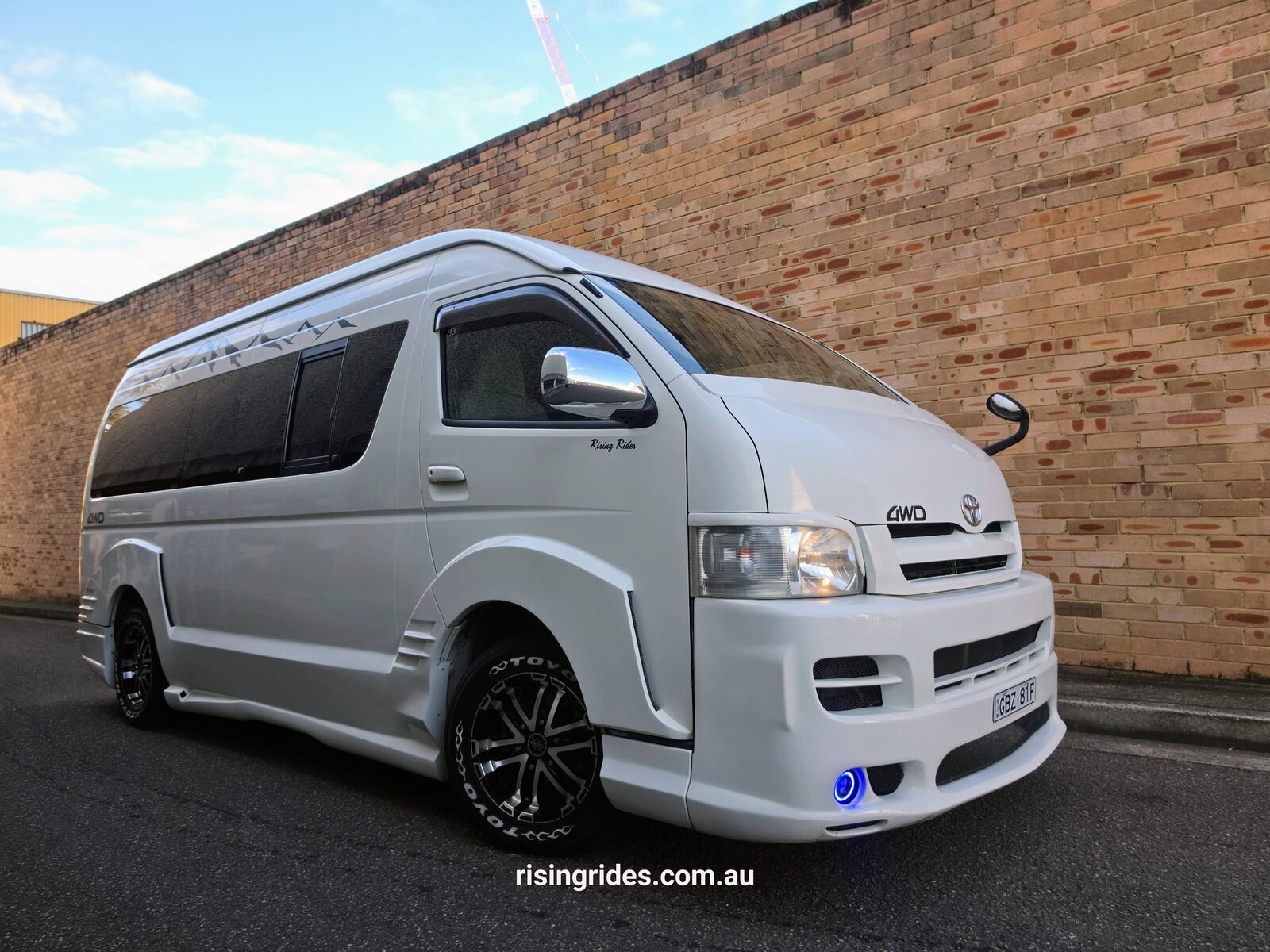
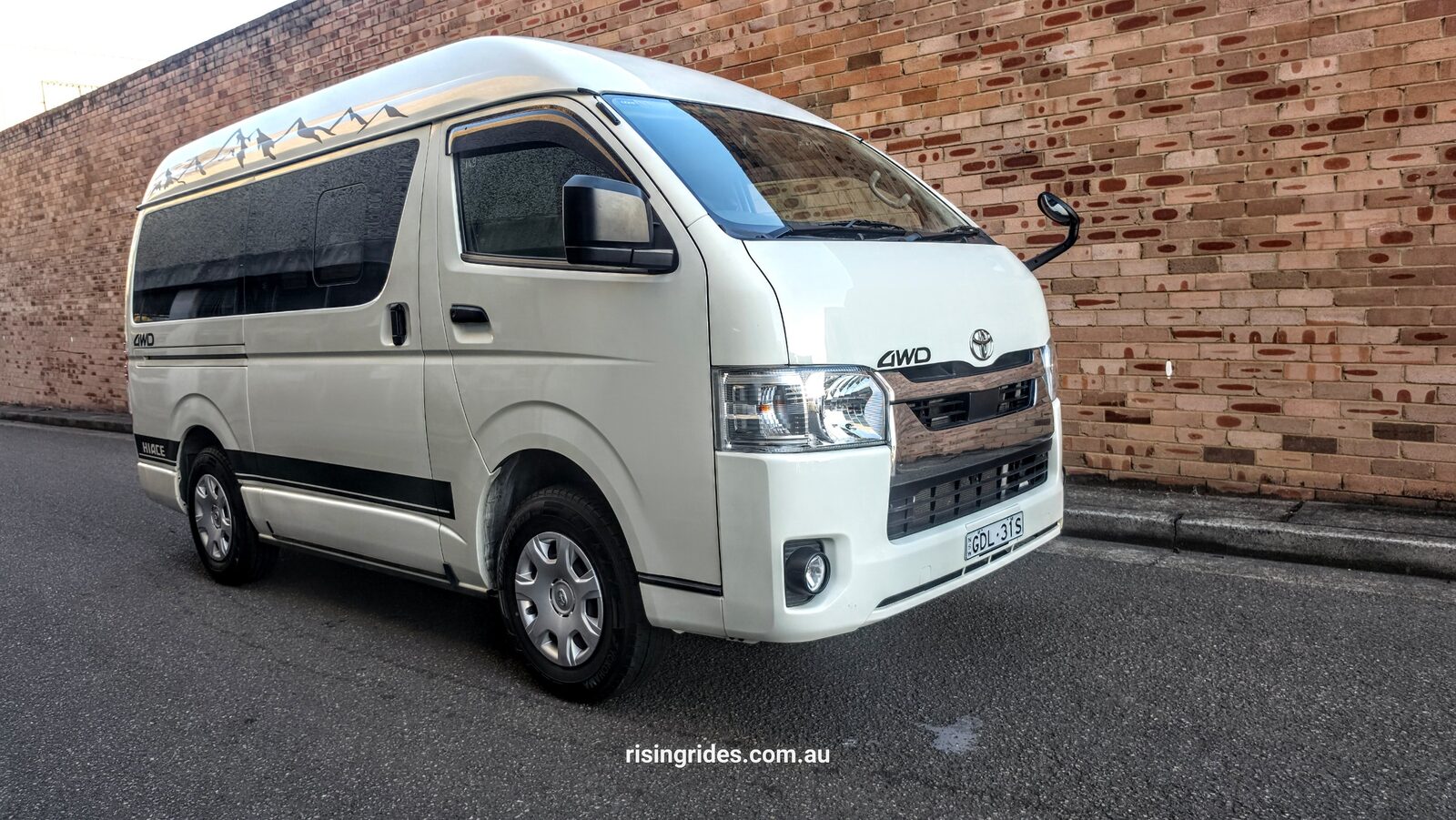
The Toyota HiAce 4WD is one of Australia's most capable overland platforms. But what can it actually handle — and where does it need help? Whether you're eyeing a fire trail in the Otways, a beach run up the Cape York Peninsula, or a long outback stretch through the Northern Territory, this guide covers everything you need to know before you leave the blacktop behind.
What Makes the HiAce 4WD Capable Off-Road
The Toyota HiAce Commuter 4WD isn't marketed as a dedicated off-roader, but its underpinnings tell a different story. Toyota engineered a proper part-time four-wheel drive system into the HiAce platform — not an all-wheel-drive setup designed for wet roads, but a genuine low-range transfer case built for serious terrain.
At the heart of it is the 1GD-FTV 2.8-litre turbodiesel, producing around 150kW and a stout 500Nm of torque from remarkably low revs. In low-range, that torque does the heavy lifting through rock shelves, creek crossings, and boggy forestry tracks where momentum matters less than grunt.
Ground clearance sits at around 190mm stock — enough for well-maintained dirt roads but limited on rocky terrain without a suspension lift. The part-time 4WD system gives you 2H for highway use, 4H for loose dirt and gravel, and 4L for serious technical driving where control matters more than speed.
The rear differential lock is arguably the HiAce's most underrated off-road feature. When engaged, it forces both rear wheels to rotate at the same speed regardless of traction — eliminating the frustrating situation where one wheel spins freely while the other sits idle. Engage it early on loose surfaces and you'll be surprised how far the HiAce will carry you.
The long wheelbase is a double-edged sword. It helps with ride stability on corrugated outback roads but reduces approach and departure angles compared to shorter 4WDs. You'll need to be more deliberate about line choice on steep, uneven terrain — but it's rarely a deal-breaker on the tracks most HiAce owners frequent.
Pro tip: Engage 4WD Low and the rear diff lock before you need them — not when you're already spinning. Engage on a flat section of track, then tackle the obstacle. You can unlock and shift back to 2H once you're clear.
2WD vs 4WD HiAce Off-Road — The Honest Comparison
If you're comparing the 2WD petrol or diesel HiAce against the 4WD Commuter for overland travel, the conversation needs to be honest rather than optimistic. Both vans share the same bodyshell, the same interior volume, and the same cabinetry potential — but off-road, they're fundamentally different vehicles.
The 2WD HiAce is rear-wheel drive only, with no low-range transfer case and no diff lock. On dry, graded dirt roads it performs adequately — but the moment conditions deteriorate, it becomes a liability. A single patch of mud, a soft beach entry, or a waterlogged fire trail can turn a fun weekend into a recovery operation.
The 4WD Commuter sits around 10 to 15 thousand dollars more on the new car market, but it comes with the part-time 4WD system, a rear locker, and around 15mm of additional ground clearance. On fire trails, it handles comfortably in 4H. On soft sand, it manages well with correct tyre pressures and the diff lock engaged. On wet and muddy tracks, the rear locker is a genuine game-changer.
In practical terms:
The 2WD HiAce suits highway touring and well-maintained unsealed roads in dry conditions. It is not suited for beach driving, mud, water crossings, or anything that requires genuine traction.
The 4WD HiAce opens up the majority of accessible 4WD tracks in Australia. Beach campsites, outback station tracks, rainforest forestry roads in winter — these become realistic rather than reckless.
One important caveat: don't conflate a 4WD HiAce with a Landcruiser 79 Series or Patrol GU. It's capable for its class and size, but it remains a long, heavy van. Approach every track with appropriate humility and always carry recovery gear. The 4WD system gives you options — it doesn't eliminate consequences.
Best Modifications: Lift Kits, Tyres, Snorkels, and Recovery Gear
The stock 4WD HiAce is a solid starting point, but most serious overlanders will want to build on it. Here's a priority-ordered breakdown of the modifications that make the biggest real-world difference on Australian terrain.
Suspension Lift — 2 to 3 Inches
The single biggest upgrade you can make to a HiAce for off-road use. A quality lift kit improves ground clearance, sharpens approach and departure angles, and opens the door to fitting larger tyres. Old Man Emu, Dobinsons, and Ironman all produce HiAce-specific kits suited to the Commuter platform.
A 2-inch lift is the sweet spot for most owners — it delivers meaningful clearance gains without affecting factory geometry significantly. A 3-inch lift offers more capability but typically requires extended brake lines and may need castor correction to keep the steering geometry accurate. Budget somewhere between $2,500 and $4,500 fully fitted from a reputable 4WD specialist, depending on the kit and labour.
All-Terrain Tyres
Factory tyres on the HiAce are highway-focused and offer limited performance on loose surfaces. Swapping to a quality all-terrain tyre is one of the most cost-effective off-road upgrades available.
Popular choices among HiAce owners include the BF Goodrich KO2, the Toyo Open Country AT3, and the Cooper Discoverer AT3 XLT. With a 2-inch lift, most owners can fit 265/70R16 without rubbing. On dirt tracks, run them between 28 and 32 PSI. Drop to 18–22 PSI for beach driving to spread the footprint and reduce the risk of bogging. The difference in traction on loose surfaces compared to highway tyres is transformative.
Snorkel
A snorkel relocates the engine's air intake from the engine bay to roof height — critical for water crossings and equally valuable for long outback runs where dust is a constant companion. Dust ingestion is one of the leading causes of premature engine wear on unsealed outback roads, and a snorkel combined with a pre-cleaner addresses it directly.
Safari Snorkels manufactures a HiAce-specific unit that maintains the van's factory look without significant modification. Even if you never plan to cross a river, the dust protection alone justifies the cost for anyone spending extended time on outback tracks.
Recovery Gear — The Non-Negotiables
No off-road vehicle should leave the tarmac without a proper recovery kit. At minimum, you'll need a rated snatch strap, two bow shackles rated to your vehicle's GVM, a long-handled shovel, and a pair of recovery boards (Maxtrax or equivalent). A portable air compressor — the ARB Twin or Bushranger Thumper are popular choices — makes reinflating tyres after beach runs quick and easy rather than a lengthy manual process.
For solo travellers heading into remote areas, a 9,500lb winch mounted to a front bull bar is worth serious consideration. It becomes your self-rescue option when no other vehicle is available to assist. A tree trunk protector and snatch block should accompany any winch setup.
Under-Vehicle Protection
Steel bash plates for the sump, gearbox, and transfer case protect the most vulnerable components from rock strikes. The HiAce's engine sits forward, making it moderately exposed on rocky terrain. A quality bash plate set adds weight but delivers genuine peace of mind on technical tracks.
Dual Battery System and Auxiliary Power
If you're building a campervan setup on the HiAce — or even just running a fridge — a dual battery system is essential. A DC-DC charger from Redarc or Enerdrive keeps your auxiliary battery topped up via the alternator while the engine is running. Pair it with a 100 to 200Ah lithium auxiliary battery for multi-day remote camping without shore power.
A rooftop solar panel of 200 watts or more extends your independent range significantly. In most of Australia, most of the time, the sun does the work for you.
What Terrain Can a Stock 4WD HiAce Handle?
Understanding real-world capability across terrain types is more useful than any spec sheet. Here's an honest breakdown for a stock 4WD Commuter — no lift, factory tyres — with the rear diff lock available.
Graded fire trails in dry conditions are natural HiAce territory. These well-maintained dirt and gravel forestry roads are comfortable in 2H and even more capable in 4H when conditions are damp. This is where the majority of HiAce owners spend most of their off-road time, and the van handles it with ease.
Outback station tracks — long, corrugated, dry dirt roads — are well within the HiAce's capability. Watch for deep corrugations that can bounce the stock suspension to its limits on faster runs. Slowing down is the most effective remedy, but upgraded shocks help considerably on extended outback trips.
Hard-packed beach driving, on the firm wet sand near the waterline, is manageable with the correct preparation. Drop your tyre pressures, engage 4WD and the rear locker, and keep moving. The key mistake on beaches is stopping — once you lose momentum in soft sand, recovery becomes the next task.
Soft sand dunes are possible but demanding. The HiAce's weight works against it in deep sand, and tyre pressure management becomes critical. Know your recovery plan before committing, and don't attempt soft dunes alone without experience.
Wet and muddy tracks are manageable with the rear diff lock engaged and careful line selection. Stay in established ruts where possible, avoid heavily cambered sections where the van's weight creates leverage problems, and exit before you reach a point of no return.
Shallow creek crossings up to around 400mm are possible without a snorkel, approached slowly and after a walk-through on foot. Avoid crossings where the water is fast-moving, turbid (you can't see the bottom), or of unknown depth.
Rocky boulder fields and deep river crossings are not appropriate for a stock HiAce. Ground clearance is insufficient for sustained rock work, and the air intake sits too low for meaningful water crossings without a snorkel. A lifted HiAce with bash plates and a snorkel changes the equation on both counts, but these remain terrain types requiring experience and genuine preparation.
As a general rule: if a track is dry and graded and you're not expecting significant ledges or water, the stock HiAce will get you there. Add a 2-inch lift and all-terrain tyres, and you've opened up roughly 80% of accessible 4WD tracks in Australia. The remaining 20% requires deliberate preparation and a conservative mindset.
Real-World Limits — When the HiAce Needs Help
Let's be direct: the HiAce is not a Landcruiser, and pretending otherwise gets people into serious trouble. Understanding its limits isn't a weakness — it's the mark of an experienced driver.
Weight and Ramp Breakover
A fully fitted HiAce campervan loaded for a long trip can push 3,400 to 3,800 kilograms GVM depending on the build. That's a significant vehicle to extract from a compromised situation. The long wheelbase also creates a vulnerability known as ramp breakover angle — the point at which the underside of the van, rather than either end, makes contact with the ground over a crest or mound. On undulating terrain, the middle of the vehicle is the lowest point. It's a less intuitive risk than approach angle, but a real one that catches drivers off guard.
Approach and Departure Angles
Stock, the HiAce's approach angle — how steep a ledge you can drive up to without the front bumper making contact — is modest for its class. The front overhang is longer than on a purpose-built off-road vehicle. A lift helps, but the geometry doesn't change dramatically. On steep track entries, approach at an angle where possible rather than straight on, and don't assume the van can climb what a Patrol or Cruiser handles easily.
Track Width and Tight Situations
The HiAce is a wide vehicle. On narrow single-lane forestry tracks, line selection matters — particularly through blind corners and tight tree-lined sections where mirrors and bodywork are at risk. Don't assume a track is passable for your van simply because another vehicle has been through it. A narrower vehicle leaves a very different margin.
When to Turn Around
There are four situations where the HiAce generally needs help or shouldn't commit: water that exceeds a safe intake height, deep mud or sand with no traction recovery option available, rock terrain with insufficient clearance for the sump and diff, and anything requiring sustained suspension articulation that bottoms out the stock or lifted setup. Recognising these before you're committed is the most valuable off-road skill you'll develop.
If you're travelling solo in remote areas, a registered PLB (Personal Locator Beacon) is non-negotiable. Register it with AMSA before departure. It's your last-resort link to emergency services when phone coverage doesn't exist — which describes most of the Australian outback.
Travelling with a second vehicle is the single most effective risk mitigation for remote off-road travel. Two HiAces can recover each other. One HiAce alone relies entirely on preparation and luck. Many 4WD clubs across Australia run tag-along tours suited to van-based travellers — a practical way to build skills, explore new tracks, and travel with built-in backup.
Always check current track conditions with Parks Victoria, NSW Forestry, or the relevant state land manager before heading out. Fire trails can be closed after heavy rain, during fire danger season, or seasonally for fauna protection. Getting stuck on a closed track isn't just dangerous — it can carry legal consequences.
The golden rule: if you're not sure, don't commit. Get out, walk the section, assess the risk, and trust your judgment. The track will still be there when you return better prepared. The van might not be if you guess wrong.
Ready to Find Yours?
Every van in our stock is a Toyota HiAce 4WD Commuter, purpose-built for Australian overland travel — pre-fitted lift kits, dual batteries, full solar, and ready to roll.
View our 4WD HiAce campervan stock