
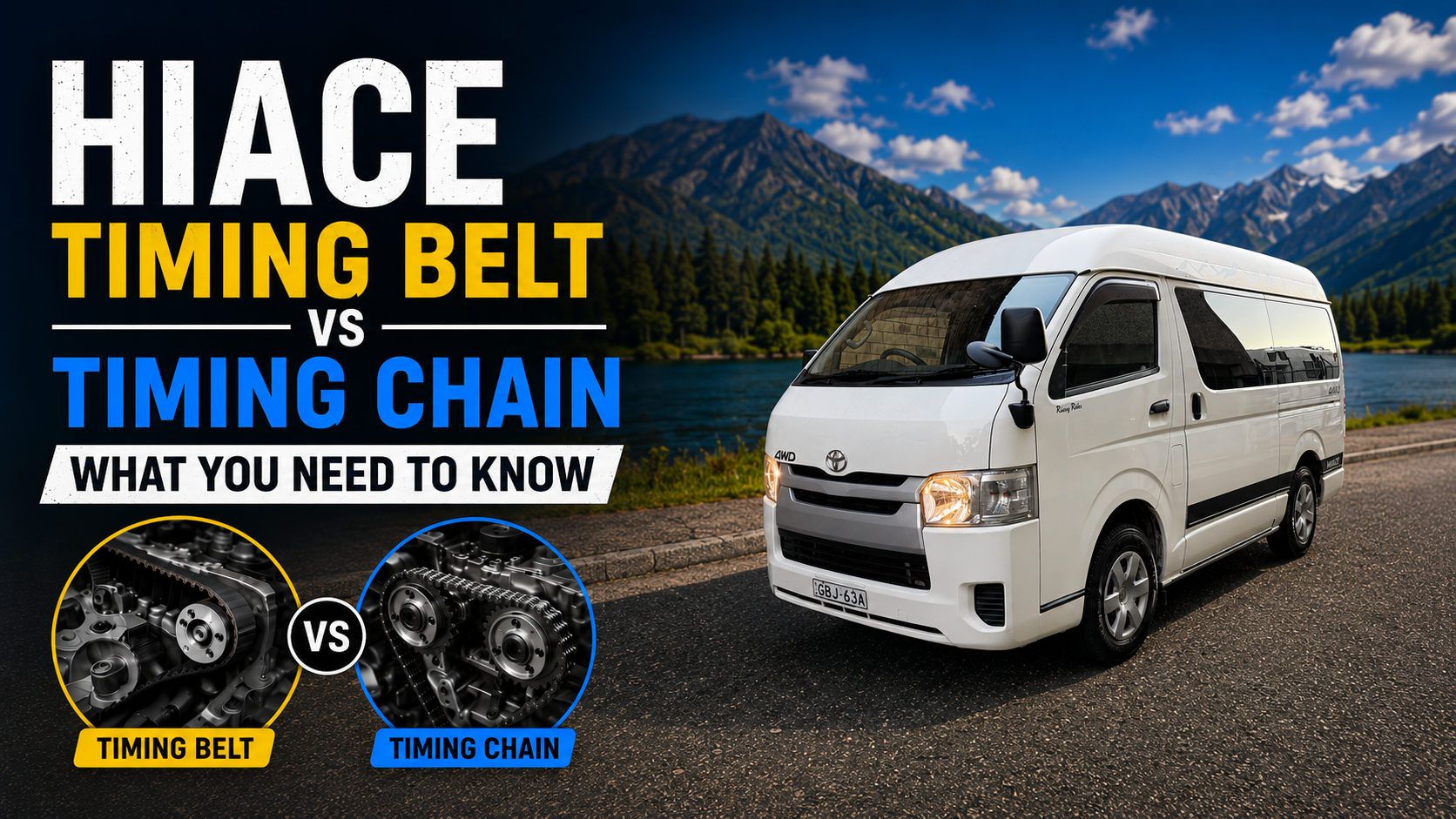
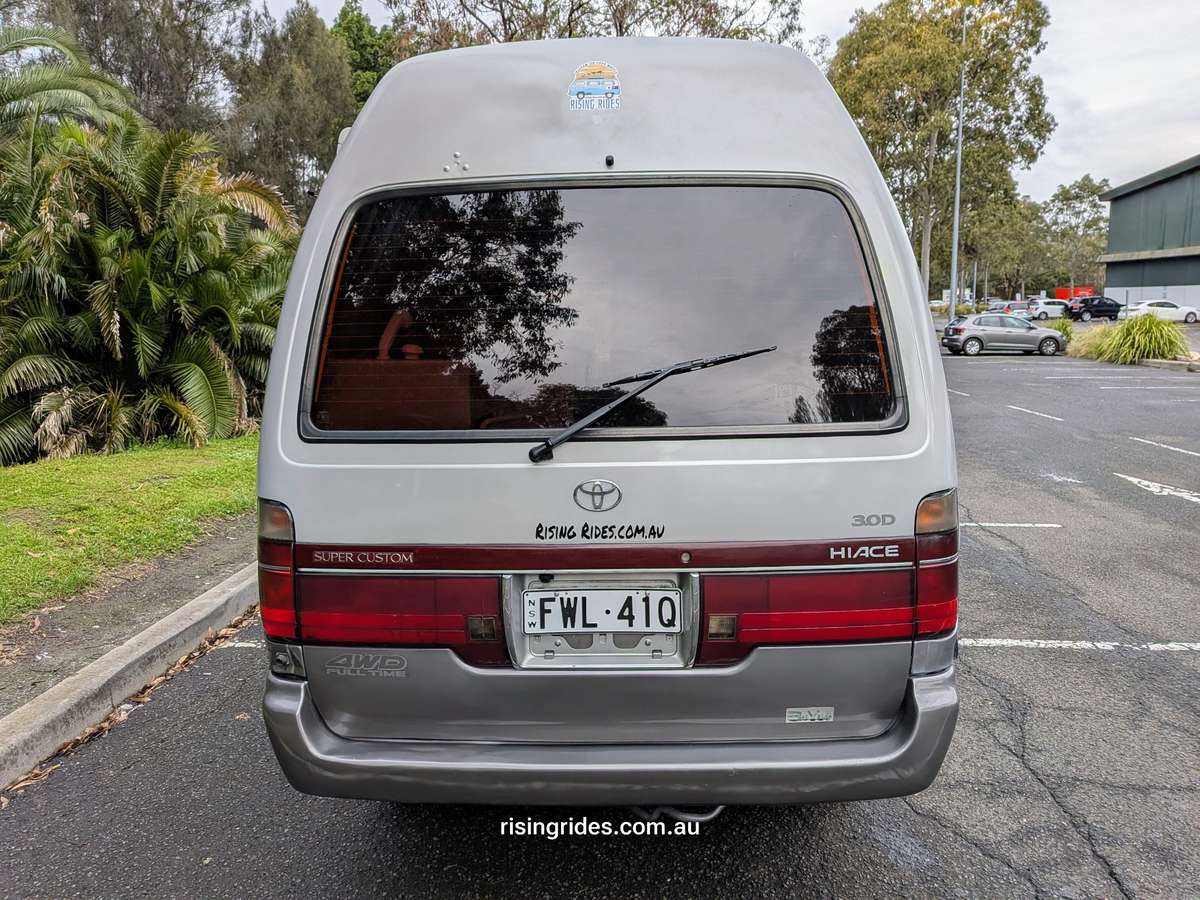
If you are buying a Toyota HiAce, one of the most important maintenance questions is simple: does this HiAce have a timing belt or a timing chain?
It matters because a timing belt is a scheduled maintenance item, while a timing chain is usually designed to last much longer. For buyers searching for HiAce timing belt chain information, the answer depends mainly on the engine fitted to the vehicle.
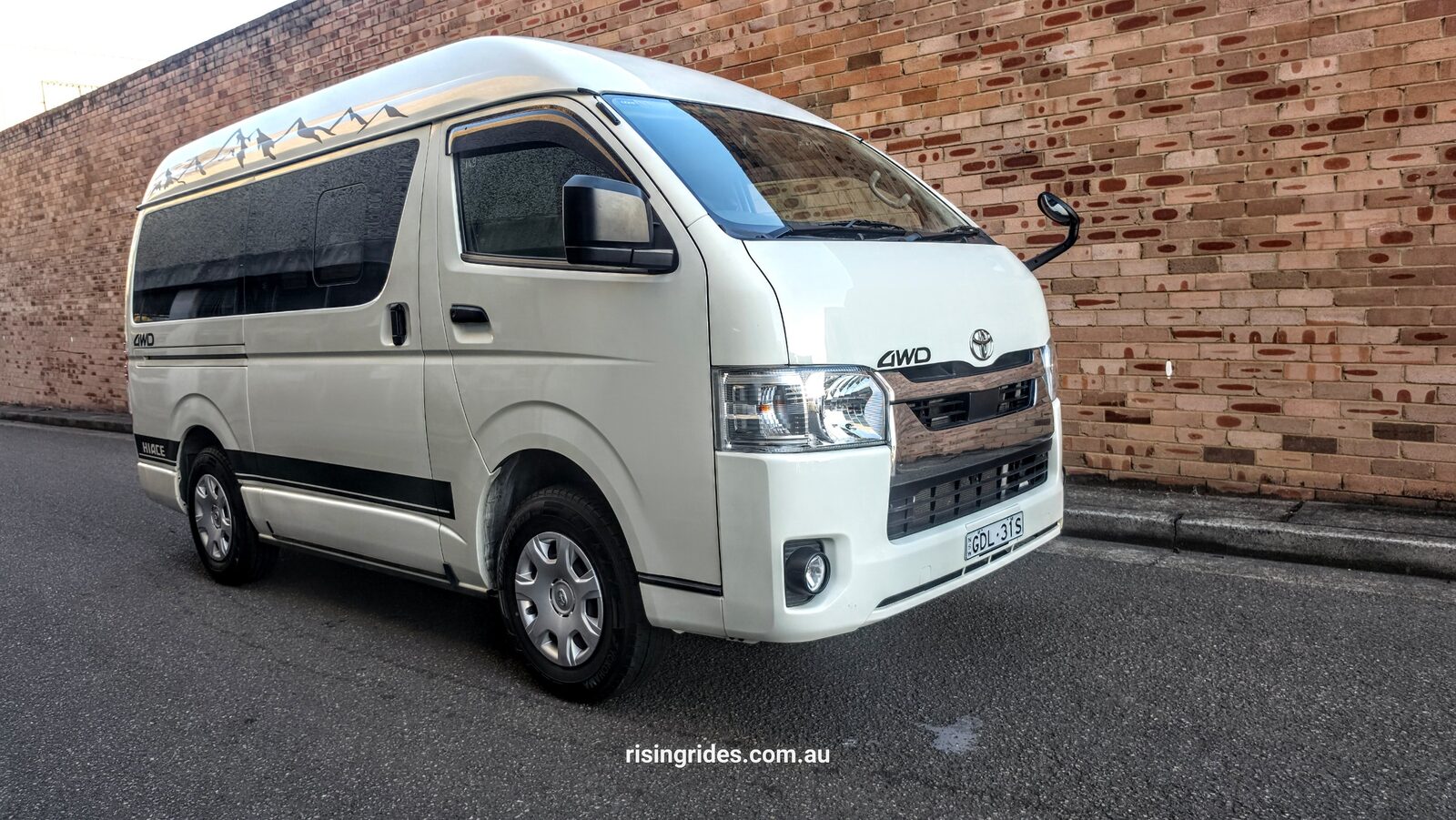
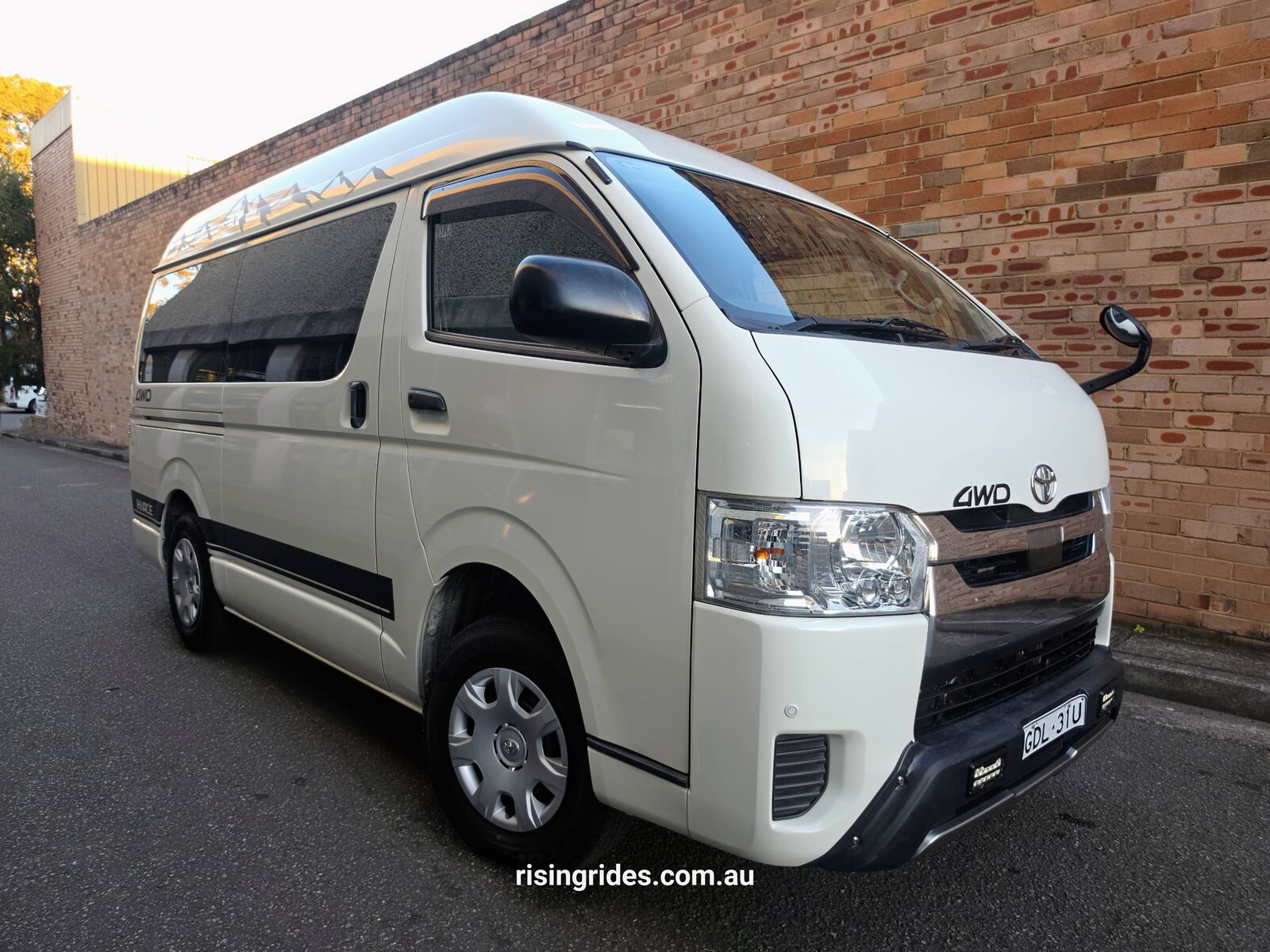
At Rising Rides, we deal with a wide range of Toyota HiAce models, including Australian-delivered vans and Japanese-import HiAce 4WD campers. That means we regularly see different HiAce engine types, different service histories, and different timing belt or timing chain setups.
This guide explains the difference, which HiAce engines commonly use belts or chains, and what you should check before buying.
What Does a Timing Belt or Timing Chain Do?
A timing belt or timing chain keeps the engine’s internal parts moving in the correct order. It connects the crankshaft and camshaft so the valves and pistons operate at the right time.
- Timing belt: Usually made from reinforced rubber. It is quieter and cheaper to manufacture, but it must be replaced at the correct service interval.
- Timing chain: Made from metal and runs inside the engine. It is generally longer-lasting, but still needs good oil quality and proper servicing.
Important: If a timing belt is overdue and fails, it can lead to serious engine damage. That is why documented timing belt history is a major buying point on any used HiAce diesel.
Which Toyota HiAce Engines Have a Timing Belt or Chain?
The easiest way to know is by checking the engine code, not just the year or model name. Two HiAce vans from the same year may have different engines depending on market, body type, drivetrain, and whether it is a Japanese import.

Rising Rides Tip: Do not rely only on the badge, year, or body shape. Always check the engine code and service records. This is especially important with Japanese-import HiAce campers and 4WD vans.
When Should a HiAce Timing Belt Be Replaced?
For many Toyota HiAce diesel engines with a timing belt, the common replacement point is around 150,000 km. Some workshops may also recommend considering age, vehicle use, and service history, especially if the vehicle has been used in dusty, rough, or high-load conditions.
If the HiAce has no clear record of timing belt replacement, it is safer to treat the belt as due rather than guessing.
 Timing Belt vs Timing Chain: Which Is Better?
A timing chain can be a strong advantage for long-term ownership because it usually does not require scheduled belt replacement. However, that does not automatically make every chain-driven HiAce better than every belt-driven HiAce.
A well-maintained 1KD-FTV diesel HiAce with a documented timing belt replacement can be a better buy than a poorly serviced chain-driven vehicle with unknown oil history.

Signs a Timing Belt May Be Overdue
Timing belts often do not give much warning before failure, which is why service history is more important than waiting for symptoms. Still, buyers should be cautious if they notice:
- No timing belt record: No sticker, no invoice, and no clear service book entry.
- High kilometres: Vehicle is around or above the recommended replacement interval.
- Unknown import history: Japanese auction sheets and service records may not always show full maintenance detail.
- Oil or coolant leaks nearby: Leaks can shorten the life of rubber components.
- Rough running or unusual noises: These need proper mechanical inspection before purchase.
Do not ignore it: A cheap HiAce can become expensive quickly if the timing belt history is unknown and the engine has been neglected.
Should the Water Pump Be Replaced with the Timing Belt?
In many cases, workshops recommend replacing related parts while the timing belt area is already open. This may include:
- Timing belt
- Tensioner
- Idler pulley
- Water pump, where applicable
- Cam and crank seals, if required
- Fresh coolant, if the cooling system is opened
This can save labour later and gives the next owner more peace of mind.
What About HiAce Campers and 4WD Imports?
HiAce campers and 4WD Japanese imports are often bought for touring, road trips, camping, and long-distance travel. That makes preventative maintenance even more important.
If you are planning to drive across NSW, head up the coast, or travel remote areas, you want to know the timing belt or timing chain setup has been properly checked before you go.
For camper buyers: A documented timing belt replacement can be a strong selling point, especially on 1KD-FTV, 2KD-FTV, 1KZ-TE, 3L, and 5L diesel HiAce models.
Rising Rides Buyer Checklist
Before buying any used HiAce, especially an imported diesel or campervan, check the following:

Final Thoughts
When comparing a HiAce timing belt vs timing chain, the main thing is not to guess. Check the engine code, review the records, and understand what maintenance has already been completed.
A chain-driven HiAce can be attractive for lower scheduled timing maintenance, but a belt-driven diesel HiAce with proper service history can still be a brilliant, reliable choice — especially for work, family use, touring, and campervan adventures.
Looking for a Properly Checked Toyota HiAce?
At Rising Rides, we specialise in quality used vehicles, including Toyota HiAce vans, 4WD Japanese imports, and camper-ready options. We focus on honest information, proper checks, and helping buyers choose the right vehicle with confidence.
Browse our latest stock or speak with our team for help choosing the right HiAce for your needs.